








Mastering Your Golf Swing: 3 Essential Exercises Every Golfer Should Do
Golf is as much a mental sport as it is a physical one. Many players work hard to implement swing changes during practice sessions, only to see their efforts fall apart the moment they step onto the course. If you’ve ever felt frustrated with your golf swing despite knowing what to do, you’re not alone. Often, the underlying issue is that your body hasn’t fully internalized the new movement patterns needed for success when it counts.
In performance mode, several factors can crowd your mind: the direction of the wind, the position of hazards, or even the pressure of your score. As you prepare to take your shot, your body tends to revert to what it knows best—those ingrained patterns developed over countless repetitions. This article aims to provide practical solutions to help you solidify your swing changes.
Understanding the Challenge of Swing Changes
The intricacies of a perfect golf swing typically require time and repetition to master. When faced with the anxiety of an actual round, many golfers instinctively revert to their old, comfortable movements. This familiarity, while not always effective, is what your nervous system trusts. To shift this reliance, incorporating specialized exercises can significantly transform your golf game.
These exercises will help in two critical ways: first, they will develop the necessary strength, mobility, and stability that form the foundation of a sound golf swing. Second, they will enable your body to learn new movement patterns in a low-pressure environment. When practiced correctly, this allows for seamless integration into your game.
Exercise 1: The Backswing-to-Downswing Pattern
The first exercise focuses on teaching your body the fundamental sequencing—loading and unloading—that powers a successful golf swing. For this drill, you’ll need a resistance band, easily found at any sporting goods store.
Begin by holding the band across your chest while maintaining tension. Step back with your lead leg to create a split stance. As you make a backswing, keep the band taut while loading onto your trailing leg. Focus on the internal rotation of your trailing hip, ensuring that your foot remains flat on the ground.
After completing 10 reps of this backswing load, switch to the downswing side. Maintain the band across your chest and pull your trailing leg back. As you turn your shoulders, try to feel the pressure pushing through your lead leg. This exercise solidifies the connection between the two essential phases of the swing.
Exercise 2: Early Extension Ender
If you tend to lose your posture by pushing your hips toward the ball during the downswing, this exercise is crucial. You’ll need either a friend to assist you or a sturdy anchor point for the resistance band.
Set yourself up in a split stance with your trailing leg back. Hold the resistance band in your hands, ensuring tension is present. As you simulate your downswing, concentrate on pushing your trailing side through the shot: your trailing shoulder should move under rather than around.
The resistance from the band will challenge you, encouraging you to maintain posture while implementing a full rotation. Perform 15 repetitions of this drill to help refine your movement and develop better balance.
Exercise 3: The Dynamic Step Drill
One critical aspect of a golf swing that many neglect is its dynamic nature. Unlike other sports where movements may be static, golf requires fluidity and rhythm. Therefore, training for those dynamic loads is essential for a successful swing.
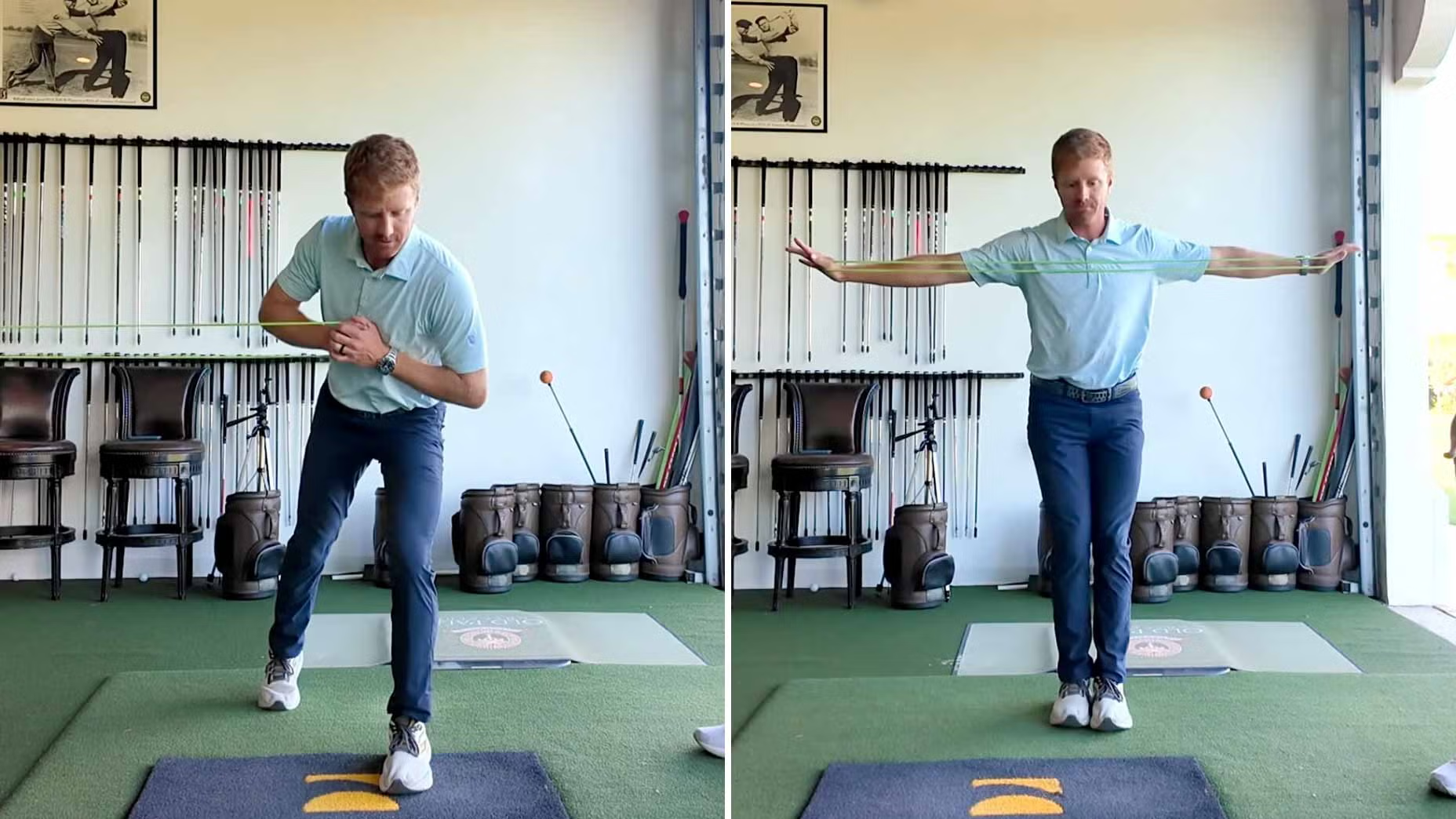
Hold the resistance band in both hands in front of you. Start with your feet together. For the backswing variation, step back with your trailing leg and turn into your swing while ensuring the band remains stretched. This creates the loading movement associated with a proper backswing.
For the downswing component, begin with your feet together again. Step toward the target with your lead leg and rotate through as you finish the step. This exercise mimics the rhythm and flow of an actual golf swing and helps your body learn these essential movements more effectively.
Balancing Backswing and Downswing
While the focus of exercises often leans more toward one component of the swing, finding balance is vital. Both the backswing and downswing are equal parts of the same motion; neglecting either side can lead to imbalances and even potential injuries. Ensure you dedicate equal attention to each pattern during practice.
Consistency is key—to maximize the benefits of these exercises, aim to integrate them into your daily routine. Just five to ten minutes of focused training can yield significant changes to your overall game, transforming swing components into habits that feel natural during play.
The Importance of a Supportive Environment
Initial workouts focused on improving your swing mechanics should not involve targets, scores, or even a golf ball. Remove all pressures and anxieties from your practice. Concentrate purely on movement and executing each exercise correctly. Your aim should be to establish familiarity with the new patterns before attempting them in high-pressure scenarios.
Conclusion: A Roadmap for Improvement
With concentrated effort and these three vital exercises in your routine, you can begin to see noticeable improvements in your golf swing. They foster a better understanding of the mechanics involved and allow you to overcome old habits that may plague your performance.
Invest time into these simple yet effective drills, and you will find your body adapting to these new techniques, ultimately resulting in greater consistency and confidence on the golf course. You’ll be driving farther, putting better, and, most importantly, enjoying the game more as you refine your skills.
Call to Action: Keep Learning and Growing
To deepen your golfing knowledge and enhance your performance, consider following more professional resources. Understanding the science behind swings, obtaining proper fitness education, and engaging with professional trainers can further elevate your game. Don’t hesitate—start now, and make the commitment to a stronger, more efficient golf swing.


