


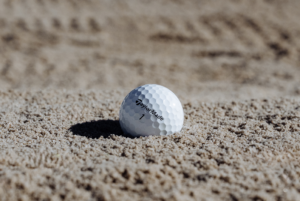





What Makes a Golf Ball Right for You: The 5 Key Factors to Consider
Alright, let’s get real—your golf ball is the MVP of your bag. You smack it on every single shot, which is why it’s crucial to pick the right one. Research from our 2025 Golf Ball Test (big thanks to our pals at UNRL for making it happen) shows that the differences in golf ball performance are way more pronounced than what you’ll see with drivers, wedges, or any other club. So, how can you tell if a golf ball is actually good for your game? We’re breaking it down into five key areas that matter, and we’ve backed it up with all the nitty-gritty data from this year’s test.
1. Trajectory That Fits Your Game
Let’s cut through the jargon—“launch angle” is just fancy talk. What really matters is the trajectory, which combines how high the ball peaks and how steeply it descends. This factor is key in deciding whether your approach shots land softly on the green or zoom off the back.
The data is crystal clear—"It’s not just about launch angle; it’s about trajectory." Two balls could launch similarly but behave totally differently in the air and upon landing.
For those looking for more stopping power on approach shots, check out higher-flight balls like the Wilson Staff Model, Maxfli Tour, and TaylorMade TP5x. If you prefer distance but don’t mind a bit of roll, consider flatter-flight options like the Callaway Chrome Tour Triple Diamond or Titleist Pro V1x. Just remember, shop by actual peak height and descent angle, not just buzzwords.
2. Spin Where You Need It
When talking about golf ball performance, driver spin and wedge spin are two very different animals. Most golfers are better off with a ball that keeps tee spin under control while delivering that much-needed bite around the greens.
Our 2025 wedge test revealed some massive disparities: launch angles varied by as much as seven degrees, and spin rates fluctuated by almost 4,000 RPM. Talk about a game-changer! If you’re after serious stopping power, look at high-spinning options like the TaylorMade TP5, Bridgestone TOUR B XS, and Wilson Staff Model X. If you’re rolling with less expensive ionomer balls like the Titleist Velocity, you might only be getting one-third of that spin. If your short game isn’t where you want it to be, don’t sleep on spin metrics.
3. Cover Material That Delivers Control
Let’s get straight to the point: If greenside spin is your jam, you need a ball with a urethane cover.
Here’s how the materials stack up:
-
Urethane: Offers consistent short-game spin and performs way better in wet conditions—losing only about 6.5% of spin on average in moisture tests.
- Ionomer: While durable and budget-friendly, these balls drop nearly 44.6% of spin under the same conditions. Yikes!
Options like the Titleist Tour Soft and Callaway Supersoft can surprise you off the driver, but when it’s time for that all-around performance, they just can’t keep up.
4. Consistency from Driver to Wedge
Let’s face it—if a ball is great off the tee but flops around the green (or the other way around), you’re not helping your scorecard.
Our tests show that the biggest discrepancies arise in the short game rather than with the driver. If you’re solely hunting down distance, you’re leaving strokes on the table. Quality control is also significant; poorly made balls can go way off track, even on a perfect swing. This is why premium tour models like the Pro V1, Chrome Tour X, Maxfli Tour X, and Srixon Z-STAR DIAMOND consistently shine all across the bag. For smoother play without surprises, make consistency a priority when you’re shopping.
5. Fit Where You Need the Most Help
Here’s the kicker: there’s no one-size-fits-all “best ball.” The right choice is the one that packs the most punch in your weakest area.
So, how do you tackle it? Easy:
- Start around the green with wedge shots; that’s where the most significant differences pop up.
- Next, try out your iron performance—analyze height, descent, and spin.
- Finally, tune your driver. With modern drivers being adjustable, it’s usually easier to adjust the club to fit the ball than the other way around.
Final Thoughts
A ball that’s actually good for you should check off all the boxes:
- Trajectory that suits your approach game.
- Spin where you want it—especially in that delicate area within 50 yards.
- A urethane cover if greenside control matters to you.
- Consistency across drivers, irons, and wedges.
- A fit that aligns with the part of your game where you need the most help.
Your game deserves the best. Don’t be shy about putting in the time to find the right ball for you. Happy golfing!
For more detailed insights, check out our full Golf Ball Test on what makes a golf ball good for you!


