







In my three decades covering professional golf, I’ve watched the sport evolve through equipment revolutions, Tiger’s dominance, and the rise of social media. But I’ve never seen the game struggle with its identity quite like it is right now.
Take this week’s scattered conversations across the golf world. We’ve got Padraig Harrington debating the greatest short games in history, Bryson DeChambeau plotting his next reinvention, and Viktor Hovland publicly questioning the PGA Tour’s decision-making regarding Brooks Koepka and Patrick Reed. On the surface, these seem like unrelated golf chatter. Dig deeper, and they reveal a sport that’s fundamentally confused about what it wants to be.
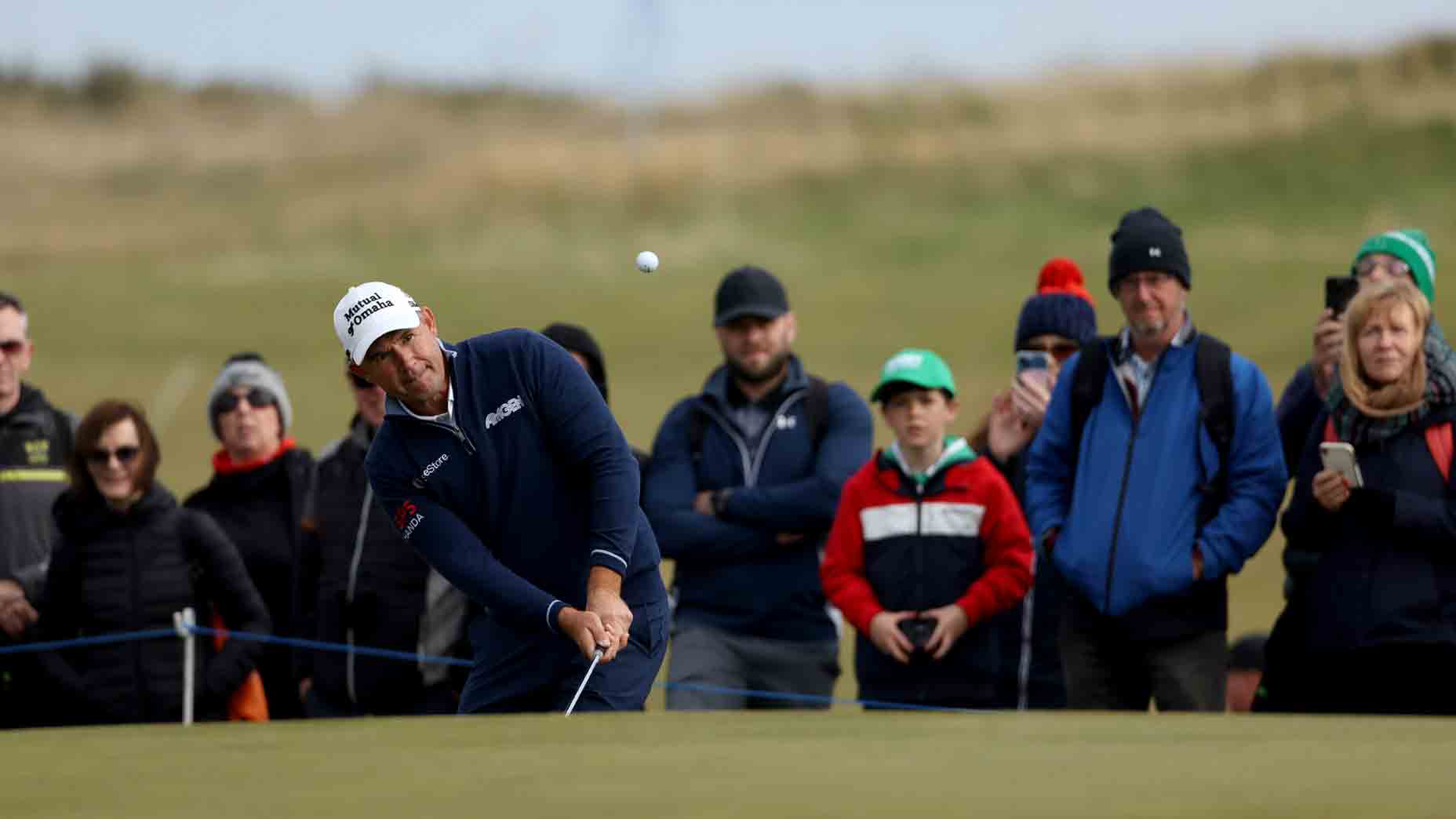
Let’s start with Harrington’s short-game discussion, which might seem like harmless off-season content. But having caddied through the ’90s and covered countless major championships since, I can tell you these debates matter more than you’d think. They reflect golf’s ongoing tension between tradition and innovation, between appreciating classic skills and embracing new approaches.
When tour pros start debating the “best ever” anything, they’re really arguing about values. Is it the craftsman-like precision of a Seve Ballesteros around the greens? The calculated brilliance of a Phil Mickelson? Or do we celebrate the data-driven approach of today’s players who’ve optimized every angle and spin rate? The answer reveals whether golf sees itself as an art or a science – and right now, we’re getting mixed signals.
Then there’s Bryson, golf’s most polarizing figure, apparently plotting his next chapter. Having watched his transformation from a curious amateur with single-length irons to a bomber who broke the game, I’m fascinated by his staying power. But here’s what strikes me: Bryson represents everything modern golf claims to want – innovation, engagement with younger audiences, social media savvy – yet the establishment still treats him like an outsider.
This perfectly illustrates golf’s schizophrenia. We say we want personalities and characters, then bristle when someone actually brings both. We claim to embrace technology and new approaches, then act surprised when someone like Bryson takes it to logical extremes. Whatever he’s planning next, you can bet it’ll force golf to confront its own contradictions once again.
But the real meat of golf’s identity crisis lies in Hovland’s pointed questions about the Tour’s handling of LIV defectors. Viktor’s not just some random player throwing bombs – he’s one of the game’s rising stars, a major winner, and exactly the kind of thoughtful voice the Tour should want representing it. When he’s publicly questioning precedents, that’s not idle chatter. That’s a problem.
Having covered the LIV split from day one, I can tell you the Tour’s messaging has been anything but consistent. First, LIV players were pariahs who’d sold out the game. Then suddenly, some get special considerations for majors and other events. Meanwhile, players who stayed loyal to the Tour watch guys like Koepka and Reed get what appears to be preferential treatment despite their defection.
Hovland’s frustration isn’t really about Brooks or Patrick – it’s about fairness and consistency. And he’s absolutely right to question it. What precedent is the Tour setting? That loyalty doesn’t matter? That there are different rules for different players? That principles are negotiable if the player is talented enough?
In my experience, successful sports leagues – and make no mistake, the PGA Tour is a league – succeed through clear, consistent messaging about their values. The NFL doesn’t waiver on what it stands for. The NBA doesn’t send mixed signals about its priorities. But golf? We’re all over the map.
This confusion extends beyond just LIV. Look at how we handle slow play (we complain constantly but rarely penalize). Consider our relationship with technology (we embrace some advances while banning others seemingly at random). Examine our approach to course setup (we want challenging but fair, then set up tricks that favor luck over skill).
What golf needs – what it’s desperately lacking – is clear leadership with a coherent vision. We need someone to stand up and say: “This is what professional golf values. This is how we’ll measure success. This is how we’ll treat players, partners, and fans.”
Instead, we get reactive policies, inconsistent enforcement, and mixed messages that leave everyone confused. Players don’t know what’s expected. Fans don’t understand the rules. Media members like me spend more time explaining contradictions than covering great golf.
The irony is that golf has never been in a better position to thrive. Participation is up. Young stars like Hovland are engaging and articulate. Technology is making the game more accessible. But instead of capitalizing on these advantages, we’re stumbling over our own mixed messages.
Until golf decides what it actually values – tradition or innovation, loyalty or talent, consistency or flexibility – we’ll keep having these fractured conversations. And that benefits no one, least of all the fans who just want to watch great golf without needing a decoder ring to understand the politics behind it.
Golf’s got the talent. It’s got the audience. What it needs now is the courage to pick a lane and stay in it.


