









As a lifestyle editor, I’m always looking for those moments in golf that transcend the scorecard—the human stories, the unexpected twists, the elements that remind us why we love this game so much. And let me tell you, Bryson DeChambeau’s recent escapade at LIV Golf Adelaide delivered in spades. It was a perfect storm of surprise, skill, and sheer relatability, offering a wonderful lesson for us all, regardless of our handicap.
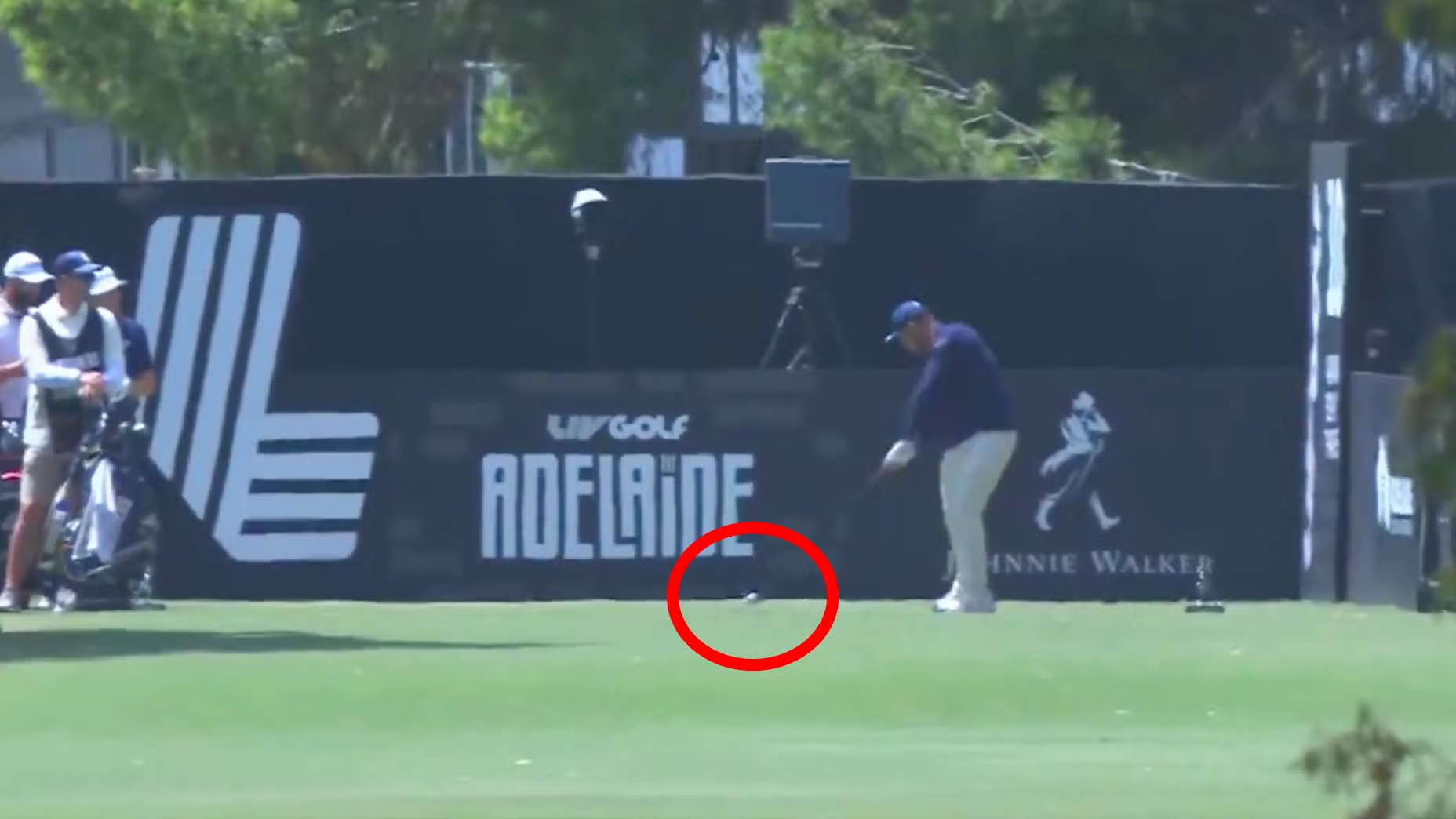
Picture this: one of golf’s biggest hitters, known for his methodical approach and gargantuan drives, steps up to the 10th tee, a 529-yard par-5. Eagle expectations are surely swirling. He swings, and… well, it wasn’t pretty. A topped drive. A complete mishit. We’ve all been there, haven’t we? That sickening thud, the ball skittering low and forlornly down the fairway. My heart sank for him for a split second, because that feeling is universal.
But here’s where the magic, and the lifestyle lesson, truly begins. That “worst shot of the day,” as the source article puts it, somehow traveled an astonishing 245 yards. Let that sink in. Two hundred and forty-five yards with a shot that, by all accounts, should have been a disaster.
“There’s something you don’t see every day. Stone-cold skulled it.”
David Feherty’s commentary perfectly captured the collective disbelief. Even Bryson himself was puzzled, turning to his caddie with that classic golfer’s question, “Did I hit the ground on that or it just knuckled?”
This isn’t just about a pro golfer’s fluke. This is about perseverance, adapting, and finding the silver lining. How many times on the course have we hit what we thought was a terrible shot, only for it to end up in a surprisingly decent position? It’s a powerful reminder that every shot, good or bad, is just one step in the journey. The real test isn’t the perfection of each stroke, but how you respond to the imperfections.
The Art of the Recovery: A Life Lesson from the Fairway
What Bryson did next is the real takeaway for every golfer, from weekend warriors to aspiring pros. Instead of lamenting the flub, he embraced the reality. From that “unlikely” 245-yard landing spot, he hit a 288-yard approach shot right onto the green. The result? An unlikely birdie. Not just an unlikely par, but a birdie! It was one of seven birdies he holed in Round 1, putting him tied for the lead.
This isn’t just a golf story; it’s a life philosophy. How often do we let a perceived mistake define our entire day? This incident with Bryson is a fantastic parallel for navigating life’s inevitable curveballs. That moment you stumble in a presentation, that client meeting that goes sideways, or even just a difficult morning commute – it’s not about the initial misstep. It’s about the recovery, the pivot, and the refusal to let one bad moment derail your entire trajectory.
I hear from so many golfers who get bogged down after one bad shot, letting it snowball into a disastrous round. Bryson, in his moment of bewilderment, gave us a masterclass in resilience. He acknowledged the poor contact, but quickly refocused on what he *could* do from his new position. This mindset is gold, both on and off the course.
“The two-time U.S. Open champ then turned to his caddie and asked, “Did I hit the ground on that or it just knuckled?”
His questioning isn’t just about mechanics; it’s about processing. It wasn’t frustration, but curiosity. This curiosity to understand, rather than merely react, is a cornerstone of growth. In our daily lives, when something unexpected happens, do we stop to analyze, or do we simply get angry or defeated? The former leads to learning; the latter often leads to more mistakes.
Actionable Takeaways for Your Game (and Your Life):
-
Embrace the “Happy Accident”: Sometimes, even what feels like a terrible shot or a misstep in life can land you in a surprisingly good position. Look for the unexpected advantage, the new perspective, or the hidden opportunity before writing it off.
-
Master the Art of the Immediate Reset: Bryson didn’t dwell. He looked, he asked, he moved on. After a bad golf shot (or a tough moment at work), take a deep breath. Acknowledge it, but don’t let it linger. What’s the *next* best step?
-
Focus on What You Can Control: He couldn’t change the topped drive, but he could control his approach shot. In life, there are always elements beyond our control. Direct your energy towards what you *can* influence – your attitude, your next action, your focus.
-
Adopt a Learning Mindset: Bryson’s question to his caddie wasn’t self-pity; it was an inquiry. Always be curious about what went wrong and how you can prevent it next time. Every “bad” experience is a potential learning moment.
-
Your Mindset is Everything: A flubbed drive could have easily broken his momentum, but Bryson maintained his composure and went on to birdie the hole. This resilience is a muscle you can train, both on the golf course and in your daily routine.
In my experience covering the human side of golf, these are the stories that resonate most deeply. It’s not just about hitting bombs or sinking putts; it’s about the attitude, the grit, and the human spirit that shines through when things don’t go to plan. So, the next time you top a drive or face an unexpected challenge, remember Bryson. A “bad” start can still lead to a fantastic finish, especially when coupled with a winning mindset.
“Incredibly, DeChambeau’s ball still traveled 245 yards down the fairway. From there, he hit a 288-yard approach that landed safely on the green. A two-putt led to an unlikely birdie.”
This isn’t just a tale from the greens; it’s a blueprint for a resilient, adaptable lifestyle that celebrates progress over perfection. And frankly, that’s a philosophy I think we can all get behind, one unlikely birdie at a time.


