







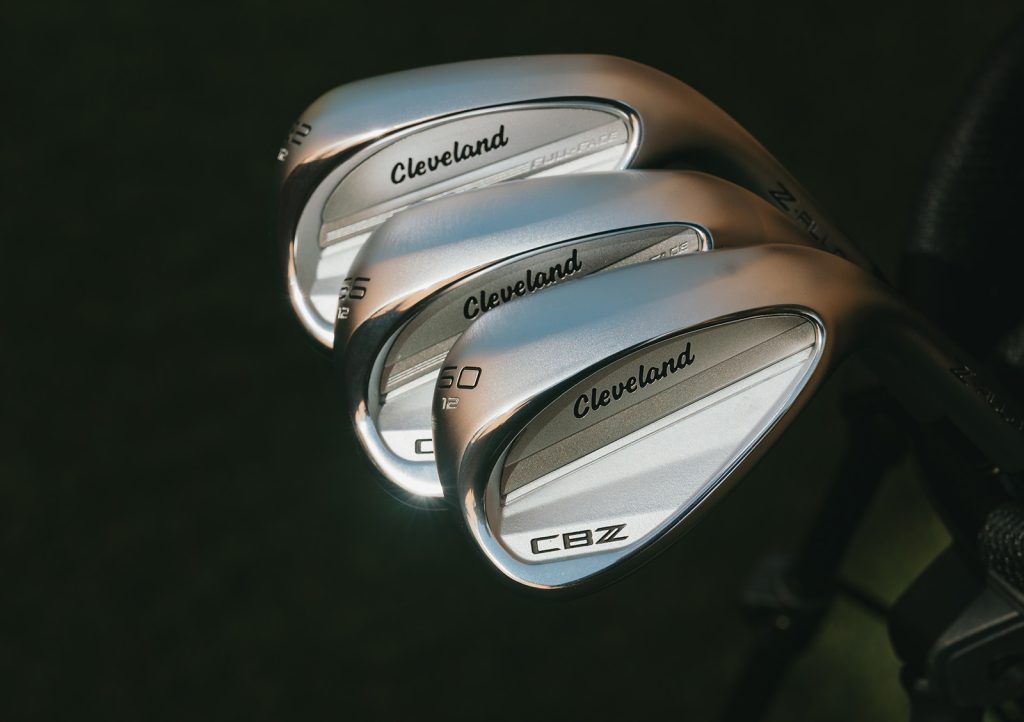


Alright, Daily Duffer faithful, Tyler Reed here, and today we’re talking wedges – specifically, the Cleveland CBZ. Now, those of you who’ve followed my ramblings know I’m not one for fluff. I don’t care about flashy paint jobs or celebrity endorsements. I care about what happens when the club meets the ball, and more importantly, what the numbers on the launch monitor tell me. So, when I saw The Hackers Paradise (THP) putting out a call for testers for the CBZ wedges, my ears perked up. Not because I needed to test them myself; I’ve already put plenty of Cleveland’s offerings through their paces on the Foresight and TrackMan. But because *they* are putting them into the hands of everyday golfers.
This is a smart move, and frankly, it’s how more equipment testing should be done – beyond the pros and the usual suspects. Getting real-world feedback from a diverse group of players is invaluable. THP states:
“At THP, we believe that testing should be done not only by us, but also by golfers just like you. One of the cool features about being an active member of the THP Forum is that we look to you guys/gals, the consumers, to give feedback on equipment to golfers all around the world.”
That’s an ethos I can get behind. While my job is to dive deep into the tech, understand the minute differences in CG, grind, and groove geometry that impact performance, the ultimate arbiter is the golfer themselves. Does it *feel* good? Does it inspire confidence? Does it perform consistently for *them*?
The Cleveland CBZ wedges aren’t new to my radar. We took a preliminary look at them when they first launched, focusing on the blend of performance and forgiveness touted by Cleveland. And based on what I’ve seen in my fitting bay, their claims aren’t entirely unfounded. Cleveland has consistently innovated in the short game, and the CBZ aims to bridge the gap between blade-style wedges and more cavity-back iron designs, offering a slightly larger, more perimeter-weighted profile.
In my fitting experience, many amateur golfers struggle with consistency around the greens, not just with technique, but with equipment that demands pinpoint strikes. A traditional blade wedge, while offering incredible feel and versatility for the highly skilled, can be punishing on slight misses. That’s where the CBZ comes into play. The “Z” in CBZ, from what I understand, points to zones of forgiveness. This means weight is strategically distributed to improve stability on off-center hits. What does that translate to? Higher MOI (Moment of Inertia). While you won’t see driver-level MOI numbers, a slight bump in a wedge means less twisting on impacts closer to the heel or toe, leading to more consistent ball speeds and, crucially, more consistent spin rates. This is paramount for distance control and trajectory.
Think about it: A delicate flop shot from a tight lie, or a full sixty-yard pitch. If your clubhead twists even slightly on impact, your launch angle and spin can be all over the map. Forgiveness in a wedge isn’t just about getting the ball airborne; it’s about maintaining a predictable trajectory and spin profile, even when you don’t catch it perfectly. I’ve seen golfers gain 5-10 yards of effective hitting area on the face with a more forgiving design like the CBZ, leading to tighter dispersion patterns on approach shots and more controlled pitches.
From a tech standpoint, Cleveland has always excelled with their groove technology. While the article doesn’t delve into the specifics of the CBZ’s grooves, if they follow Cleveland’s typical pattern, you can expect aggressive milling and laser etching designed to maximize friction for spin, even in damp conditions. And that’s critical. High spin is great, but *consistent* high spin is what really shaves strokes. On the launch monitor, I’m looking for spin rates that hold tight across various strike locations, not just the dead center. I’ve found modern Cleveland wedges to deliver high spin (typically 8,000-10,000 RPM on full shots with a cleanly struck ball) and, importantly, maintain a substantial percentage of that spin even on slightly thinner strikes, thanks to effective groove engineering.
Now, while I’m a fan of real-world testing, the criteria for THP’s selection process are fairly straightforward:
“Comment below and follow these instructions.
Step 1 – Tell us what wedges you currently use.
Step 2 – Tell us what lofts you would like to review.
Step 3 – What feature of CBZ draws you in the most, that you want to test out?”
This is a solid way to filter potential testers. Knowing what lofts they want helps Cleveland match the right clubs, and asking what feature draws them in immediately tells you if they’ve done their homework beyond just “I want free clubs.” For me, the feature I’d be most interested in testing, if I were an amateur, would be the consistency of spin preservation on off-center hits. If a player typically struggles with chunking or thinning their wedges, the CBZ’s enhanced perimeter weighting should offer a noticeable improvement in turf interaction and forgiveness.
Who are these wedges for? Based on the design philosophy and my experience, the Cleveland CBZ wedges are ideally suited for mid- to high-handicap golfers, or any player who prioritizes forgiveness and consistency over the ultimate workability of a raw-faced, blade-style wedge. If you occasionally mishit your wedges, and find your short game suffering from inconsistent distances and trajectories, the CBZ could be a significant step up. They strike a nice balance between playability and genuine performance. It’s not about revolutionary ball speed (we’re talking wedges, not drivers), but about boosting your confidence by making those marginal hits behave more like pure strikes.
Are they worth the money? That’s always the million-dollar question. If you’re currently using ancient wedges with worn-out grooves, or struggling with unforgiving blade designs, then absolutely. The technology, particularly in groove design and perimeter weighting, has advanced significantly in recent years. Fresher grooves alone can give you a measurable boost in spin, and the added forgiveness can translate directly to fewer dropped shots around the green. For the average golfer, fewer dropped shots means lower scores, and that’s a return on investment you can take to the bank.
In short, the Cleveland CBZ wedges represent a thoughtful approach to short game equipment, blending classic Cleveland short game expertise with modern forgiveness technology. They acknowledge that not everyone is a tour pro, and provide tools that actually help the majority of golfers play better. And for that, I give them a nod.


