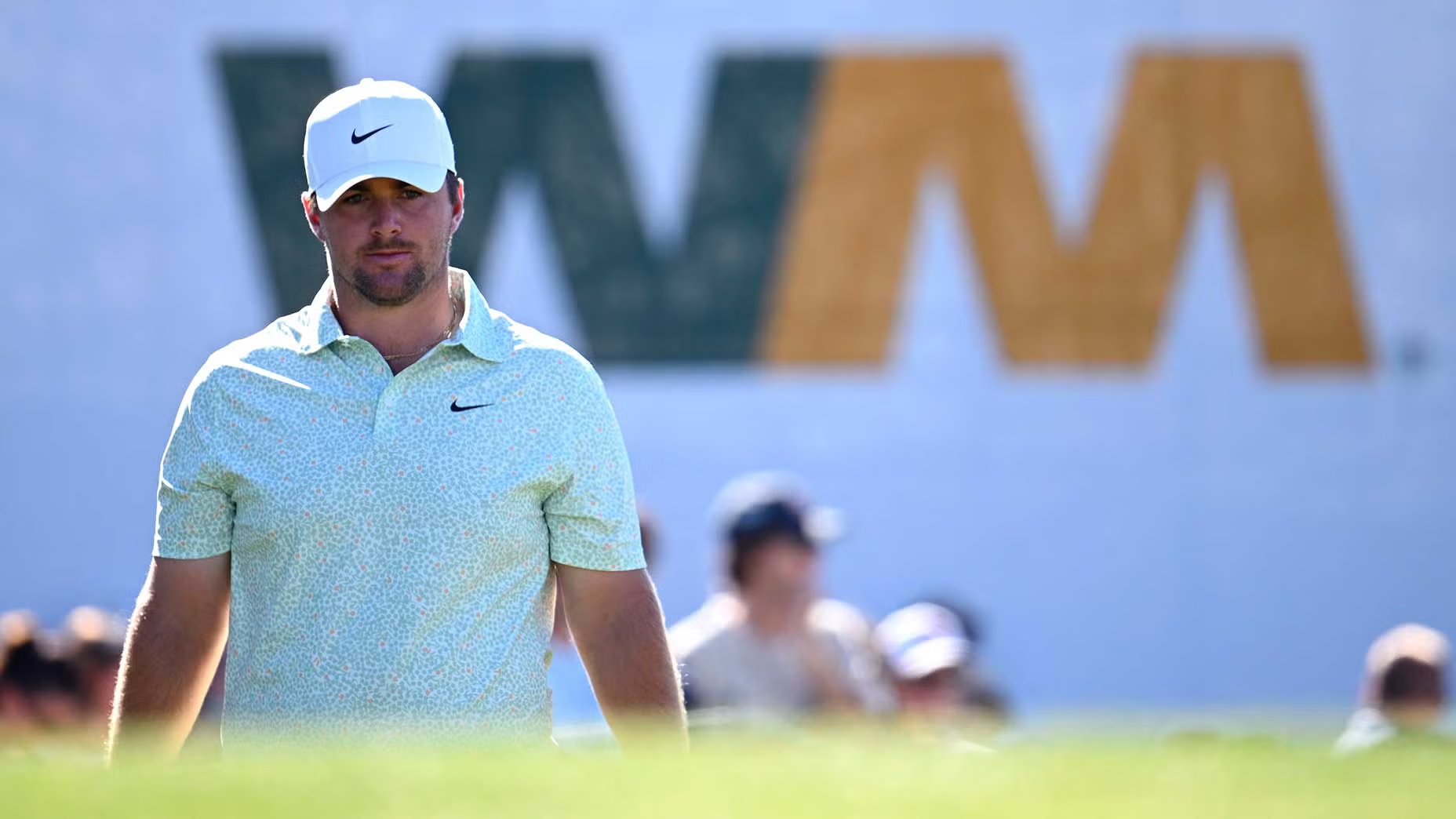
There’s a moment that happens right before everything changes. It’s not always visible to the outside world—no trophy, no leaderboard update, no viral highlight. But it’s there. For Chris Gotterup, it seems to be happening right now, and honestly? It’s worth paying attention to, even if you’ll never play on the PGA Tour.
Here’s why: Gotterup’s rise isn’t just a golf story. It’s a masterclass in resilience, self-belief, and the unglamorous work that happens when nobody’s watching. After winning the Myrtle Beach Classic in 2024, he essentially disappeared from relevance. He couldn’t crack the top 50 in his next eight events. By any reasonable measure, he was becoming a footnote—that guy who won once and faded into the background. And yet, instead of accepting that narrative, something shifted internally.
The Work Nobody Sees
I’ve noticed over my years covering golf lifestyle that the players who sustain success aren’t necessarily the ones blessed with natural talent alone. They’re the ones who can sit with disappointment, resist the urge to make drastic changes, and trust the process when the results aren’t coming.
Gotterup embodied this during what could have been his lowest point. He didn’t abandon his game. He didn’t hire a new swing coach every month. He did something far more powerful—he chose faith over fear.
“I definitely knew I was a work in progress, and still am. But I knew that my game was suited for out here, and I knew if I continued to work and at least had faith in what I was doing that I would be able to be in the position someday.”
That’s the kind of statement that gets glossed over in tournament recaps, but it deserves to sit with you for a moment. How many times have you wanted to quit something—a fitness routine, a swing change, a career pivot—because the immediate results weren’t there? How many times did you convince yourself that the work wasn’t working, when really you just hadn’t done it long enough?
This is where Gotterup’s lifestyle becomes instructive for all of us, regardless of handicap.
Playing the Long Game
Fast forward to July 2025. Gotterup won the Scottish Open, then finished third at the Open Championship the following week. By season’s end, he had accumulated the kind of resume that whispers about a player being genuinely elite—not just talented, but equipped mentally and physically to perform when it matters most.
Then this season started, and he didn’t ease in. He won the Sony Open immediately, grabbed a top 20 at the Farmers, and won a playoff at the WM Phoenix Open by making birdies on five of his last six holes—the kind of finish that separates those who can manage pressure from those who crumble under it.
What’s fascinating from a lifestyle perspective is that Gotterup’s breakthrough didn’t happen because of some singular change. It was the accumulation of small decisions made in obscurity. The training sessions he completed when nobody was monitoring him. The mental work he did to stay centered during the lean months. The nutrition and recovery protocols that support his ranking as the second-best off-the-tee golfer on Tour right now.
He’s 26 years old, making his Masters debut soon, and ascending into the rarefied air where he’ll compete at Pebble Beach, Genesis Invitational, and Bay Hill—events that define a player’s calendar and legitimacy.
“I’m just really enjoying being out here right now, and I’m having fun. I feel confident in what I’m doing and feel like I have played well enough to feel confident to be able to be in those positions. So far, I’ve been able to capitalize on those, and I’m excited for the rest of the year.”
The Emotional Intelligence Factor
There’s one more element of Gotterup’s lifestyle that matters: his willingness to feel things deeply. After his playoff win, when CBS reporter Amanda Balionis asked him about showing up in crucial moments, his voice cracked. He wasn’t performing emotion—he was genuinely moved by the magnitude of his own achievement.
“You make me cry every time.”
This matters because golf culture—and honestly, much of modern culture—often valorizes emotional restraint. We celebrate the stoic, the unbothered, the players who act like they’ve seen it all before. But Gotterup’s vulnerability is actually his strength. It reveals that he cares deeply, that the work means something, that achievement isn’t hollow to him.
For everyday golfers, that’s permission to care about your rounds, your progress, your goals. Emotional investment isn’t weakness. It’s fuel.
What We Can Actually Apply
If you’re working on your game right now—whether that’s your swing, your fitness, your mental approach—Gotterup’s arc offers a blueprint that transcends professional golf.
First: trust your process. When results are slow, the temptation to abandon what you’re doing is enormous. But sustainable improvement requires patience. Gotterup didn’t win immediately after his Scottish Open breakthrough. He had a T10 here, a top 20 there. Then it compounded.
Second: invest in the invisible work. Your off-course routine—training, nutrition, sleep, mental preparation—matters enormously. Gotterup’s standing as the second-best off-the-tee golfer on Tour suggests his practice and training protocols are elite. Where are you shortcutting your own process?
Third: create space for enjoyment. Notice that Gotterup emphasizes having fun. Elite performance doesn’t come from grinding yourself into dust. It comes from sustainable practices that you can maintain over years, not weeks. What would make your golf lifestyle more enjoyable?
Gotterup’s 2026 season has only just begun, but what we’re watching isn’t just a hot streak. It’s the manifestation of years of quiet work, undeterred belief, and the willingness to become genuinely excellent at something. That’s the real lifestyle story worth paying attention to.