








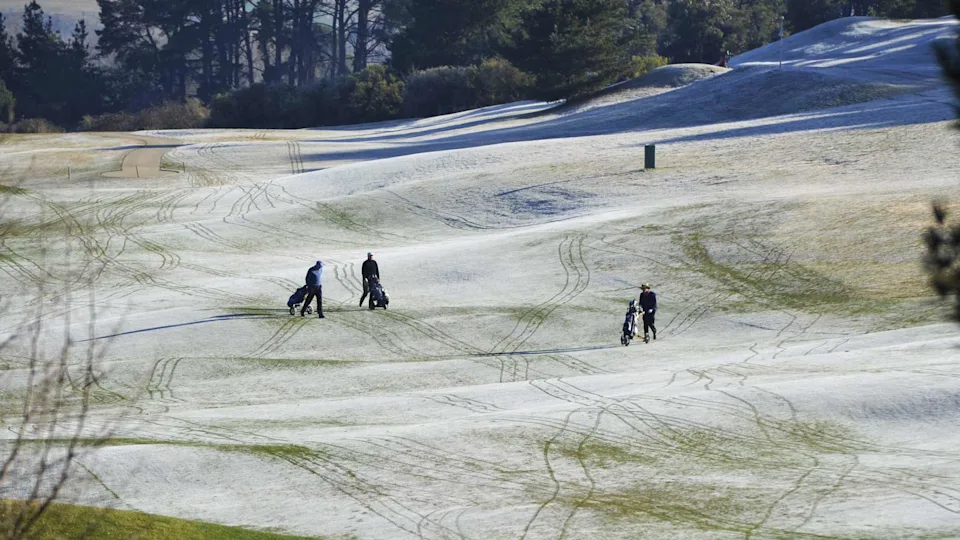
Winter Golf Isn’t a Punishment—It’s a Skill Test. Here’s How Tour Pros Think About It
I’ve spent 35 years covering professional golf, and I’ve learned that the best players in the world don’t curse the cold—they adapt to it. That might sound like corporate motivational poster material, but I mean it literally. When conditions get hostile, that’s when you separate the craftsmen from the weekend warriors.
The article floating around this week about winter golf survival tips is solid practical advice. But what strikes me most is what it reveals about how golf’s elite think about adversity. And make no mistake—cold weather golf is adversity.
The Mental Game Matters More Than the Gear
Sure, the fundamentals are there: invest in quality layers, take extra club, shorten your swing. All of that is true. I wore vests religiously during my years caddying for Tom Lehman in the ’90s, and I’ve seen every variation of cold-weather gear imaginable at 15 Masters tournaments. The equipment matters.
But here’s what I’ve observed after three decades on the tour: the players who succeed in brutal conditions are the ones who don’t fight their environment. They accept it. They plan for it. And crucially, they don’t try to swing their normal swing.
“Consider taking more club and making a smaller, controlled swing. Think knockdown-style shots: adjusted setup, reduced motion, and cleaner contact. Smaller swings often lead to smaller misses—a big win when conditions aren’t perfect.”
This philosophy is borrowed directly from tour-caliber thinking. I’ve watched Ernie Els and other international players who grew up in variable conditions demolish American-bred golfers in winter tournaments, not because they hit it longer, but because they were willing to dial back expectations and execute with precision. The ego has to check itself at the door.
The Ball Physics Problem—And Why It Matters
Let’s talk about something that casual players often underestimate: cold air density. A golf ball hit in 35-degree weather can travel 5-7 fewer yards than the same swing in 65-degree conditions. That’s not a rumor. That’s physics. And on a tour level, every yard matters.
In my experience, the frustration many amateur golfers experience in winter comes from not accepting this reality. They pull out their 7-iron expecting a 160-yard result and get 153 yards, then blame their swing. Wrong diagnosis. The environment changed the equation.
“Before you tee off, test this on the range. Laser a distance, hit the club you’d normally use for that number, and see where it lands. That quick check will give you a feel for how much carry and roll you’re losing.”
This is a pro move. Literally. I’ve seen tour caddies do exactly this in practice rounds before winter events. You’re gathering data, not just swinging clubs. It’s the same methodical approach that separates tour professionals from everyone else—they measure, they adjust, they execute.
Fast Greens Are Actually an Advantage (If You Know How to Think About It)
What I find encouraging about this advice is how it reframes a potential problem into an opportunity:
“Cold, dry conditions can lead to faster, firmer greens. Pay attention to this, especially on approach shots where the ball may not stop as quickly.”
Most players see fast greens and panic. Tour pros see fast greens and smile. Why? Because firmer surfaces reward precision and penalize sloppiness. A player with good technique and feel actually has an edge. You can land it short and let it feed to the hole. You can be more aggressive with your line because speed is doing some of the work.
This is where winter golf becomes beautiful, honestly. It’s a test of fundamentals and feel, not power. In my 15 Masters—the tournament that often plays in chilly conditions—I’ve seen the most technically sound strikers shine. Players who trust their mechanics. Players who don’t have to muscle the ball.
The Bigger Picture: Golf Doesn’t Wait for Perfect Weather
What I appreciate about this whole conversation is the implicit message: golf continues. Winter doesn’t pause the calendar. The PGA Tour doesn’t reschedule. And amateur golfers shouldn’t hibernate either.
Having caddied at the highest level, I can tell you that the players who stay sharpest through the winter months—whether playing in cold conditions or utilizing simulators—carry that momentum into spring. There’s no “off” switch. There’s only adaptation.
The article wisely mentions indoor golf as a fallback, and there’s zero shame in that. Technology has made simulator golf legitimate practice. But I’d argue the real growth comes from playing in the conditions you’re dealt. That’s where you develop the mental toughness and technical creativity that defines accomplished golfers.
Final Thought: Winter Golf Builds Character
In my 35 years covering this sport, I’ve noticed something: the golfers who embrace winter are the ones who improve most consistently. Not because cold weather is magical. But because it forces you to think. It demands respect for fundamentals. It strips away ego.
So bundle up. Take an extra club. Make a smaller swing. Check those greens. And if it’s 28 degrees and your car doors are frozen shut—well, that just means you’re about to have a story worth telling at the nineteenth hole.
Jimmy Caldwell has covered professional golf for 35 years and served as caddie for PGA Tour member Tom Lehman. He has attended 15 Masters Tournaments and maintains a weekly column for The Daily Duffer.


