







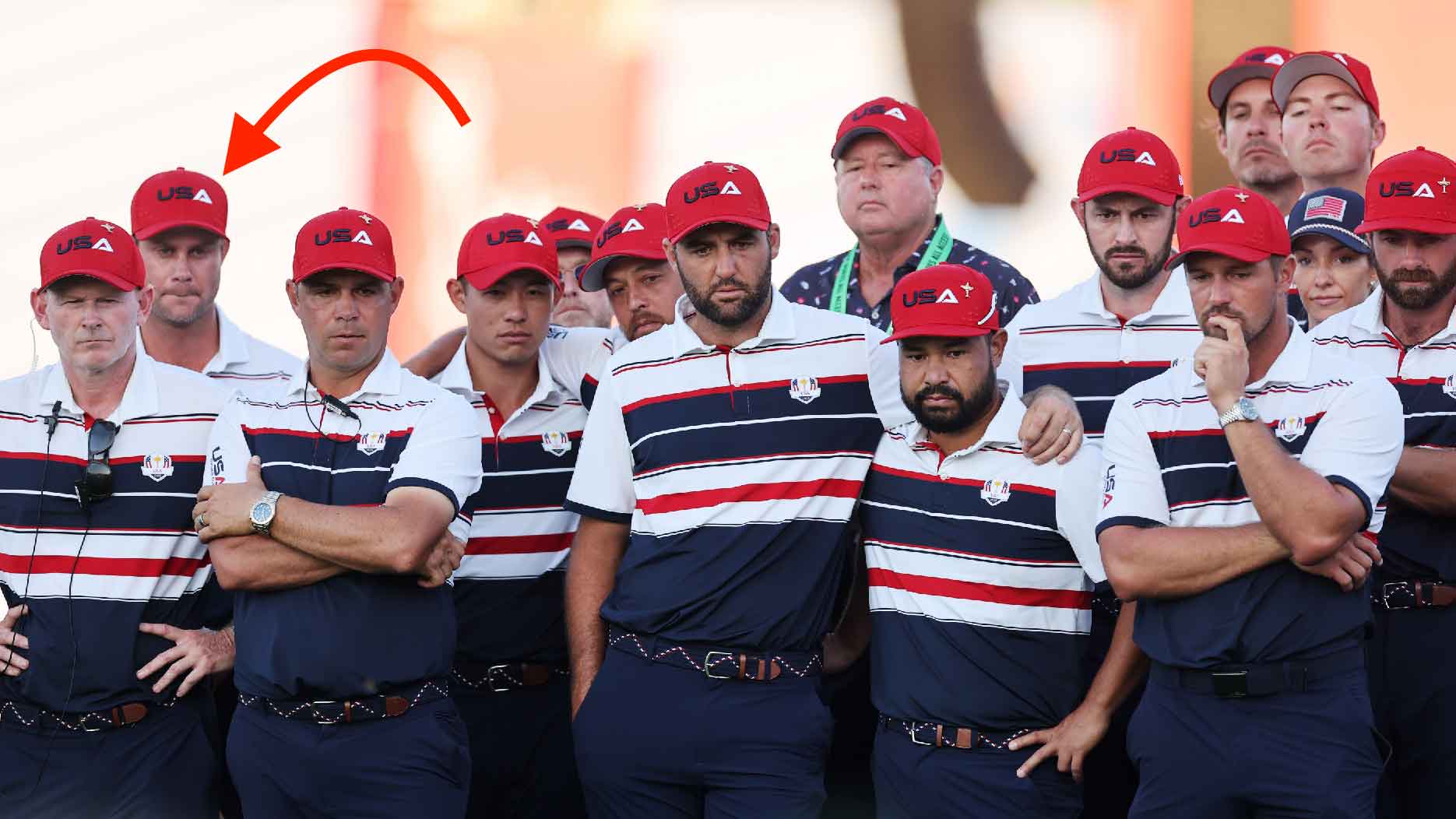


Harris English’s Ryder Cup Journey: Memories, Challenges, and a Future Uncertain
Harris English, a prominent figure in professional golf, made headlines when he joined the U.S. Ryder Cup team for the first time at the age of 32, four years ago at Whistling Straits. As a captain’s pick, he experienced the excitement of the event, contributing to the American team’s overwhelming win against the Europeans with a score of 19-9. However, with his recent second appearance at Bethpage Black, English reflected on the uncertainties of his future in this prestigious competition. As he mentioned, “Ultimately, this might be my last Ryder Cup,” encapsulating the blend of anticipation and apprehension that accompanies top-level competition.
During his time at the practice rounds, English took full advantage of the opportunity to learn from seasoned teammates. Unlike the usual Tour ambiance, where players often hold their game-improvement tips close to their chests, the camaraderie at the Ryder Cup offers a unique chance for bonding and knowledge-sharing. English found joy in mingling with fellow golfers, including Bryson DeChambeau, who introduced him to the intricacies of social media—an unfamiliar territory for English. He also reconnected with Russell Henley, linking their current achievement to their shared past from junior golf and their days at the University of Georgia.
The thrill of competition heightened as players geared up for the matches, especially the Sunday singles, where individual skills are put to the ultimate test. This unique format guarantees every player a chance to contribute, creating memorable moments that showcase not only technical expertise but also mental fortitude. For English and his teammates, the Sunday singles were not just matches; they were opportunities to leave lasting legacies and showcase their dedication to their country.
Upon arrival at Bethpage Black, Harris English quickly found himself in a challenging situation. U.S. captain Keegan Bradley decided to pair him with Collin Morikawa for the opening foursomes on Friday. Their opponents, the formidable duo of Rory McIlroy and Tommy Fleetwood, proved to be a tough match, leading to a 5-and-4 loss for the American team. Despite the disappointing start, Bradley retained confidence in the English-Morikawa combination, fielding them again on Saturday against the same opponents, only to face another defeat, this time by 3-and-2.
By Saturday night, the U.S. team faced a daunting prospect: to win 10 out of the 12 singles matches the next day to secure a victory. Historically, the U.S. team has performed well in this format, igniting a flicker of hope as players focused on giving their best. Among the victorious European players was Viktor Hovland, who, despite battling a neck injury, contributed to his team’s success. His decision to withdraw from the afternoon match would ultimately lead to a significant turn of events on Sunday.
After a challenging Saturday, Hovland, affected by an MRI result revealing a bulging disc, chose to forgo play on Sunday. This unexpected withdrawal meant that English, who was poised for a pivotal matchup, suddenly found himself sidelined. The emotional weight of the moment was palpable as English prepared for the reality of missing out on what many consider one of the pinnacle experiences in a golfer’s career.
The news struck Harris English around 1:15 p.m., just 45 minutes before his scheduled match. While he had anticipated the possibility of this outcome, the confirmation hit hard. English’s response was marked by professionalism, expressing pride in his teammates’ performance despite the unfortunate turn of events. “It was tough,” he admitted, revealing the internal conflict stirred by the day’s news, a reflection of the deep emotional investments players make in their craft.
The situation was further complicated by the “envelope rule,” which dictates that each captain must name a player to be benched in the event an opponent cannot compete. This rule has rarely been utilized in its 46-year history, which only amplifies its complexities and the heavier ramifications it entails for both captains and players. With both Bradley and Donald providing their perspectives on the matter, the overwhelming sentiment leaned toward the need for reform.
Bradley’s outspoken call for rule changes signified broader frustrations and highlighted the intense atmosphere surrounding the Ryder Cup. As the off-the-green discussions evolved, the anticipation for the next Ryder Cup, scheduled for two years from now at Adare Manor in Ireland, surfaced. Observing the entire ordeal, fans, players, and team officials alike were left wondering whether this would be Harris English’s last appearance at the prestigious event, turning the focus to the unpredictable nature of sports and careers.
As English considers his future, the emotions tied to this experience prevail. Pride, disappointment, and hope intertwine as he reflects on what it means to wear the team colors and rally for one’s country in one of golf’s greatest tournaments. This singular competition not only marks achievements but also bears witness to the personal journeys of players like English, illustrating the depth and dedication inherent in the sport.


