








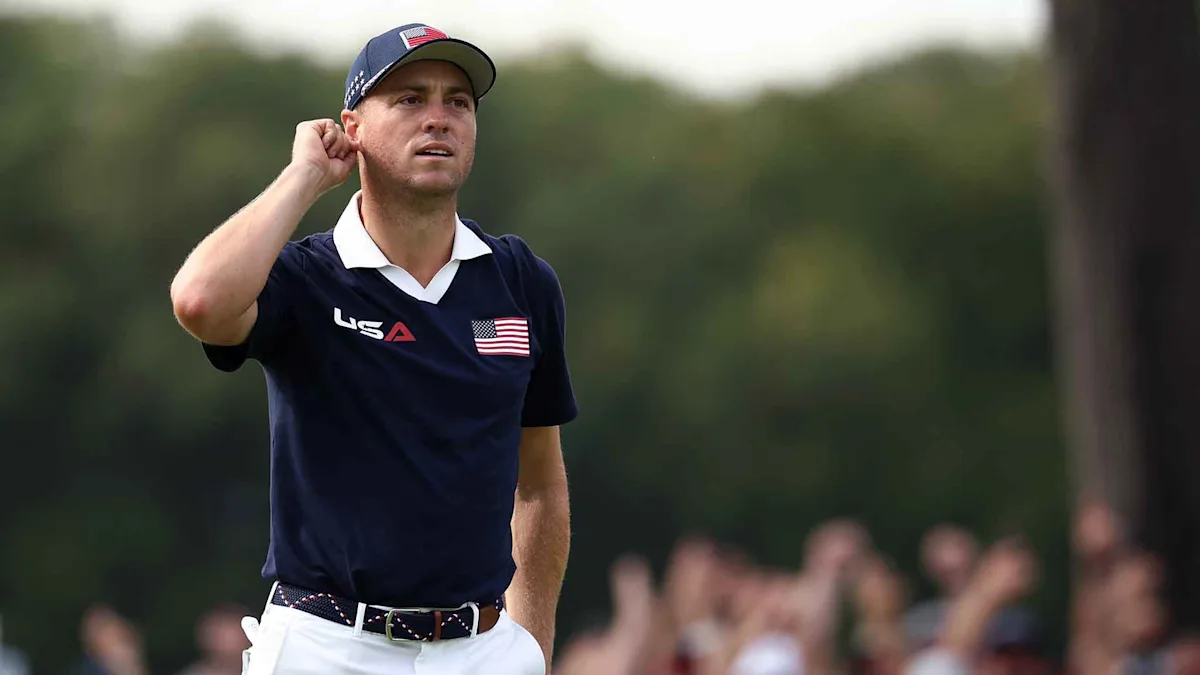
Justin Thomas and the Future of the Ryder Cup: Strategies for Team USA
Getty Images
With the 2025 Ryder Cup held at Bethpage Black still fresh in mind, Justin Thomas’ recent comments stirred considerable discussions among golf enthusiasts and analysts alike. His remarks, initially perceived as a critique of the course setup decisions, were later clarified but not without igniting a firestorm of debate online. While the media often summarizes lengthy interviews into bite-sized snippets, Thomas’ insights about Team USA’s structure deserve a closer examination, especially as the team looks ahead to the 2027 Ryder Cup.
During his appearance on the No Laying Up Podcast, Thomas emphasized the need for synergy within Team USA’s strategic framework. He suggested that adjustments are necessary for the success of the American squad moving forward. "What those specific changes are, I’m not sure entirely," he noted, acknowledging the challenges but also underscoring the opportunities that lie ahead.
A particularly interesting point Thomas made revolves around the distinction—and disconnect—between Team USA and Team Europe. While both teams compete at the same event, they operate under different organizational umbrellas, which significantly impacts their collective strategies. For Team Europe, the intricate relationship between the DP World Tour and their Ryder Cup operations creates an environment conducive to success. On the other hand, Team USA is supported primarily by the PGA of America, whose mission extends beyond the Ryder Cup to encompass broader objectives in growing the game of golf.
The success of the European team is rooted in their commitment to an ongoing partnership fostered by the DP World Tour. This year-round engagement enables players like Rory McIlroy and Viktor Hovland to build meaningful relationships with the tour representatives. They are more than just players during the Ryder Cup; they are historical partners who have shared experiences and goals that transcend individual tournaments. This continuous connection nurtures a sense of camaraderie and trust that often shines through during competition.
In contrast, Team USA’s representation by the PGA of America lacks the same level of consistent interaction. The organization primarily interacts with its players during major events and the Ryder Cup, which limits familiarity. This can create a disconnect, making it harder for the American team to unify under a cohesive strategy. Thomas acknowledges these differences, implying that a more deliberate effort to bridge the gap could offer Team USA a path to improvement.
Moreover, the organizational structure of the two teams significantly influences the mindset of the players heading into the Ryder Cup events. The European team benefits from a well-integrated support system that enhances player performance through familiarity and understanding. For instance, the same sports physiotherapists who support players during the regular season are the same ones present at the Ryder Cup. This level of continuity may contribute to a greater sense of comfort, which could translate to improved performance in high-pressure situations.
The organizational interplay among European players and their governing body also contrasts sharply with the U.S. approach. The PGA of America’s emphasis on individual competition allows for distinct incentives, such as stipends for participation, which ultimately may undermine the collaborative spirit found within the European squad. The European golfers know that their success in the Ryder Cup directly impacts the very tour that fosters their careers. This creates a robust investment in the outcome of every match.
Revisiting Thomas’ vision for a more integrated American team strategy, one could argue that the PGA of America and the PGA Tour should explore a partnership similar to that of Ryder Cup Europe. With the Presidents Cup offering a platform for American golfers to bond and build chemistry, it may be prudent to leverage that event more effectively in cultivating a sense of unity within Team USA.
The urgency for change has intensified, especially given Team USA’s recent performance record. Falling short in five of the last seven Ryder Cup competitions has raised the stakes. Golf’s landscape is increasingly competitive, and lessons from the European team’s success should not be overlooked. As Thomas hinted, aligning the two major events under a more cohesive umbrella could ultimately enable American golfers to bring their best games to the Ryder Cup stage.
In conclusion, Justin Thomas’ comments resonate even beyond the immediate context of the Ryder Cup. They touch upon broader themes of teamwork, strategy, and organizational dynamics in professional sports. Emphasizing synergy between different golf governing bodies may not seem like an immediate answer, but following such a path could provide Team USA with invaluable advantages in the future. As we head towards 2027 and beyond, it will be intriguing to see how Team USA evolves in its approach, potentially learning from its counterparts across the Atlantic. The focus on fostering unity and drawing on common experiences could indeed prove pivotal in reclaiming Ryder Cup glory.


