







The LPGA’s 2026 Season: A Turbulent Start and the Path to Redemption
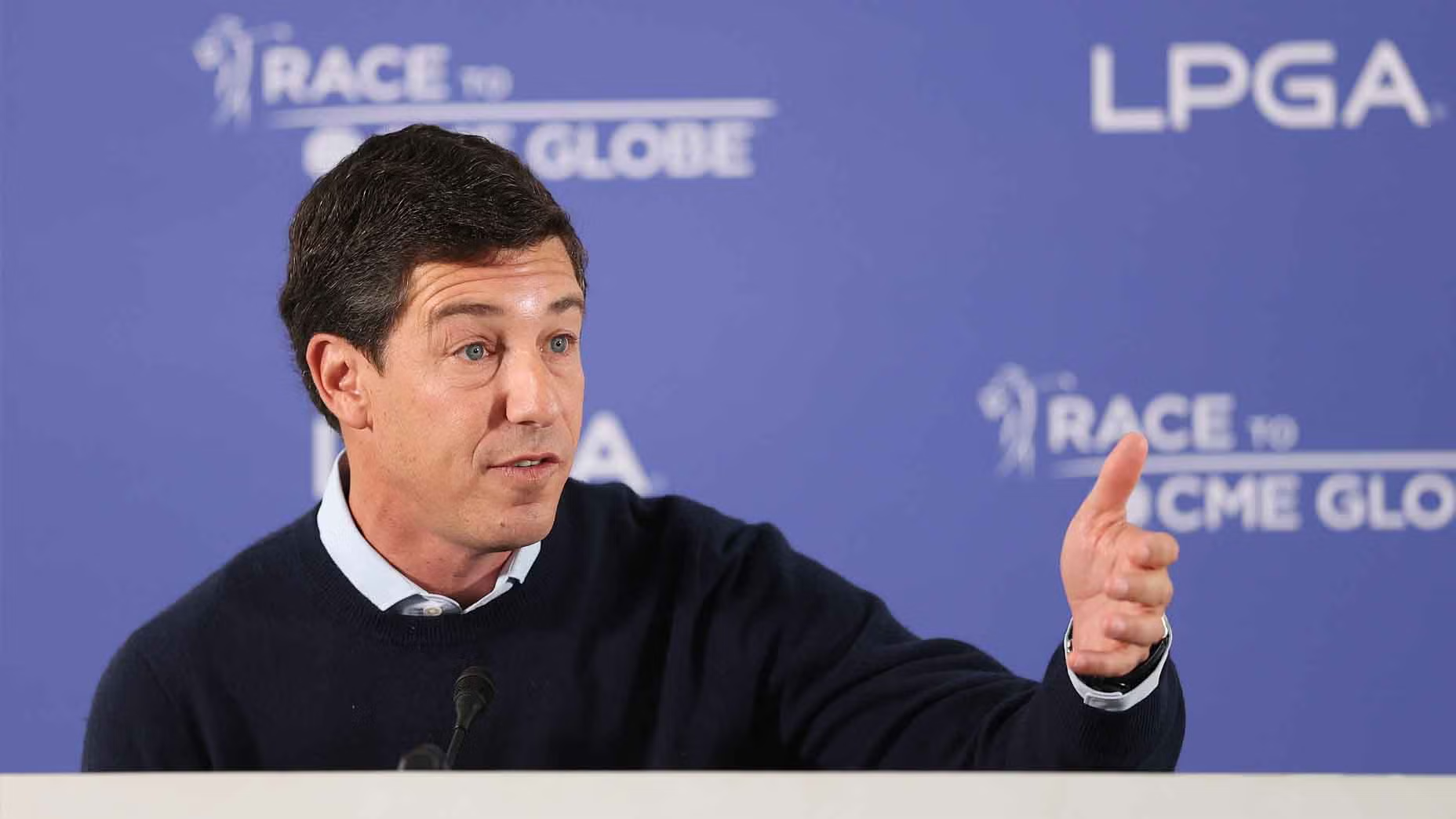
The 2026 season for the Ladies Professional Golf Association (LPGA) commenced with unexpected challenges, leaving many players and fans bewildered. In what could best be described as a controversial start, Craig Kessler, the newly appointed commissioner, expressed regret over the situation that unfolded during the season-opening Tournament of Champions at Lake Nona Golf & Country Club in Orlando.
On Sunday, adverse weather conditions, specifically freezing temperatures, prompted the LPGA to shorten the tournament to 54 holes. This decision, made in real-time, was met with considerable backlash as the communication surrounding it left much to be desired. Notably, World No. 2 Nelly Korda clinched the victory without hitting a shot on the final day, raising eyebrows among spectators and competitors alike.
The Duty of Communication in Sports
In professional sports, the boardroom decisions made by management often ripple through the player ranks and into the fan community. The LPGA’s initial approach was to delay the start of the final round, only to later allow celebrity participants in a pro-am to play while simultaneously declaring the professional athletes unfit to compete. This lack of clear communication understandably sparked confusion and criticism among players and fans who felt left out of the decision-making process.
In a heartfelt memo to LPGA athletes, Commissioner Kessler took responsibility for the mishap, reiterating the league’s commitment to trust and transparency. “When I joined the LPGA last July, I said trust would be our highest priority,” Kessler wrote, acknowledging that this incident tested that trust.
The Chaos of Real-Time Decision-Making
Kessler went on to explain the reasoning behind the significant decision-making process at Lake Nona. Authorities were concerned about player safety due to record low temperatures that had hardened the course, creating potentially hazardous conditions. However, hindsight revealed that alternative avenues could have been explored to maintain competitive fairness without shortening the tournament.
Critics pointed out that if the course was deemed safe enough for celebrity amateurs, it should have been suitable for professionals as well. LPGA legends like Annika Sorenstam were puzzled by the inconsistency and voiced their concerns publicly. Sorenstam, who played as a celebrity during event, expressed disbelief that the pros weren’t competing on what she considered a playable course.
The Role of Governance in Sports Events
The LPGA’s governance structure came under scrutiny as officials announced that the celebrity event was deemed an “exhibition” while also tied to a cash purse. This dissonance in categorization created more questions than answers, particularly about how decisions regarding player safety were made. An official statement cited the lack of an "optimal competitive environment," yet specifics on how the cold weather affected the conditions for pros were lacking.
With the LPGA scheduled for a break until mid-February, many believed a Monday finish would be ideal, as world-class phenom Korda led after scoring a remarkable 64. The aim of showcasing a successful season opener quickly turned into a public relations hurdle that Kessler would need to address moving forward.
Acknowledging Mistakes and Building Trust
Commissioner Kessler’s memo included explicit acknowledgments of the LPGA’s missteps and a promise to improve its operational protocols. The outlined steps aimed to establish clearer principles around decision-making during challenging conditions and enhance communication in real-time scenarios.
In the memo, Kessler emphasized the importance of accountability, reflecting the understanding that every decision carries weight in the broader landscape of professional sports. He assured players and fans that improvement was on the horizon but clarified that perfection was not a realistic expectation. “We won’t be perfect, but we will be accountable, learn quickly, and keep earning your trust,” he affirmed.
Fan Expectations in Professional Sports
The incident stirred conversations about fan expectations regarding transparency and reliability in sports governance. With many fans closely following the LPGA, their voices amplified skepticism about the judgment calls underpinning tournament operations. The ability to maintain an engaging competitive atmosphere while ensuring athlete safety is a delicate balance that Kessler and his team must navigate moving forward.
The tournament’s significance was not lost on Korda, who, despite earning her title without competing in the final round, expressed commitment to advocating for both athlete safety and competitive integrity. Such sentiments resonate deeply within the golfing community, reinforcing that player welfare must remain paramount in all decision-making processes.
Navigating Social Media’s Role in Sports Commentary
In an age where social media serves as a real-time commentary platform, the criticism of the LPGA’s decision-making process quickly gained traction, leading to a broader discourse about governance in sports. Critics leveraged platforms to voice their concerns, pushing the LPGA’s public relations team to engage with an increasingly vocal audience. This brings to the forefront the necessity of responsive governance capable of adapting to unforeseen challenges.
While the decision at Lake Nona may have led to turmoil, it offers a unique opportunity for the LPGA to grow in its approach to transparency, reliability, and communication with its athletes and fanbase. Learning from these moments can yield not just improved governance but an enriched experience for everyone involved.
The Future Awaits: Preparing for Challenges Ahead
As the LPGA moves forward, eyes will remain fixed on how effectively Kessler implements the changes he promised. There’s no doubt that the season’s unexpected start presents lessons that can propel the LPGA toward its eventual goals of growth and enhanced player commitment. Moving forward, the LPGA must embody agility, ensuring that governance structures are robust enough to tackle extreme circumstances as they arise.
Additionally, creating singular standards across player categories—professionals and amateurs alike—will be crucial in preserving the genuine spirit of competition. Establishing clear and unified guidelines for decision-making could build a foundation of trust that resonates deeply within the golf community.
Conclusion: A Call for Understanding and Growth
Ultimately, the LPGA’s 2026 season opener serves as a stark reminder that real-time decision-making in sports can have unforeseen consequences, but those challenges also present opportunities for reflection and growth. As fans and players navigate this tumultuous start, the focus must shift toward constructive dialogue and actionable solutions that foster a culture of trust and collaboration.
Moving forward, the LPGA’s leadership, under Commissioner Kessler, has the potential to not only restore faith among players and fans but also set a pioneering example for sports governance in an ever-evolving landscape. In navigating this trial by fire, the LPGA can fortify its commitment to the sport, its athletes, and the community that passionately supports it.
By tackling these challenges head-on and employing lessons learned to adapt and advance, the LPGA can set the stage for a promising future, beginning with the next chapter of the 2026 season and beyond.


