








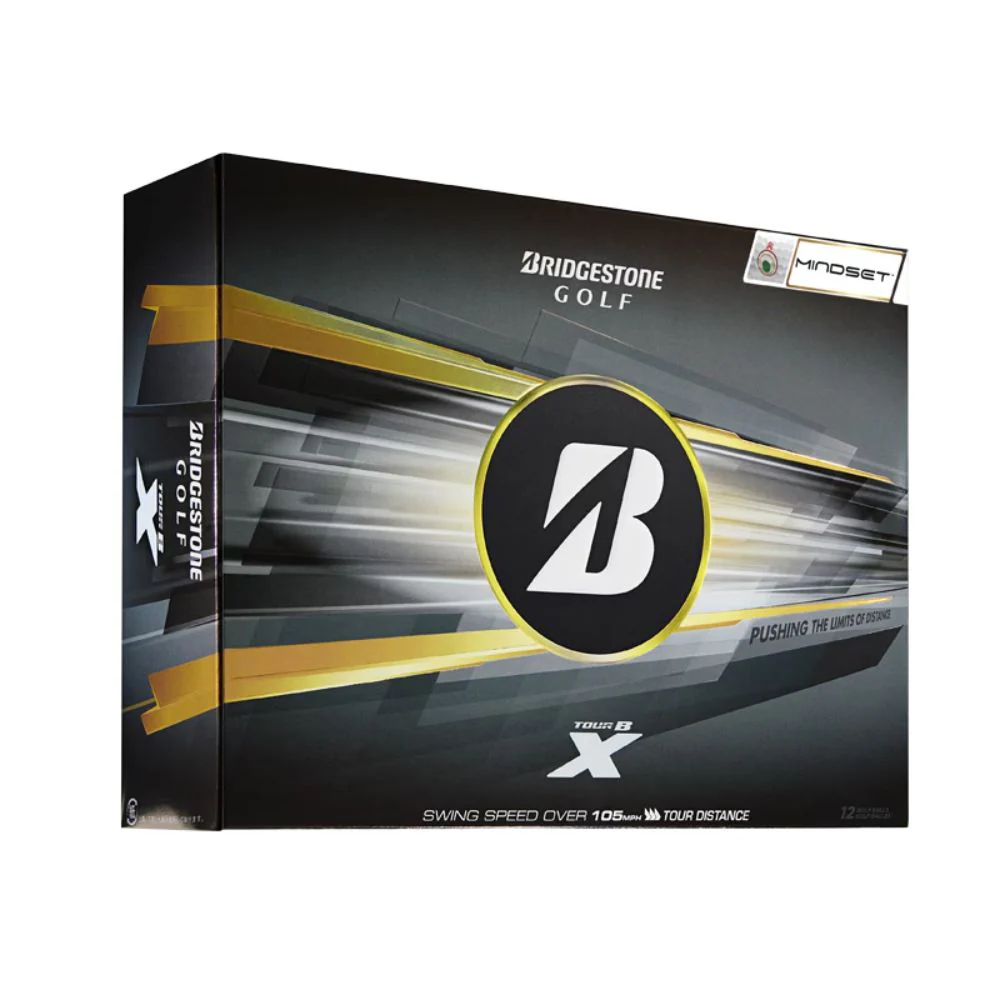
The Bridgestone Tour B X Moment: When Equipment Innovation Actually Moves the Needle
In 35 years of covering professional golf, I’ve watched the equipment industry make a lot of noise about “breakthroughs” that, honestly, amounted to marginal tweaks and clever marketing. A new dimple pattern here, a slightly firmer mantle there—you get the idea. So when Bridgestone’s new Tour B X line arrived on the PGA Tour less than a month ago and Chris Gotterup immediately captured his second win of the season, my first instinct wasn’t to declare a revolution. My second instinct, though? That’s where things get interesting.
What strikes me about this moment is that we’re not looking at a one-off performance or a statistical anomaly. We’re looking at a golf ball that’s demonstrably different in measurable ways, paired with a player who’s executing at an elite level right when the tool enters his hands. That’s a confluence worth examining.
The Numbers Don’t Lie—But Context Matters
Let’s start with the data. During testing, the new Tour B X with its Velo Surge core technology showed an average increase of 2.3 mph in ball speed and 8.7 yards of added distance compared to other new Tour B offerings. On a PGA Tour where equipment is heavily regulated and marginal gains are fiercely fought over, those aren’t rounding errors. They’re meaningful.
Here’s what the specs tell us:
- VeloSurge Core-Mantle Technology: Designed for breakthrough velocity off the tee
- Reactiv iQ Cover: Extended clubface adherence for tour-level spin and greenside control
- MindSet Visual Cue: A three-step mental process (identify target, visualize path, focus on dot) printed directly on the ball
- Available Options: Tour B X for faster swingers; Tour B RX and RXS for players under 105 mph swing speed
But here’s where I need to pump the brakes slightly—and I say this as someone who respects what Bridgestone has accomplished. Equipment matters, absolutely. I’ve caddied in tournaments where a player switched to new irons mid-season and saw immediate improvement. But equipment is maybe 15-20% of the equation at this level. The other 80%? That’s player skill, mental approach, course fit, and timing.
The Gotterup Narrative: Skill Meets Opportunity
Chris Gotterup’s performance at the WM Phoenix Open—opening with a 63, closing with a 64, winning the playoff with a bonus-hole birdie after birdying six of his final seven holes—that’s exceptional golf. The ball didn’t hit those shots. Gotterup did. What the Tour B X appears to have done is given him a tool that feels right in his hands and performs in a way that supports his game.
Gotterup has actually been using Bridgestone equipment since 2023, so this isn’t some sudden conversion story. But as he said in the release:
“With the new TOUR B X, I’m getting max speed and distance off the tee, and total control when it matters most around the greens. As far as I’m concerned, this is the best golf ball I’ve ever played, and the sky is the limit for the rest of the season.”
That confidence matters. In my experience, players perform better when they trust their equipment completely. There’s less swing thought noise, less doubt. Gotterup sounds like he’s found something he believes in.
The Tiger Factor and What It Means for 2026
Here’s where this story gets genuinely interesting from a tour dynamics perspective: Tiger Woods tested this ball and confirmed he’ll use it upon his return to competition in 2026. Now, I’m not going to overstate Tiger’s current influence on the tour—he’s not playing regularly anymore. But when Tiger endorses equipment, it still carries weight. Players watch. Sponsors watch. The narrative matters.
What’s particularly notable is that Woods switched from the softer, spinnier Tour B XS to the firmer Tour B X. That suggests Bridgestone’s engineering convinced him that this iteration offers something meaningfully different. Tiger doesn’t endorse things casually.
“With the new TOUR B X, I’m getting max speed and distance off the tee, and total control when it matters most around the greens.”
Having covered Tiger’s equipment choices for decades, I can tell you: this signals confidence in the product.
The MindSet Element: Psychology Meets Physics
One aspect I find genuinely thoughtful is the MindSet component—a visual cue on the ball itself that guides players through a three-step process developed by Jason Day and his coach. In an era where sports psychology is increasingly recognized as crucial to performance, embedding a mental tool directly into the equipment is clever. It’s not gimmicky; it’s functional. Every time you look at your ball, you’re reminded of your process.
I’ve seen what good process work can do for players. Back in my caddie days, I watched Tom Lehman’s pre-shot routine evolve over the years, and the consistency it created was remarkable. If Bridgestone has found a way to reinforce that kind of discipline through the equipment itself, that’s worth taking seriously.
What This Means for the Rest of 2026
So what do I think happens next? I think we’ll see adoption among tour players who swing the club at high speeds—particularly long hitters who prioritize distance without sacrificing control. The performance gains are real, the design philosophy is sound, and the player testimonials are credible.
Will every player switch? No. Equipment loyalty is real, and what works for Gotterup and Woods won’t necessarily work for everyone. The tour is diverse enough that the softer Tour B models will continue to have strong representation.
But this moment—less than a month in, with two tour wins already in the books and Tiger Woods on board for his return—suggests that Bridgestone has genuinely moved the needle. In my experience, that’s rare enough to warrant attention.


