








Mastering the Takeaway: The Tour-Trusted Two-Ball Drill for Golf Improvements
Master the takeaway with this tour-trusted two-ball drill
Credit: GOLF
A solid golf swing truly begins long before the club makes contact with the ball. The takeaway, which is the initial move in your swing, essentially sets the stage for everything that follows. A well-executed takeaway increases your chances of maintaining club alignment, stabilizing the clubface, and facilitating the correct body rotation — all crucial elements that contribute to power and speed in your swing.
Christine Wang, ranking fifth on the Epson Tour in Greens in Regulation percentage, intimately understands the significance of a proper takeaway. In a recent interview discussing her performance on the greens, Wang attributed a significant portion of her success to the time and effort she invests in refining her takeaway technique.
Wang shared that early in her career, she frequently hinged her wrists too quickly during the takeaway. This premature movement caused her swing to flatten, resulting in a loss of alignment and making it challenging to maintain the right tempo and sequence. As a result, achieving a square clubface at impact became nearly impossible.
"Timing the clubface to square up becomes increasingly challenging if your initial movements aren’t on plane," Wang explained. To address this issue and bring her swing back to plane, she adopted a simple but effective drill that significantly improved this crucial phase of her swing.
The Two-Ball Takeaway Drill: Step-by-Step Guide
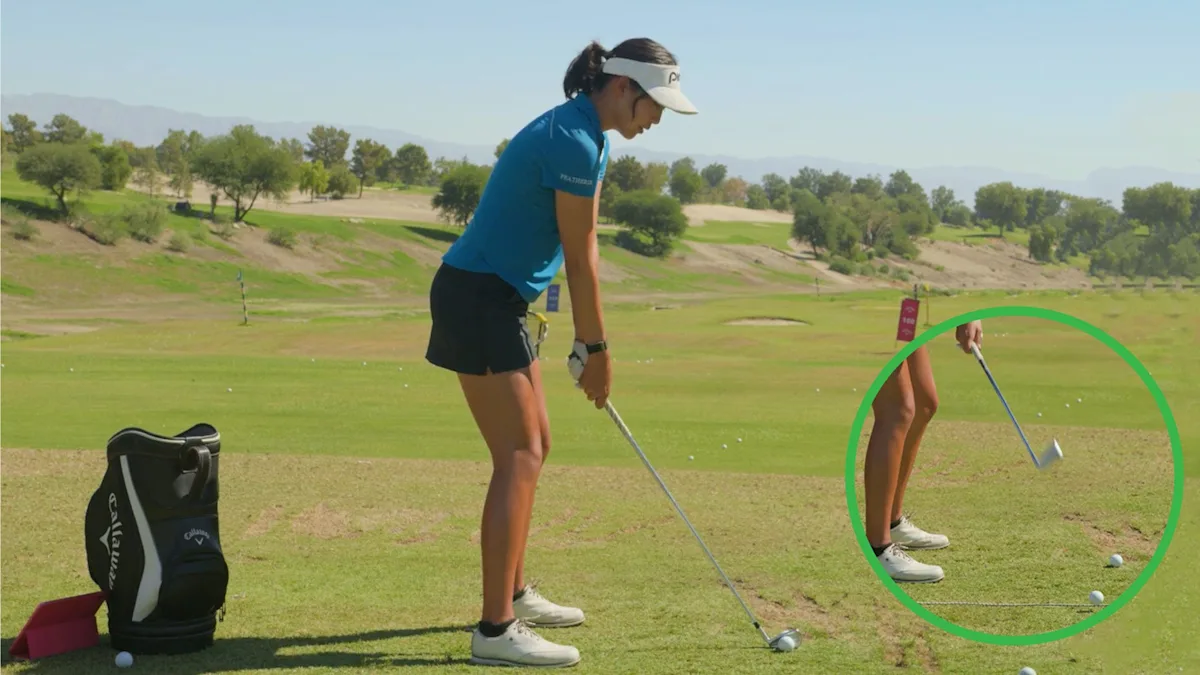
You may be familiar with Wang’s favorite two-ball takeaway drill, a straightforward yet powerful exercise requiring just a club and two golf balls. Implementing this drill can yield immediate feedback on your takeaway, enhancing both form and consistency.
Step 1: Create Your Setup
Begin by creating a "gate" with your two golf balls. Position one ball in your normal hitting area and place the second ball a few inches behind it, ensuring there is enough space for your club to maneuver freely between the two. This setup serves as a guide for your takeaway.
Step 2: Execute the Swing
Assume your typical stance and address the ball. Initiate your swing by slowly moving the club back, ideally halfway or up to the top of your backswing. The objective is to have your clubhead roll the second ball along the intended path of your swing.
As you perform this exercise, you will receive instant feedback. If the rear ball rolls straight back or traces a gentle arc, you’re likely maintaining the correct path. Wang notes, "It’s okay if the ball doesn’t roll perfectly straight back due to the arc of your body movement; aim for the straightest path you can achieve."
Identifying Common Errors
If you notice that the second ball rolls too far inside (toward your body), it typically means you’re hinging too quickly or bringing the club too far inside the target line. Conversely, if the ball barely moves, your takeaway may be too far outside (away from your body).
As you practice, concentrating on the immediate two feet behind the second ball is essential. There’s no need to overexert; you should focus on the path rather than trying to push the ball a great distance. Wang emphasizes that this drill remains a staple in her training regimen. While she may not use it daily, it’s a reliable tool she turns to whenever her swing feels off course.
Building Confidence and Consistency
Even beyond merely correcting takeaway issues, the two-ball drill serves to build confidence in your swing mechanics. By reaffirming that you are on the right trajectory both physically and mentally before making contact with the ball, you can enhance your performance on the golf course.
Fine-Tuning the Upper Body Motion
An important aspect of the takeaway is ensuring that the upper body remains relaxed and engaged. As you incorporate the two-ball drill, pay attention to how your shoulders and arms interact. A rigid upper body can hinder your ability to achieve the correct swing plane.
Wang’s experience reflects the need for a free-flowing upper body movement that can seamlessly transition into the backswing. Increasing awareness of how your body moves can build muscle memory — an essential component in achieving lasting improvement on the course.
Investing Time in Practice
The takeaway is just one component of a full swing, yet its significance cannot be overstated. As amateur golfers strive to lower their scores and enhance their skills, they often overlook the nuances of the takeaway. Investing time in practicing this fundamental motion can yield significant dividends in the form of improved accuracy and distance.
A Long-Term Investment in Your Game
Ultimately, mastering the takeaway isn’t merely a short-term fix but rather a long-term investment in your golfing prowess. As you develop a more reliable takeaway through consistent practice, you may find that other aspects of your swing improve following suit.
Incorporate Drills into Your Regular Routine
Incorporating the two-ball takeaway drill into your regular practice routine can help you establish a more consistent and effective swing. Whether you’re driving at the range or working on your irons, a solid takeaway can set you up for success on every shot.
Conclusion: Drive Your Game Forward
A solid takeaway is the cornerstone of an effective golf swing. Pro golfers like Christine Wang demonstrate just how critical this initial movement is to long-term success. By adopting a structured practice routine that includes the two-ball takeaway drill, golfers of all levels can enhance their performance and drive their game forward.
The essence of your golfing journey starts with an effective takeaway; mastering this critical step could make all the difference. Commit to practicing and refining this aspect of your swing, and you’ll likely see an improvement in your overall performance. Don’t hesitate to revisit the fundamentals frequently — they form the foundation upon which great golf is built.


