







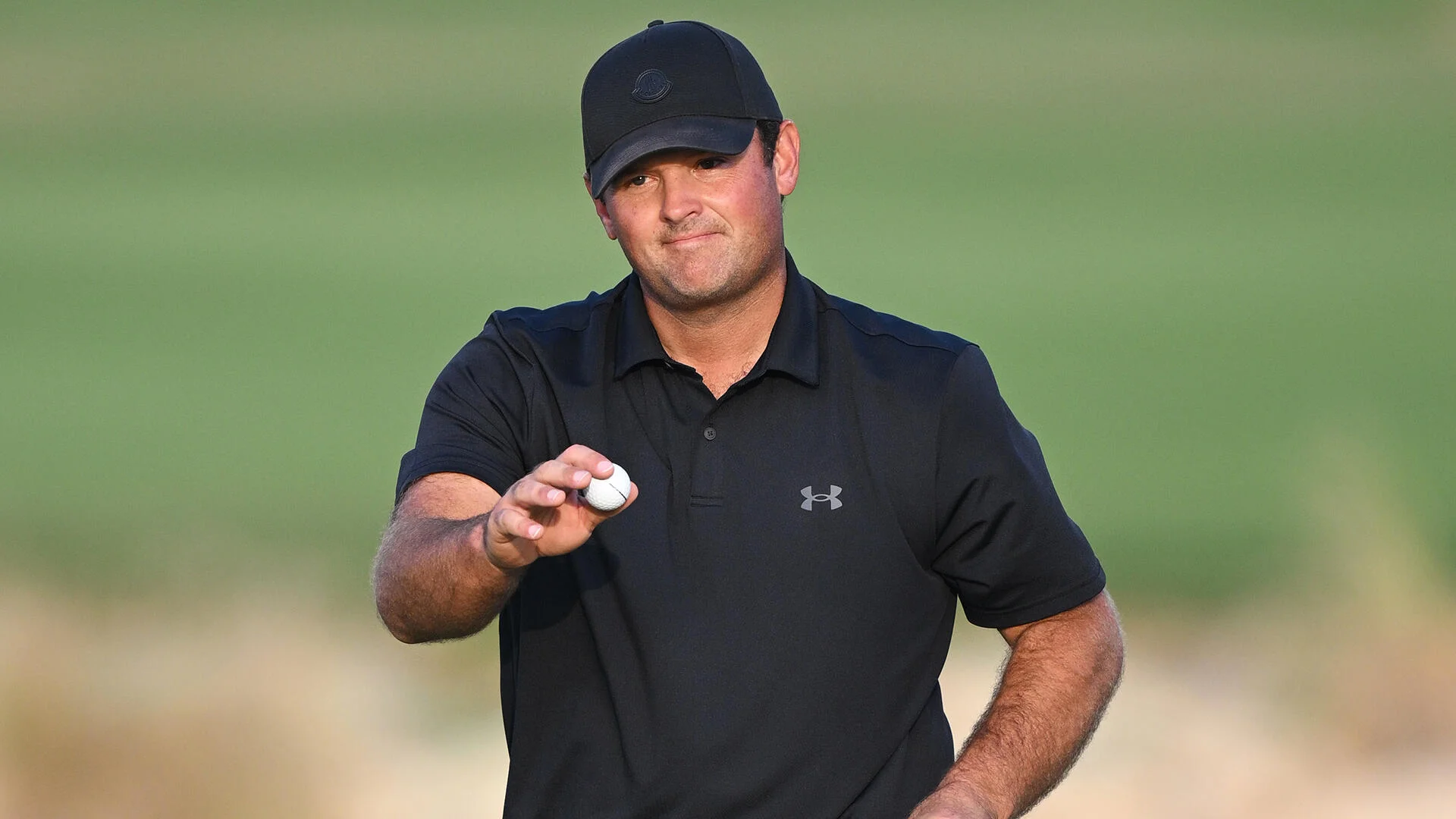
Patrick Reed’s DP World Tour Pivot Could Reshape PGA Tour Re-Entry Strategy
I’ve covered 35 years of professional golf, and I can tell you that what Patrick Reed is doing right now is genuinely clever—and worth watching closely, because it might become a blueprint for other players caught in the limbo between rival tours.
Reed’s two wins in the opening weeks of the 2026 DP World Tour season, capped by his two-shot victory at the Qatar Masters over Calum Hill, isn’t just a nice run of form. It’s a calculated path back to the PGA Tour that sidesteps the traditional power dynamics that have defined the professional game for the past three years. And frankly, after spending 35 years around the tour—including my caddie days with Tom Lehman—I recognize a smart pivot when I see one.
The Math Gets Interesting
Here’s what caught my attention: Reed’s current position in the Race to Dubai standings with 2,260 points puts him in genuinely elite company for PGA Tour re-entry. The historical precedent is telling. Last season, Jordan Smith earned the 10th and final full-time PGA Tour card with 2,203 points. The year before that, Tom McKibbin secured his card with 1,897 points before ultimately choosing LIV Golf instead.
Reed’s point total suggests he’s not just in the conversation for a PGA Tour card—he’s positioned to earn it comfortably. That’s the kind of buffer that matters when you’re betting your career on a season-long grind.
What strikes me most is the elegance of this move. Reed had a past champion exemption sitting in his back pocket, which would have guaranteed him a spot back on the PGA Tour eventually. But why use it when you can prove you’ve still got it at the game’s highest level and earn your way back legitimately? It’s the difference between being handed a chair and pulling one up yourself. Tournament wins look better than exemption clauses when you’re rebuilding your resume.
The Mental Game Within the Game
Let’s talk about what happened on Sunday at the Qatar Masters, because it reveals something important about Reed’s current state of mind. He posted an underwhelming front nine—1-over 37 with 18 putts—that actually cost him his lead. Calum Hill, meanwhile, was surging with a back-nine 30 that included four consecutive birdies from holes 14-17. By the turn, Reed was chasing.
Here’s where experience matters. I’ve watched players of Reed’s caliber handle adversity for decades, and the ones who stick around do exactly what he did: they flip the script. Rather than panic, Reed made a conscious decision. In his own words:
“To lose the lead like that and then to be able to kind of flip the switch there on the back nine obviously felt amazing. I just needed a putt to go in.”
That’s not luck talking—that’s tournament golf. Reed authored three birdies across holes 10-14, including what he called “a pearl into No. 14,” and suddenly the tournament was his. The stat that matters: 18 putts on the front nine versus the fluidity that came on the back. He identified the problem, adjusted his approach, and executed.
In my experience, that’s the signature of a player who knows how to win majors. Reed proved it at the 2018 Masters, and on Sundays like this one, you see echoes of that same mentality.
The Bigger Picture for Professional Golf
What really interests me, though, is what Reed’s success might mean for the larger ecosystem of professional golf. He’s now won twice in the early portion of the DP World Tour season while completely sidestepping the LIV Golf commitment that created this entire situation in the first place. That’s significant.
When Reed publicly announced he was leaving 4Aces Golf and the LIV circuit to focus on DP World Tour events, some observers treated it as a retreat. I see it differently. It’s pragmatism. The DP World Tour offers a clear pathway back to the PGA Tour through the Race to Dubai, and Reed recognized that path was more reliable—and more winnable—than waiting for a LIV invitation to lead somewhere.
Reed himself acknowledged the quality of his recent play:
“The golf we’ve played since basically the offseason has been some stellar golf. I feel really confident in my golf game right now.”
That confidence matters because it’s grounded in results, not wishful thinking. Two wins and a second-place finish in the early going isn’t a lucky streak. It’s evidence that his game is sharp, his decision-making is sound, and his ability to close tournaments remains intact.
What Comes Next
The remaining DP World Tour season will tell us whether Reed can sustain this level or if these early wins represent a peak. But even if the wins dry up, his current point total suggests he has enough cushion to secure a PGA Tour card. That’s the real victory here—Reed has essentially locked down his re-entry before summer.
That means the rest of the season becomes about something else entirely: building momentum and confidence for a return to the PGA Tour circuit. Every birdie, every tournament victory, every solid finish becomes a statement about his readiness to compete at the highest level.
In three decades covering this game, I’ve learned that the players who thrive through transitions are the ones who control their narrative. Reed is doing exactly that. He’s not asking for his tour card back. He’s earning it.


