






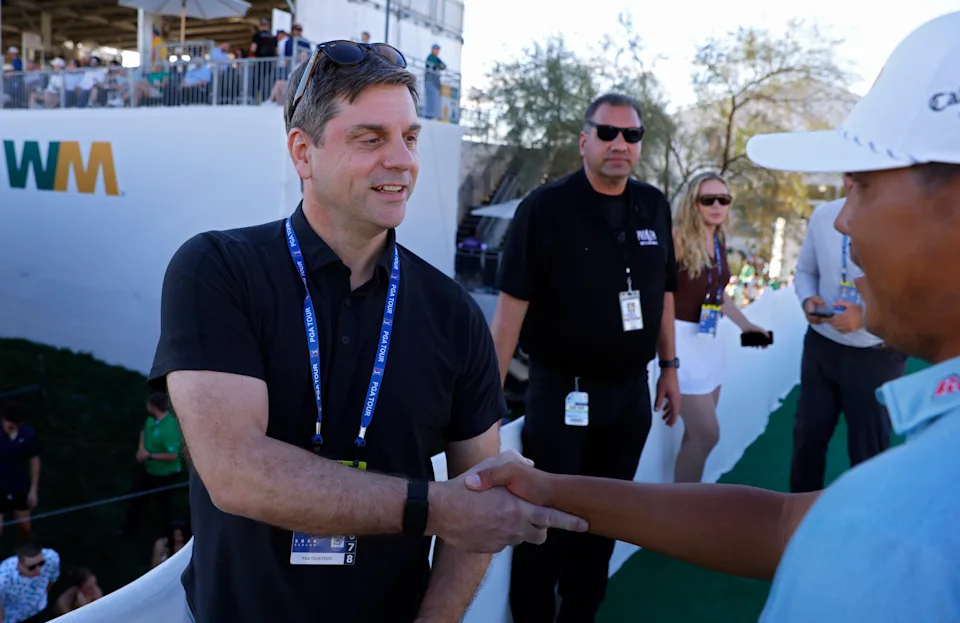


Brian Rolapp Brings NFL Discipline to Golf’s Greatest Upheaval
After 35 years covering professional golf, I’ve watched this sport navigate plenty of turning points. But watching Brian Rolapp settle into his role as PGA Tour CEO these past few months? This feels different. Not because the Tour’s facing existential questions—we’ve been there before. But because for the first time in recent memory, we’ve got a leader from outside the golf bubble who actually understands how to operate at the highest levels of sports business, and he’s not afraid to shake things up.
What strikes me most about Rolapp’s entrance into golf isn’t his resume from 23 years at the NFL. It’s his humility paired with clear-eyed ambition. The man waited tables at a Marriott steakhouse in Bethesda during college and years later found himself across from Jim Nantz covering the Kemper Open. He remembered it. He thanked Nantz for his time. Now he’s running the show.
That’s not sentimentality. That’s someone who understands you build empires on relationships, not mandates.
A Fresh Perspective on an Old Institution
Having caddied on tour back in the ’90s and covered 15 Masters tournaments, I’ve seen what happens when golf gets too insular. The sport can become precious about its traditions while missing opportunities that fans actually crave. Rolapp gets this in a way I suspect Jay Monahan, for all his diplomatic skills, never quite did.
During that CBS event at Pebble Beach—the same course Rolapp once peered through the gates at as a broke graduate student—he made a telling comment about his philosophy. David Berson, CBS’s President, recalled Rolapp’s public letter upon taking the job:
“He said something akin to we want to honor the traditions of the game but not be overly bound by them.”
That’s the needle this sport needs to thread right now. Golf’s traditions are its strength—the majors, the historic courses, the gentleman’s code—but blind devotion to “how we’ve always done it” is exactly what allowed LIV to gain traction in the first place. Players want competition that matters. Fans want to see the best play the best more often. Both of those things are reasonable.
What’s encouraging is that Rolapp isn’t keeping his cards hidden. CBS’s Berson confirmed the Tour and its broadcast partners are already in serious conversations about structural changes. Berson wouldn’t tip his hand on specifics, but he did hint at something significant:
“The concept of having events of more consequence and having events featuring the best players in the world playing against each other more often is something that we and other media partners and the Tour and the fans all should be excited about.”
Translation: The Tour knows its scheduling needs overhaul. Too many weeks feature fragmented fields. Too many tournaments feel interchangeable. Real change is coming.
The Partnership Angle Nobody’s Talking About
Here’s what I found most revealing from that Pebble Beach gathering: Rolapp’s emphasis on partners. He mentioned AT&T, the Tour’s longest-running sponsor dating back to 1986. He spoke warmly about his working relationship with Berson, deals made “mostly on a handshake” back in his NFL days. He’s clearly someone who understands that you don’t run a sports property successfully by decree—you do it by earning buy-in from stakeholders.
In my experience, that’s rare among newly-minted executives in sports. Many come in wanting to immediately prove they’re the smartest person in the room. Rolapp seems more interested in being the most collaborative. Berson noted:
“He’s surrounding himself with people that can challenge him, can add perspective and are also willing to make changes when necessary.”
That’s not throwaway praise. That’s a broadcast president saying, “This guy actually listens.” Try finding that quality in sports leadership more broadly.
What This Actually Means for Golf
The real story here isn’t Rolapp’s personal narrative—charming as it is—it’s what an NFL veteran with his background can bring to golf’s governance. The NFL built a $25 billion annual business through relentless focus on competitive balance, compelling narratives, and media innovation. Yes, the league has flaws. Yes, it’s far more commercial than golf purists might like. But there’s no denying it maximizes fan engagement.
Golf’s operating on a different scale, which is fine. But if Rolapp can transplant even 30% of that strategic thinking into Tour operations, we’re looking at a sport that’s simultaneously more traditional and more progressive than we’ve seen in decades.
The WM Phoenix Open—where Rolapp watched his first Super Bowl as Tour CEO instead of from a host venue—is an example of what the Tour does right. It’s wild, wacky, fan-friendly chaos that still respects the game. More events should capture that spirit without sacrificing competitive integrity.
The Road Ahead
I’m not going to pretend I know exactly what changes are coming. Nobody outside the Tour’s leadership circle does yet, and that’s appropriate. What I know is this: A 35-year career covering this game taught me that golf thrives on competence and respect. Rolapp’s shown both already. He’s not tried to immediately impose an agenda. He’s studied the landscape. He’s built coalitions. He’s being transparent about his intentions while remaining appropriately cautious about specifics.
That’s the opposite of how many major sports initiatives have rolled out in recent years, and frankly, it’s refreshing.
Golf’s at an inflection point. For the first time in professional golf’s modern era, we’ve got leadership that understands both the traditions that make this sport great and the business realities that will keep it thriving. That’s worth watching closely, and so far, I like what I’m seeing.


