







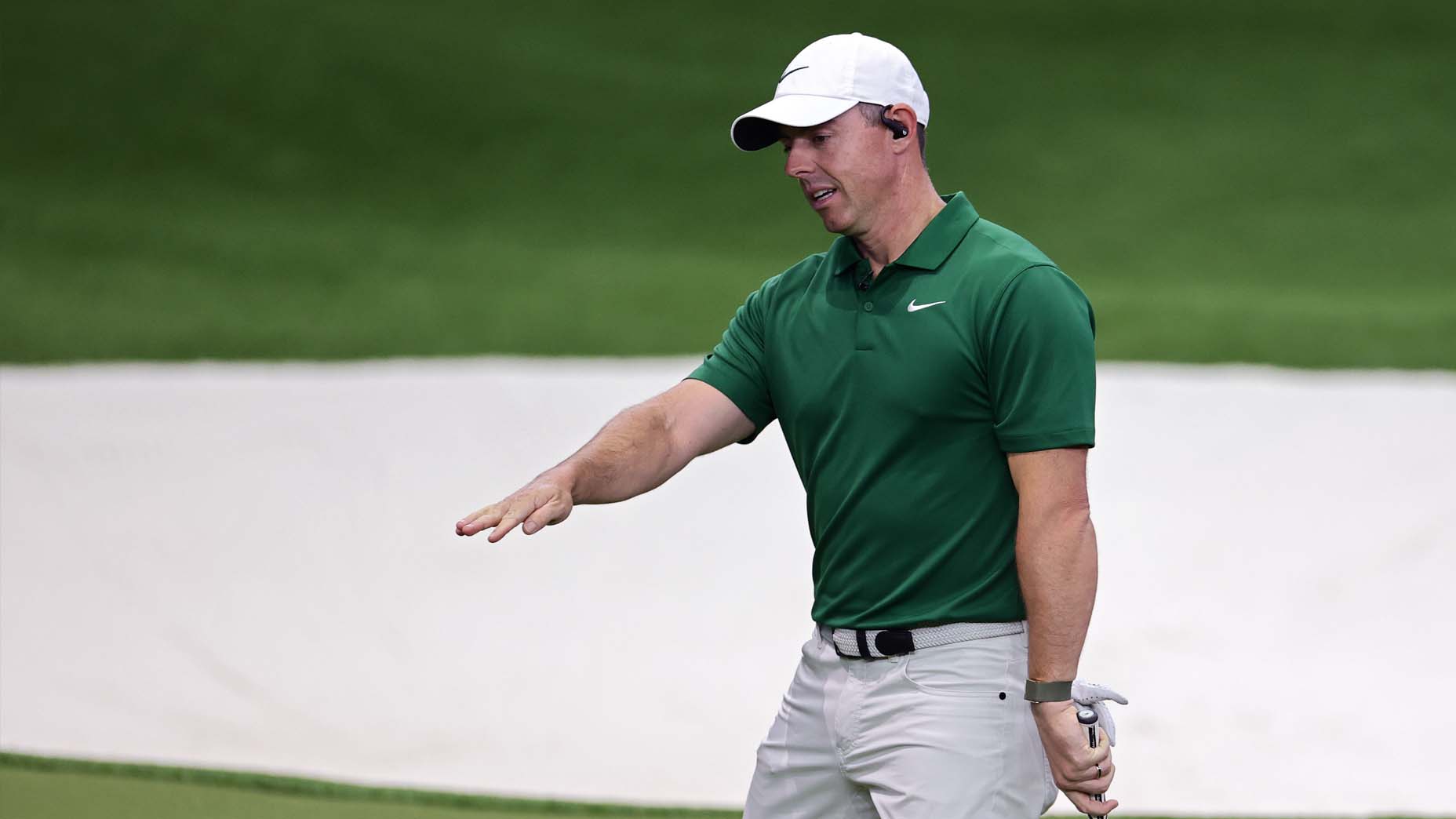


The TGL match between Rory McIlroy’s Boston Common Golf and Tiger Woods’ Jupiter Links on Monday night was a successful one, potentially showing the league the formula for long-term success. However, there are still kinks to be ironed out, new ideas to be tested, and an identity to be formed for the high-tech simulator league. One of the biggest concerns during the first month of TGL was around the simulator technology, high-tech green, and the integrity of both.
The Full Swing simulator used in the league drew some confused reactions from Woods, Max Homa, and Kevin Kisner during their first match. The green complex has also presented problems as pros have struggled to control the speed of their putts. McIlroy, one of the co-founders of TGL, highlighted the bunkers as a significant issue affecting gameplay. He mentioned that the drying sand in the bunkers makes it challenging for players to execute bunker shots effectively.
Despite some initial concerns about the integrity of TGL’s technology, McIlroy’s pre-match practice session helped alleviate those worries. He brought two other launch monitors with him and found that the numbers were virtually identical across all three devices. McIlroy emphasized the importance of trust in the technology, especially when hitting into a screen instead of a live target. He suggested that with more practice and familiarization, players can learn to trust the simulator’s readings and improve their performance.
McIlroy’s Boston Common Golf team will be facing Los Angeles Golf Club in their next TGL match, while he focuses on helping the PGA Tour regain momentum in the regular season. As the Tour looks for a boost, TGL continues to evolve and improve with each match. With time and experience, both the league and its players are expected to become more comfortable and confident in the high-tech environment. Overall, the recent TGL match between McIlroy and Woods showcased the potential for long-term success and growth for the startup league.


