








The Phoenix Rising: Why Sunday’s Desert Showdown Matters More Than You Think
Here’s what I’ve learned in 35 years of watching professional golf: the best tournaments aren’t won by the guy who shoots the lowest score on Sunday. They’re won by the player who understands how to orchestrate a comeback, who knows his own game well enough to trust it when the pressure mounts, and who can tap into something deeper than mechanics when the stakes are highest.
This Sunday at TPC Scottsdale, we’re going to see exactly that dynamic play out in the Arizona desert, and it’s going to tell us more about the state of professional golf than any stats sheet ever could.
Matsuyama’s Moment—Or Is It?
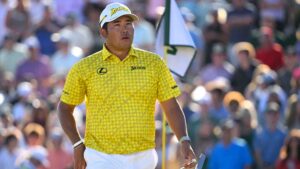
Let’s start with the obvious: Hideki Matsuyama walks into Sunday’s finale with a one-shot lead, and two previous WM Phoenix Open titles under his belt. That’s the kind of resume that should make you feel pretty comfortable headed into 18 holes. The guy knows this place. He’s celebrated here before. The Stadium Course at Scottsdale shouldn’t hold many secrets for him at this point.
But here’s what I think matters more than his position on the leaderboard: he’s got legitimate firepower bearing down on him from multiple angles. Si Woo Kim, Nicolai Hojgaard, Maverick McNealy, and Ryo Hisatsune are all within striking distance. That’s not a lead—that’s a starting line. In my experience covering tour events, when you’ve got that many quality players bunched within a shot or two, the guy in front often gets swallowed up by the chaos. The pressure doesn’t work the same way when there’s no clear frontrunner. Everyone smells opportunity.
The Scheffler Factor: Greatness Defined by Response
Now let’s talk about the real story here, because it isn’t actually about the man leading the tournament.
“I’ve put myself in contention from this exact position in this golf tournament, and it’s one of those places you can get hot. That’s what I’ll be looking to do over the weekend.”
Scottie Scheffler came to Phoenix as the World No. 1, and by Thursday evening, he’d already handed his competitors a gift: an uncharacteristic 73 in the opening round. For most players on tour, that would be the story. That would be the excuse. That would be the beginning of a long weekend of frustration.
What strikes me about Scheffler’s response—and this is where I’m genuinely impressed—is how quickly he pivoted. Two consecutive rounds at 10 under to claw back to just five shots out. That’s not desperation golf. That’s not wild swinging. That’s the golf of someone who has complete confidence in his process and knows that one bad round doesn’t define a tournament.
Having caddied for Tom Lehman in the ’90s, I saw that same quality up close. Tom would shoot an 73 on Friday at a major, and instead of pressing on Saturday, he’d somehow find another gear. It’s a mental skill that separates the truly elite from everyone else. Scheffler has it in spades.
The fact that he believes he can win from five back—and based on his recent play, he absolutely can—tells you everything you need to know about where his head is at.
A Loaded Final Pairing
Matt Fitzpatrick, Akshay Bhatia, Chris Gotterup, and Viktor Hovland round out the contenders within reasonable striking distance. What we’re looking at is essentially the future of professional golf lined up from Friday evening forward. These are players in their prime, hungry, and playing well enough to capitalize on any mistakes from the leaders.
In my 15 Masters coverages alone, I’ve seen tournament leaders wilt under this exact scenario—when the field is too stacked with talent to make any one threat obvious. It diffuses the pressure in unexpected ways. Matsuyama will have to be nearly flawless to hold on, and that’s actually the kind of situation where the player with the one-shot lead is at a subtle disadvantage.
Money and Momentum
The WM Phoenix Open purse has grown to a serious level—$1.728 million to the winner, with the 2026 payout breakdown showing genuine depth in compensation all the way down the field. That’s important context. This isn’t just a prestige tournament anymore; it’s a genuine financial milestone that can shape someone’s year. Early-season wins matter for momentum, for FedEx Cup positioning, for confidence as the tour moves deeper into the West Coast swing.
What I’m watching for on Sunday isn’t just who wins the golf tournament. I’m watching to see which of these elite players can manage the pressure of a crowded leaderboard, which one can hit the shots when they matter most, and which one truly understands his own game under duress.
My money is on a drama-filled Sunday where multiple players find themselves within a shot or two heading into the back nine. The question isn’t whether we’ll get fireworks in the desert—we will. The question is who has the temperament and the game to handle them when things get tight.
That’s Phoenix golf. That’s what makes this tournament special.


