








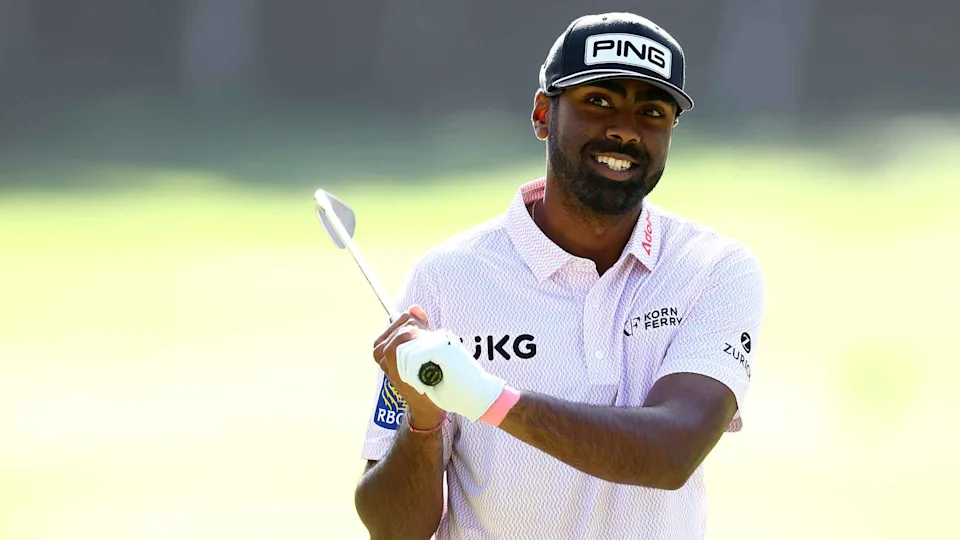
Theegala’s Chipping Philosophy Could Be the Antidote to Golf’s Distance Arms Race
Last week at TPC Scottsdale, something refreshing happened in a PGA Tour press room. A 15-year-old reporter asked Sahith Theegala a simple question about how junior golfers should develop their games, and the answer cut through all the noise we’ve been hearing about launch monitors, TrackMan data, and the relentless pursuit of longer drives.
In my 35 years covering this game—including a stint caddying for Tom Lehman back when we actually thought about trajectory and course management—I’ve watched the sport chase numerous trends. But this distance obsession feels different. It’s almost manic. And Theegala’s response deserves more attention than a casual read-through of the press notes.
When More Isn’t Better
Here’s what struck me most about what Theegala told young Maverick Midthun from Today’s Junior Golfer:
“I’m seeing guys that are in high school and college hit it further than guys on Tour. The distance thing is a big thing. I think something that’s—it’s easier said than done, but just ignoring that part and finding your own path. I’ve seen a lot of kids lose their game trying to chase distance rather than hone in their craft.”
That’s not the sort of thing you hear from Tour players very often. Usually, when asked about the modern game, guys talk about how important it is to compete in every statistical category. They’ll mention adapting to the new equipment, the speeds, the physicality required. Theegala’s taking the opposite approach, and frankly, it’s more honest than most.
What interests me most is his willingness to acknowledge something the data evangelists don’t like to admit: some young golfers are genuinely sabotaging themselves by chasing metrics instead of mastering fundamentals. In my experience covering junior tournaments over the decades, I’ve seen plenty of 16-year-olds who can absolutely bomb it—they’ve got club head speeds that would make some Tour guys jealous. But ask them to flight a 7-iron down into a tight pin or chip from rough with touch, and they look lost.
The irony? Many of them don’t end up on the PGA Tour. The ones who do tend to have spent real time developing what we used to call “touch.”
Play to Your Strengths, Not Your Weaknesses
The second part of Theegala’s philosophy deserves its own examination. He’s essentially arguing against the prevailing wisdom that you should identify and fix your weaknesses. Instead, he’s recommending players lean into what they love most about their game.
“I struggled with my driver a lot early on. I knew I was struggling with driver, but when I was doing chipping contests or chipping games or working on a crazy spinny chip, I forgot about all the other stuff, all the other parts of the game. So I just wanted to feel like my chipping was better than anyone else’s chipping. In a way, it freed up the rest of my game as well.”
This is psychological insight wrapped in golf instruction, and it’s something the analytics crowd occasionally misses. Yes, you need to address significant weaknesses—nobody’s arguing that a Tour player can completely ignore their driver if it’s costing them strokes. But there’s something to be said for building confidence and creating positive momentum by dominating an area you genuinely enjoy.
Having caddied in the ’90s and early 2000s, I saw plenty of players improve dramatically once they stopped playing golf like they were completing a checklist. The best ones had a favorite shot. They’d practice it obsessively, sometimes to the point where it seemed like overkill. But that confidence bled into the rest of their games.
The Proof Is In The Performance
Now, you could dismiss Theegala’s approach as charming but ultimately not optimal for modern Tour golf. Except the results argue otherwise. Last year, he ranked 13th on Tour in scrambling from 20-30 yards—exactly the area he’d been obsessing over since he was younger—while sitting at 102nd in driving distance. That’s not a freak anomaly either. With a current world ranking of 92 and a Tour victory already on his resume, Theegala is living proof that you don’t need to be a bomber to compete at the highest level.
What I think is happening here is that Theegala is swimming against a powerful current and doing so successfully. The modern Tour narrative basically requires players to be complete. They should crush it off the tee, hit greens in regulation at elite rates, and be exceptional everywhere else. But that narrative was written by equipment manufacturers, analytics companies, and a media that finds distance numbers exciting.
The reality is more nuanced. There’s always room on the PGA Tour for specialists—players who have such a pronounced advantage in one or two areas that they can overcome relative weaknesses elsewhere.
An Important Message for the Next Generation
I also want to give credit where it’s due: having a 15-year-old junior golfer in the press room at a PGA Tour event, asking substantive questions through an initiative like Today’s Junior Golfer, is genuinely meaningful. The fact that players like Theegala, along with presumably Scottie Scheffler and Brooks Koepka on that panel, were willing to engage thoughtfully with a young reporter speaks to something good happening in the game.
And Theegala’s message to that next generation—find what you love, master it, let the rest follow—is far more useful than the usual “work on your weaknesses” drill that juniors hear constantly.
In my three decades covering this tour, I’ve noticed that the best players tend to be the ones who figured out early what made them different, not what made them the same as everyone else. Theegala’s advice is a welcome reminder of that in an era when we’ve convinced ourselves that golf success requires conformity to a specific model.


