







The WM Phoenix Open’s Playoff Paradox: Why TPC Scottsdale Has Become Sudden-Death Central
I’ve been covering professional golf for 35 years, and if there’s one thing I’ve learned, it’s that patterns in tournament golf aren’t accidents—they’re whispers from the course itself. And right now, TPC Scottsdale is practically shouting.
The numbers tell a fascinating story. Since moving to the Stadium Course in 1987, we’ve seen 12 playoffs at the WM Phoenix Open. That’s roughly one every three years, which sounds routine enough. But here’s where it gets interesting: the last seven years have been anything but routine.
A Curious Pattern Emerges
Look at what’s happened in the even-numbered years:
2024: Nick Taylor def. Charley Hoffman, 2 holes
2022: Scottie Scheffler def. Patrick Cantlay, 3 holes
2020: Webb Simpson def. Tony Finau, 1 hole
2018: Gary Woodland def. Chez Reavie, 1 hole
That’s four playoffs in the last seven years, with one appearing like clockwork every other year during even-numbered seasons. Before that, 2016 saw another playoff—actually three in a row from 2016 to 2018. What strikes me most is the consistency of it. In my three decades around the tour, you don’t often see that kind of pattern without something structural driving it.
Now, I’m not suggesting the PGA Tour is rigging anything—that’s not my style, and it’s not true. What I am saying is that TPC Scottsdale, with its unique design and those notoriously finicky greens, seems to be perfectly calibrated to produce dramatic finishes. The Stadium Course doesn’t give up victories easily.
The Hideki Factor and What It Tells Us
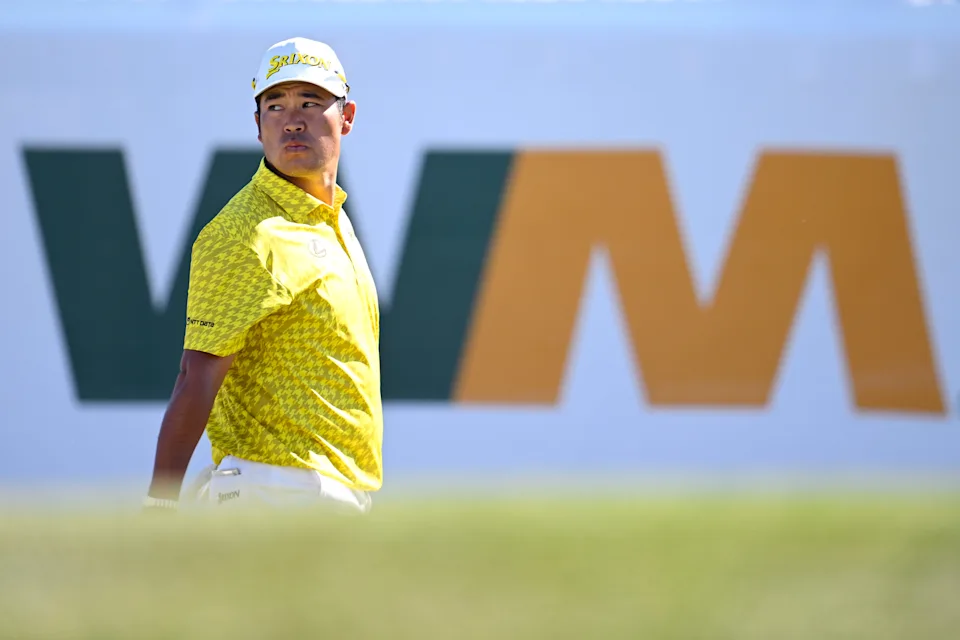
Then there’s Hideki Matsuyama, the 2026 third-round leader, who has won this event twice—in 2016 and 2017—both times winning his playoff in exactly four holes. What are the odds of that kind of precision? Hideki’s victories aren’t just notable; they’re a master class in high-pressure golf. The guy thrives when the stakes are highest.
Through 54 holes in 2026, we’re looking at a wide-open field: nine players within two shots, 15 within four, and 21 within six heading into Sunday. Having covered 15 Masters and caddied for Tom Lehman back in the ’90s, I can tell you that this kind of bunching isn’t a sign of soft competition—it’s a sign of a golf course that’s playing fair. When that many competitors are in contention, you’ve got elite-level play meeting a course that’s respecting talent across the board.
The Television Wild Card
Here’s something that doesn’t get talked about enough: the elephant in the room is the Super Bowl. CBS has the golf coverage while NBC holds the rights to the Big Game, and that creates a logistical constraint unlike anything else on the tour calendar.
The WM Phoenix Open live TV coverage is scheduled to go until 6 p.m. ET (4 p.m. Arizona time). The Super Bowl kickoff about 6:30 p.m. ET (4:30 p.m. Arizona time) so that gives a potential playoff about 30 minutes to wrap up.
I think this is underrated as a factor in how tournaments play out. While I wouldn’t suggest players are consciously thinking about the Super Bowl, the pressure cooker environment it creates—knowing there’s a hard stop on coverage—absolutely affects the competitive dynamic. There’s an intensity that comes with knowing the whole nation might flip over to football in the middle of your playoff. It’s golf theater at its finest, for better or worse.
What This Means for the Game
From an analytical standpoint, I see TPC Scottsdale as a case study in how modern PGA Tour venues are designed to deliver drama. That’s not a criticism—it’s actually a strength. The tour needs events that capture imaginations, and a playoff-prone course with this kind of architecture does exactly that. Fans remember suddenly-death golf. They remember Nick Taylor holing crucial putts against Charley Hoffman, and Scottie Scheffler winning his second in three years over Patrick Cantlay.
The tightness of the 2026 field also reflects something positive about professional golf: parity. When 21 players are within six shots heading into Sunday, you’re not watching a coronation—you’re watching genuine competition where execution matters. The margin for error has shrunk dramatically from the era when I caddied, and that’s a good thing for the sport.
Looking Ahead
Will we see playoff golf again in 2026? The pattern suggests we might. The course certainly seems to enjoy it. What I’m confident about is this: whoever wins at TPC Scottsdale will have earned it through nerves of steel and shotmaking under pressure. That’s what the Stadium Course demands, and that’s what makes this event essential viewing for anyone serious about professional golf.
The WM Phoenix Open isn’t just a tournament—it’s become a statement about where the modern PGA Tour stands: competitive, unpredictable, and beautifully dramatic.


