






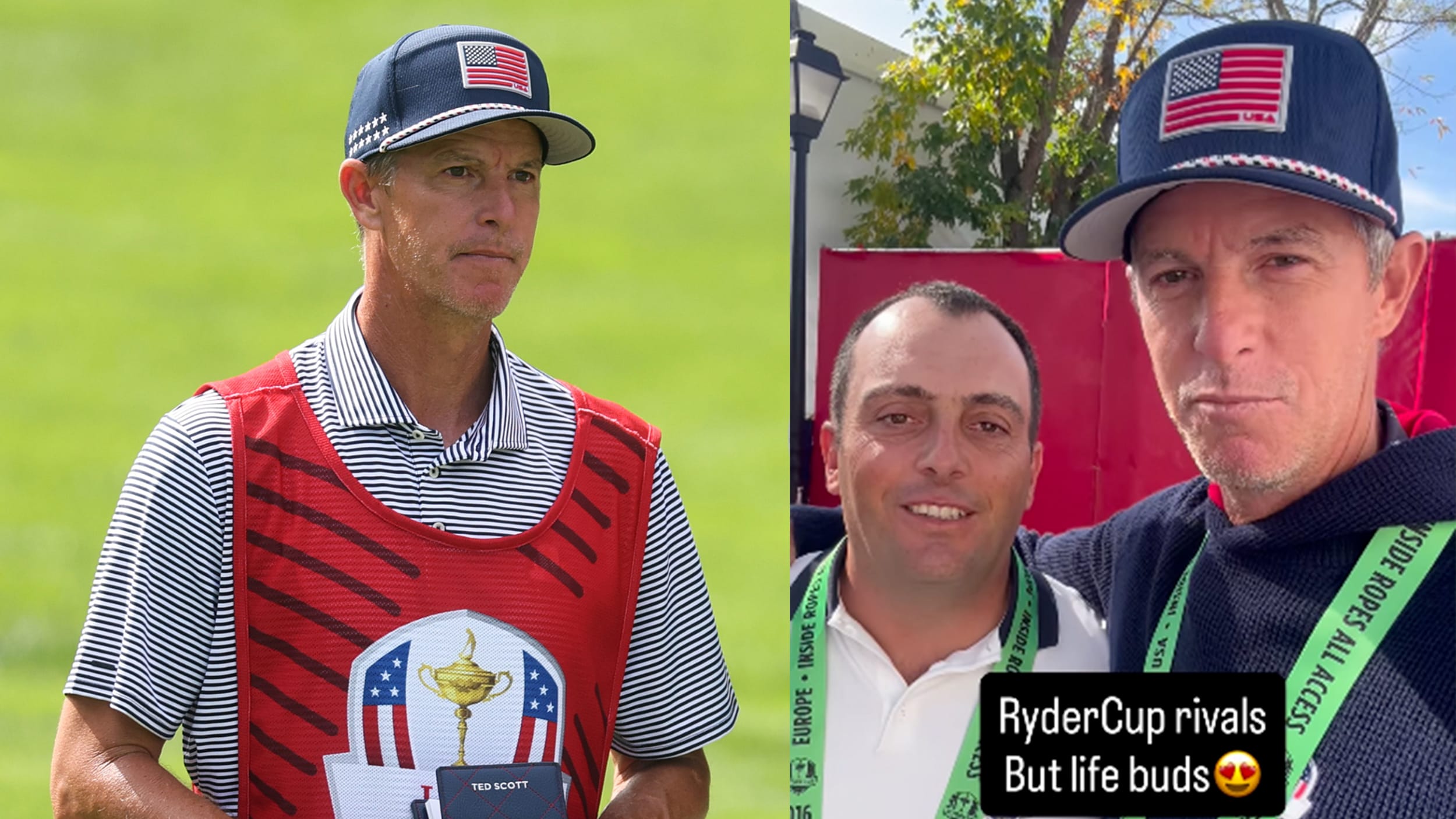
Tensions Rise at Ryder Cup: Scottie Scheffler’s Caddie Issues Apology to Francesco Molinari
The Ryder Cup, a prestigious golf tournament pitting the best players from Europe against their American counterparts, is not just about skill; it’s also a battleground of emotions and sportsmanship. Recently, an intense incident unfolded during the Saturday afternoon four-ball session, underscoring the competitive spirit that defines this historic competition. Scottie Scheffler’s caddie, Ted Scott, found himself in the spotlight after a heated exchange with European vice-captain Francesco Molinari, leading to Scott’s heartfelt public apology.
The Incident Unfolds on the 15th Green
The sparks flew on the 15th green when Justin Rose, a seasoned competitor for Europe, requested Bryson DeChambeau’s caddie, Gregory Bodine, to step aside, as he was obstructing his line to the hole. This seemingly minor request escalated quickly. Tensions heightened as DeChambeau and Scott became embroiled in a spirited discussion with Rose while heading toward the 16th tee, where it became clear that emotions were running high.
The exchange caught the attention of onlookers, and it wasn’t long before Scott found himself arguing with Molinari, who stepped in with the intent to de-escalate the situation. In high-stakes competitions such as the Ryder Cup, even small disagreements can lead to larger confrontations, exemplifying how fiercely these top athletes compete for victory.
Peacemakers and Cool Heads Prevail
As the players made their way to the 16th tee, the tension reached a boiling point. However, Tommy Fleetwood’s caddie, Ian Finnis, emerged as the peacemaker, intervening to calm the situation. His presence proved pivotal, allowing the European pairing to refocus on their game. Ultimately, they managed to secure a commanding 3 & 2 victory, showcasing both their skill and composure in the face of adversity.
This incident reflects the intense pressure cooker that is the Ryder Cup, where personal rivalries and national pride intertwine. As emotions heighten on the course, maintaining composure becomes crucial—not only for the players but for everyone involved.
A Hostile Atmosphere Amidst High Stakes
The Ryder Cup isn’t just a showcase of golfing prowess; it’s also a stage for passionate crowds. Unfortunately, this enthusiasm sometimes turns hostile. That same Saturday session was marked by volatile crowd behavior, particularly directed at Rory McIlroy and Shane Lowry, which necessitated increased security measures. This unpleasant turn of events overshadowed the stellar golfing on display, further complicating the atmosphere for players and fans alike.
The consensus following the day’s competitive action was that the incident transcended mere rivalry; it crossed a line that brought into question the decorum expected at such a prestigious event. As both teams grappled with the emotional aftershocks of the altercation, it became clear that sportsmanship must coexist with competitive fervor.
Scott’s Public Apology
In the wake of the heated exchange, Ted Scott took to social media to express remorse. In a heartfelt video posted on Instagram, Scott addressed the incident directly. Surrounded by Molinari, he declared, "This guy right here has always been just a very sweet-spirited man." He went on to explain that despite the heated moments on the course, their disagreements had been resolved quickly after their argument.
By seeking to mend fences, Scott demonstrated the importance of sportsmanship beyond the competitive narrative. His statement transcended the battlefield of rivalry and underscored the genuine human relationships forged among athletes, even in high-stakes environments such as the Ryder Cup.
Molinari’s Response
Following Scott’s public apology, Molinari responded with grace and admiration, saying, "I appreciate you. I have huge admiration for you and I love you." This moment reflected the camaraderie that can emerge from competitive tensions. It served as a poignant reminder that in the world of sports, rivalries can coexist with respect and friendship.
For fans and fellow competitors alike, the public reconciliation was a testament to the character of both men. It suggested that even in an intense format like the Ryder Cup, maintaining respect between opponents can help foster a more positive atmosphere—something everyone can aspire to.
Insights from Team USA Captain Keegan Bradley
After the intense afternoon of competition, U.S. captain Keegan Bradley weighed in on the situation. He remarked on the importance of understanding that heated exchanges are part of the game. "I’ve spoken to everybody involved," he stated, acknowledging the heightened emotions fueled by national pride and competition. It was a candid moment that highlighted the intense feelings involved in such high-stakes games.
Bradley reiterated that moments of contention can occur in sports, especially in competitions as fiercely contested as this. The important takeaway was that, despite the drama, players usually resolve their differences, which is vital for the integrity of the sport.
The Scoreboard Tells a Story
At the end of that day’s play, things were not looking good for Team USA. They faced an uphill battle, trailing by an insurmountable margin. The European team emerged victorious in the day’s session, claiming a significant lead, and creating a formidable psychological edge heading into the final rounds. With such immense pressure, sentiments ran high as each team prepared for the decisive moments ahead.
The challenge was epitomized by Scheffler and DeChambeau, both under scrutiny for their lackluster performance so far. As each player weighed their responsibilities in the competition, the tension continued to mount, reminding everyone that the Ryder Cup is not just about talent—it’s also about mental fortitude.
Last-Minute Changes and Strategic Adjustments
As the final Sunday approached, further complications emerged when Viktor Hovland pulled out due to a neck injury, resulting in a rare use of the Ryder Cup’s "envelope rule." This rule allows captains to pair substitutes in the event of a last-minute withdrawal, adding another layer of strategy to an already high-pressure situation.
Bradley’s choice of Harris English to fill in for Hovland was critical; both teams entered the final session under unique circumstances that could either break or bolster their morale. In a tournament already marked by intensity, the added layer of last-minute strategy underscored the unpredictable nature of competition at this level.
Conclusion: The Continuing Saga of the Ryder Cup
As the final session of singles matches drew near, all eyes remained fixed on the unfolding drama. With cooler heads prevailing after heated moments between rival caddies, fans hoped that both sides would embrace the spirit of the competition. Scott and Molinari’s public reconciliation serves as proof that rivals can also be friends away from the fouls of the course.
Each year, the Ryder Cup carves out a rich narrative of golf, woven together by stories of rivalry, respect, and redemption. As the final matches unfold, the legacy of this storied competition continues to captivate audiences around the globe, reaffirming the idea that in sports, as in life, honor and sportsmanship hold immense value even amid fierce competition.
The enduring spirit of the Ryder Cup shines through, reminding fans that while the stakes are high, the bonds formed on the green are what ultimately define this cherished sporting event.


