





Ryder Cup 2023: A Deep Dive into Player Contributions and Team Dynamics
As the excitement of the Ryder Cup builds, golf aficionados are engaged in fervent discussions around the selection of captains’ wildcard picks. Everyone has an opinion, leading to spirited exchanges at the water cooler about who deserves to be a playing captain. The debate reached a fervent pitch when Keegan Bradley made headlines with his decision to pick himself for the role. But amid all this chatter, a critical truth often goes overlooked: the real impact players are typically those who qualify automatically rather than the wild cards.
Historically, the statistics speak volumes. The last time a captain’s pick played five matches was in the 2016 Ryder Cup, when Thomas Pieters, playing alongside Rory McIlroy, logged significant time on the course. Prior to Pieters, only Hunter Mahan and Ian Poulter from the 2008 Cup managed the same feat. In fact, of the 61 captain’s picks made over the last eight Ryder Cups, a mere three played every session, while around 43% participated in four matches or more. This discrepancy highlights that automatic qualifiers tend to dominate play, both in terms of quantity and performance.
Golf statistics enthusiasts might argue that there are simply more automatic qualifiers than wildcard selections, so a skew in matches played is expected. While that’s true, it’s crucial to note that about 68% of Ryder Cup participants have qualified automatically over this period. When you look at the numbers, 77% of players who logged four matches or more were also automatic qualifiers. Simply put, not all players contribute equally; a team’s success heavily relies on its key performers, or as coaches colloquially put it, "horses."
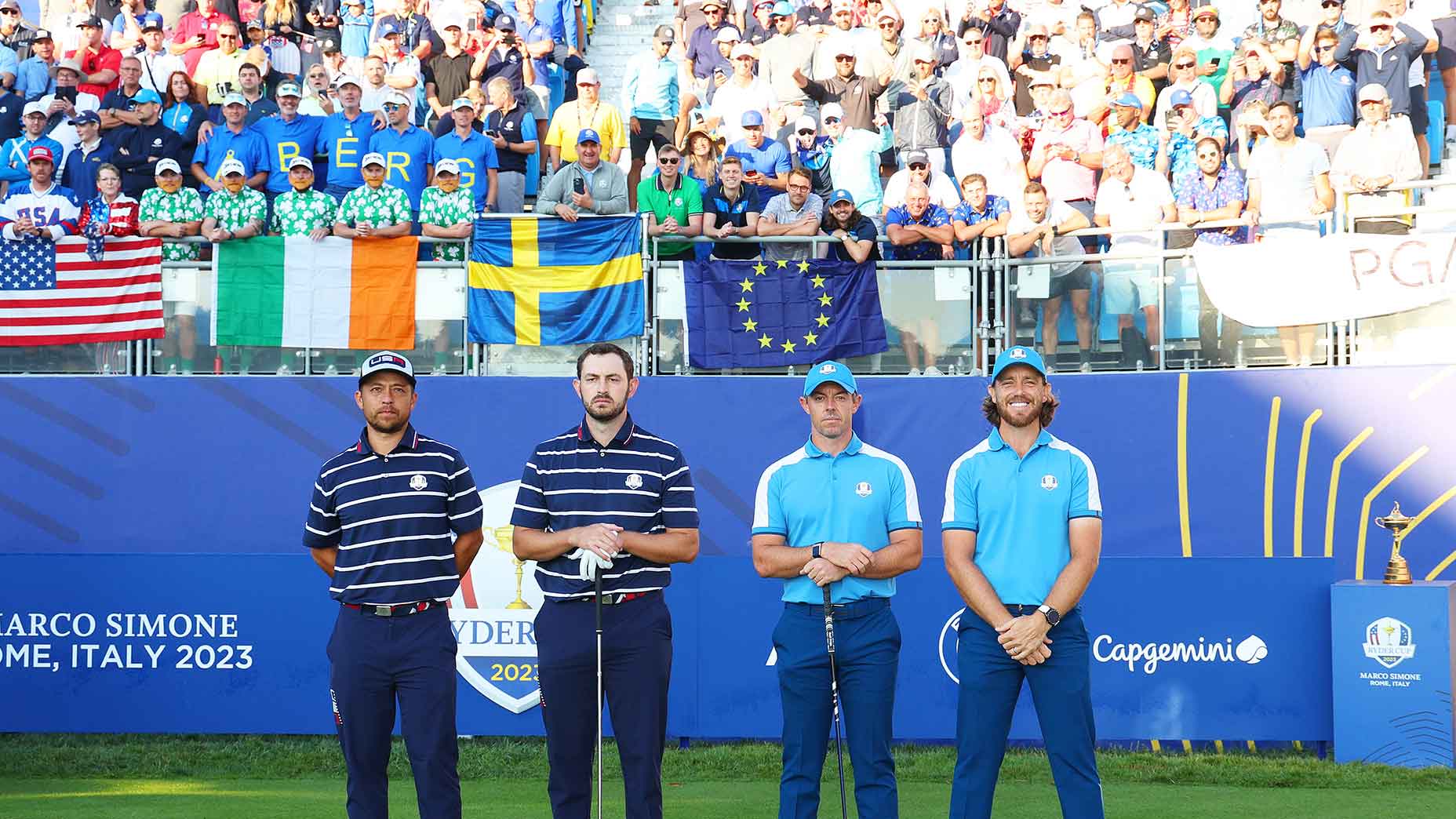
The 2023 Ryder Cup illustrated this phenomenon in stark relief. Thanks to the analytic prowess of platforms like DataGolf, we can clearly assess how the European team outperformed their American rivals. While individual performances can be influenced by myriad factors, the data reveals a clear trend: European players consistently outperformed their expectations. Home-field advantage and luck in crucial moments such as chip-ins or crucial putts certainly play a role, yet the empirical evidence emphasizes the superiority of top-performing players.
To illustrate, let’s analyze Scottie Scheffler, who was the world’s top golfer heading into the 2023 Cup. Though he played four matches, his performance fell short of expectations, especially after a brutal 9-and-7 defeat, which saw him benched for the afternoon session. His struggles vs. Rory McIlroy underscore that match outcomes greatly affect overall performance assessments. The same can be said for other key American players against their European counterparts. Patently, a clear divide in skill levels appeared, especially at the top tier of each team. The conclusion? It’s about how well your “horses” perform under pressure.
As we pivot to the upcoming Ryder Cup at Bethpage Black, it’s crucial to assess which players are likely to be relied upon most heavily. Utilizing DataGolf’s expected player skill ratings, we identify ten players—five Americans and five Europeans—who are bound to be pivotal in determining their team’s fortunes.
American Mainstays
- Scottie Scheffler – Occupying the top spot, Scheffler is almost guaranteed to participate in all five matches unless unforeseen circumstances intervene.
- Bryson DeChambeau – With his distinctive power and energy, DeChambeau’s performance could see him participating in four to five matches, particularly if he finds his rhythm.
- Russell Henley – Having already shared the course with Scheffler, Henley has demonstrated his capability to perform at a high level, making him a solid pick.
- Xander Schauffele – Schauffele remains a wildcard due to recent performance dips, yet his innate talent suggests he will play a significant role.
- Patrick Cantlay – After weathering some rough patches, Cantlay’s recent form ensures he becomes an essential part of the team’s strategy moving forward.
European Contenders
- Jon Rahm – Known for his consistency, Rahm is poised to make vital contributions and should see considerable course time.
- Tommy Fleetwood – Playing some of the best golf of his career, Fleetwood is another player whose experience in the Ryder Cup lends him crucial appeal.
- Rory McIlroy – Although inconsistent recently, McIlroy’s enduring talent makes him a strong candidate for multiple matches.
- Ludvig Aberg – Recently back in form, Aberg’s youthful exuberance and skill set make him a valuable asset likely to play several matches.
- Matthew Fitzpatrick or Viktor Hovland – Between these two, Fitzpatrick may have the edge, boasting a rising ranking and form.
The Ultimate Question
With players set and roles beginning to crystallize, the most compelling question remains: Can the European “horses” outpace their American counterparts? As we approach this much-anticipated showdown at Bethpage Black, it’s the dynamics between players and their capacity to perform when it matters most that will ultimately decide the victor in this storied golf competition. With rich history, intense competition, and the world’s best golfers taking center stage, fans and analysts alike will be watching closely to see which team delivers under pressure.
In sum, the Ryder Cup is not just about individual talent or captain’s picks; it’s fundamentally about the dynamics of team play and the performance of key players. As bets are made and predictions are set, one thing remains fiercely true: in golf, as in life, the best horses often dictate the race’s outcome. Let the games begin!