








The Scoop on Steep Golf Swings: When They’re Good, When They’re Bad
Alright, let’s talk about something that pops up a lot on the course— this whole “steep swing” thing. You’ve probably heard it from your pals, your coach, or even your own inner critic. They say, “Hey, you’re coming in too steep!” But let’s be real; it’s a bit more complex than it sounds. A steep swing isn’t automatically a villain in your golf game. Sometimes, it’s what you need to nail that perfect shot. So, let’s break this down, figure out what “steep” really means, when it could mess you up, and how to look at your own swing.
What’s a Steep Swing Anyway?
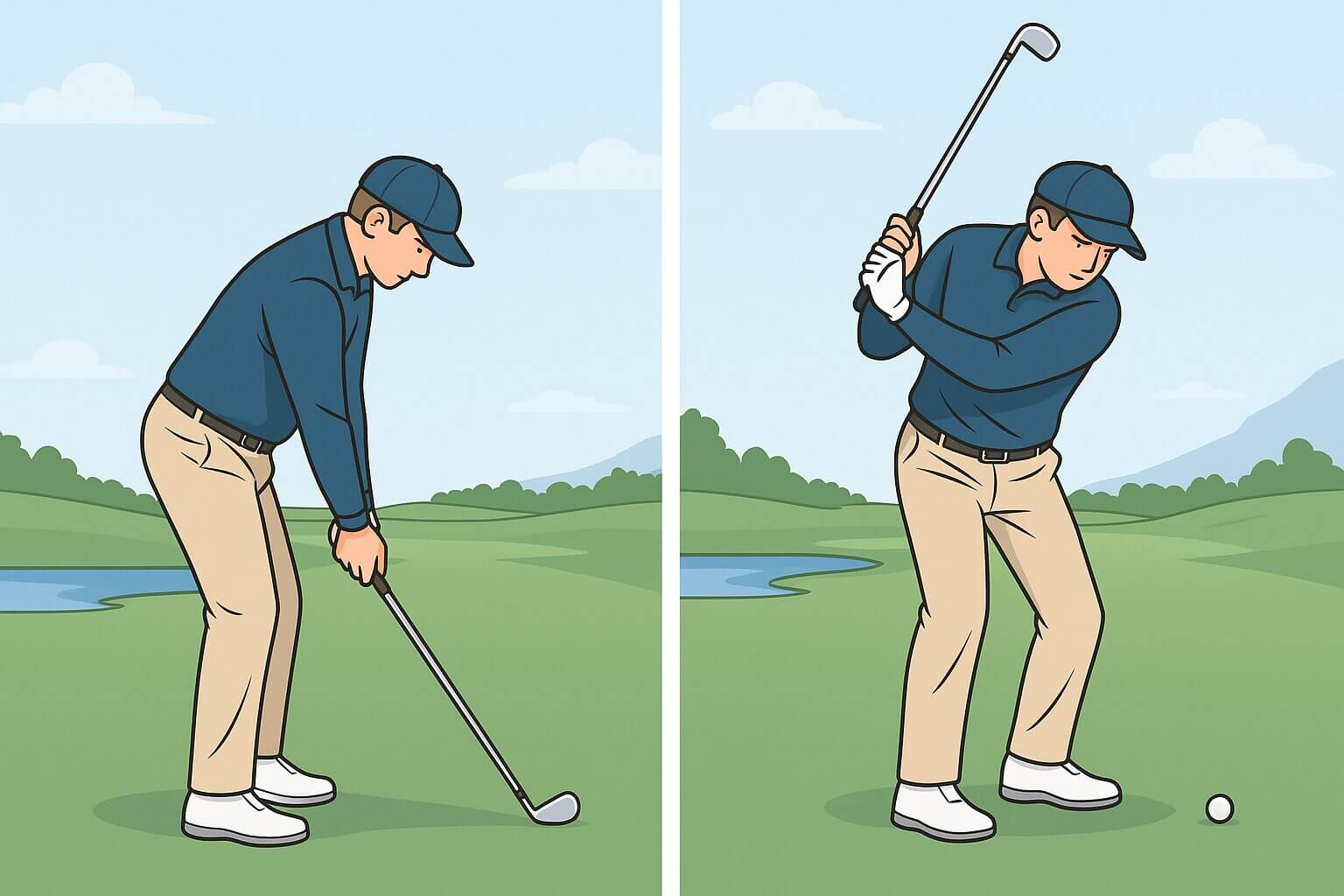
A steep downswing means that your club is coming down on a more vertical path—basically, it’s not following the ideal swing plane. This usually happens when the clubhead moves over your hands instead of sticking behind them as you transition into your swing. If you’re the kind of golfer who loves to slice, spins too early, or just goes full throttle at the ball, chances are, you might have a steep swing going on. This can lead to some tricky situations like early extension, chicken-winging, or those frustrating glancing hits.
When Do Steep Swings Spoil the Fun?
So, let’s get real here. If your swing is way too steep, you’re probably not having the best day on the course. Your most common mishaps might look something like this:
- Pulls that start out left and just stay left.
- Pull-fades or nasty slices.
- Contact issues that lead to thin shots or hitting it off the toe.
- That dreadful moment when you feel like you need to save every shot with your wrist at the last second.
Most of these steep swings come from a few classic patterns: rotating your hips too early, locking your arms tight against your chest, or trying to force that lag by yanking the handle down. Basically, your club is getting tossed out in front of you, and that’s how you end up with a steep swing path. A lot of golfers feel like they’re “coming over the top”—and yeah, that’s not a great feeling.

When Steep Swings Are Actually Your Best Friend
Now here’s where it gets interesting: a steep swing isn’t the archnemesis of your golf story. There are times when it might actually save the day. For instance, I have a shallow swing myself, and when I’m in the sand, I have to consciously steepen my swing to get that ball out of the bunker with some control. Let’s look at a few situations where a steeper swing can actually give you the edge:
- Bunker Shots – You want that sharp descent to pop the ball out and get some spin going.
- Tall Players – If you’re a taller golfer, your body structure might naturally lead to a steeper swing.
- Over-Shallowing Players – Some folks swing too shallow and get caught up in tricky spots. A steeper approach might be just what you need to avoid those dreaded blocks or hooks.


Get to the Root of Your Steep Swing
If you recognize that you might be in the “too steep” camp based on those common issues, it’s time to roll up your sleeves and work on shallowing things out a bit. Let’s talk about some common culprits behind a steep swing, along with quick fixes you can try.
Rotating Too Early from the Top
This is probably one of the biggest offenders. If your first move is to rotate your hips and shoulders together right from the top, your club gets hurled out in front of your hands. This is what people mean when they say “coming over the top.”
Fix: Try to delay your upper body rotation just a smidge. One good method is to let your arms drop while keeping your chest still for a beat. You aren’t pausing; you’re just sequencing it better. Some golfers like to picture keeping their backs to the target for just a beat longer.
Pinned Arms That Don’t Drop
If your arms are locked against your chest during transition, there’s nowhere for them to go except steep. Just rotating won’t cut it in this case.
Fix: Allow your arms to fall naturally beneath your shoulder plane before you rotate. Think “arms down, then rotate.” A pro like Justin Rose nails this; you’ll see his arms fall before he starts turning.
The Arm-Wrestling Move
If you’re cranking that trail shoulder in too early like you’re gearing up for an arm-wrestling match, you’re putting yourself in a tricky spot. Golfers often think this creates power, but it can lead to having to salvage your swing at the last moment.
Fix: Here’s a simple drill: take your trail hand off the club at the top and practice the motion with just your lead hand. This will help you feel that the trail arm needs to support the swing instead of trying to dominate it.
More Quick Fixes for Your Steep Swing
Many steep swing problems occur during the transition. Nail that part of your swing, and you’ll be well on your way to shallowing it out. Here are a couple more fixes you might find handy:
- Get Your Arms Deeper: If you tend to be stiff or locked up, try bending more at the hips. Swing your arms across your chest more to keep the club behind you. This will lower the chance of coming over the top.
- Fix the Takeaway: If your swing starts way too inside or your hands go outside too early, the club could end up steep. Making sure the club gets in front of your chest early can solve a lot of downstream issues.
Wrapping It Up: Steep Isn’t Always Evil
At the end of the day, steep swings become a problem when they’re out of sync or exaggerated. If you’re the one slicing, pulling, or just feeling stuck at the bottom of your swing, it’s likely that you’re too steep, and it might be time for a change.
The magic formula? Don’t just obsess over trying to make your swing super shallow. Instead, use shallowing techniques to rebalance your swing and learn how to adjust your steepness based on the shot you’re facing. The best players know when to tilt the balance between steep and shallow to get the most out of their game.
So, next time you get that “too steep” comment on the course, you’ll know exactly how to navigate through it. Happy swinging, and may your next round be filled with perfect shots!