







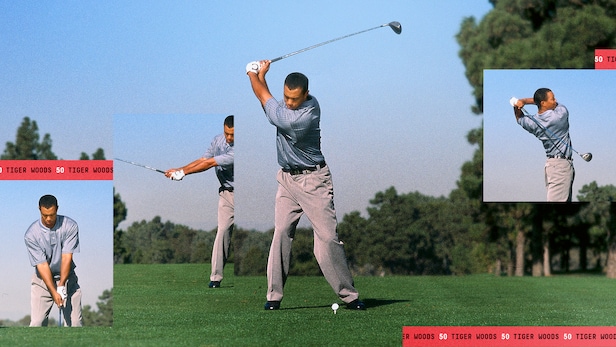
The Evolution of Tiger Woods’ Golf Swing: A Lesson in Lower Body Movement
In the world of professional golf, few topics generate as much discussion as Tiger Woods’ swing. Central to this conversation is the critical role of his knee health, which has influenced his technique throughout his illustrious career. Each transformation in his swing offers insights that are beneficial for golfers at any level.
The Impact of Knee Health on Swing Evolution
Tiger Woods’ journey is marked not only by victories but also by challenges. His decision to part ways with renowned golf instructor Butch Harmon was motivated by a desire to prevent knee injuries that could jeopardize his career. Most notably, Woods captured the 2008 U.S. Open title with a broken leg, signaling the beginning of a major championship drought that lasted over a decade.
The interconnected nature of human anatomy raises important questions: Could his knee issues in earlier years have contributed to subsequent back injuries? Regardless, the evolution of his swing, particularly the movement of his lower body, tells a compelling story.
Measuring Tiger’s Swing Through SportsBox AI
To analyze Woods’ swing over the years, we utilized SportsBox AI. This innovative app applies artificial intelligence to measure movements during a golf swing, shedding light on how the pelvis’ motion has evolved. Here’s a breakdown of his earlier swings using SportsBox’s pelvis sway metric:
Early Dominance: Massive Side-to-Side Power
Woods’ initial success in golf was characterized by impressive side-to-side movement:
- Backswing: His pelvis shifted over 1.5 inches away from the target.
- Top of Backswing: The pelvis recentered yet remained nearly 1 inch further from the target than its original position.
- Impact: At this stage, his pelvis had moved more than 6 inches towards the target.
- Follow-Through: By the end of his swing, the pelvis shifted almost 9 inches towards the target.
In this era, significant hip slides were common, providing the necessary power for high-performance swings.
The Butch Harmon Era: Refined Power
Under Butch Harmon’s mentorship, Woods refined his swing for greater consistency:
- Backswing: Pelvis shifted more than 2 inches away from the target.
- Impact: His pelvis moved less than 5 inches towards the target, a notable reduction.
This revision aimed for a balance between power and consistency, allowing for a more controlled, repeatable swing.
The Hank Haney Era: Staying Centered
Fearing long-term effects on his knees, Woods adopted a more stable swing approach with Hank Haney:
- Backswing: Pelvis sway was reduced to less than 1 inch away from the target, emphasizing stability.
- Impact: The hips moved 4 inches from their initial position.
While it remains uncertain if this swing protected his knees, it certainly resulted in a more efficient technique without excessive lateral movement.
Chasing Compression: A New Challenge
After parting with Haney, Woods shifted focus again, emphasizing better compression in his iron shots:
- Backswing: Pelvis shifted no more than 0.2 inches away, and moved 1 inch towards the target.
- Impact: A significant 8-inch shift towards the target underscored rapid adaptation and impressive results.
The Modern-Day Hybrid: A Synthesis of Techniques
Currently, Woods employs a hybrid approach, mixing elements from both Harmon and Haney. His swing mechanics show:
- Mid-Backswing: Pelvis shifts about 2 inches away from the ball.
- Top of Backswing: Pelvis recenters to half an inch away before impact, where it moves approximately 6.5 inches towards the target.
This combination reflects the evolution of his technique, allowing him to maintain performance despite physical limitations.
Key Lessons for Amateur Golfers
The evolution of Tiger Woods’ swing encapsulates essential lessons for golfers of all levels, particularly regarding pelvis movement. For amateurs, achieving adequate side-to-side movement is vital for generating power; yet, many struggle to shift their hips more than 2 inches towards the target, resulting in inconsistent ball striking and diminished distance.
Woods’ ongoing commitment to optimizing his lower body movement illustrates its critical role in executing a powerful, consistent golf swing. By studying the transformations in his technique, amateur golfers can glean valuable insights and apply them to improve their own game.
In conclusion, the evolution of Tiger Woods’ swing not only showcases his adaptability and skill but also serves as a vital learning tool for aspiring golfers. As many continue to analyze and appreciate his remarkable journey, there’s no doubt that the lessons drawn from his experiences will influence future generations on the golf course.