






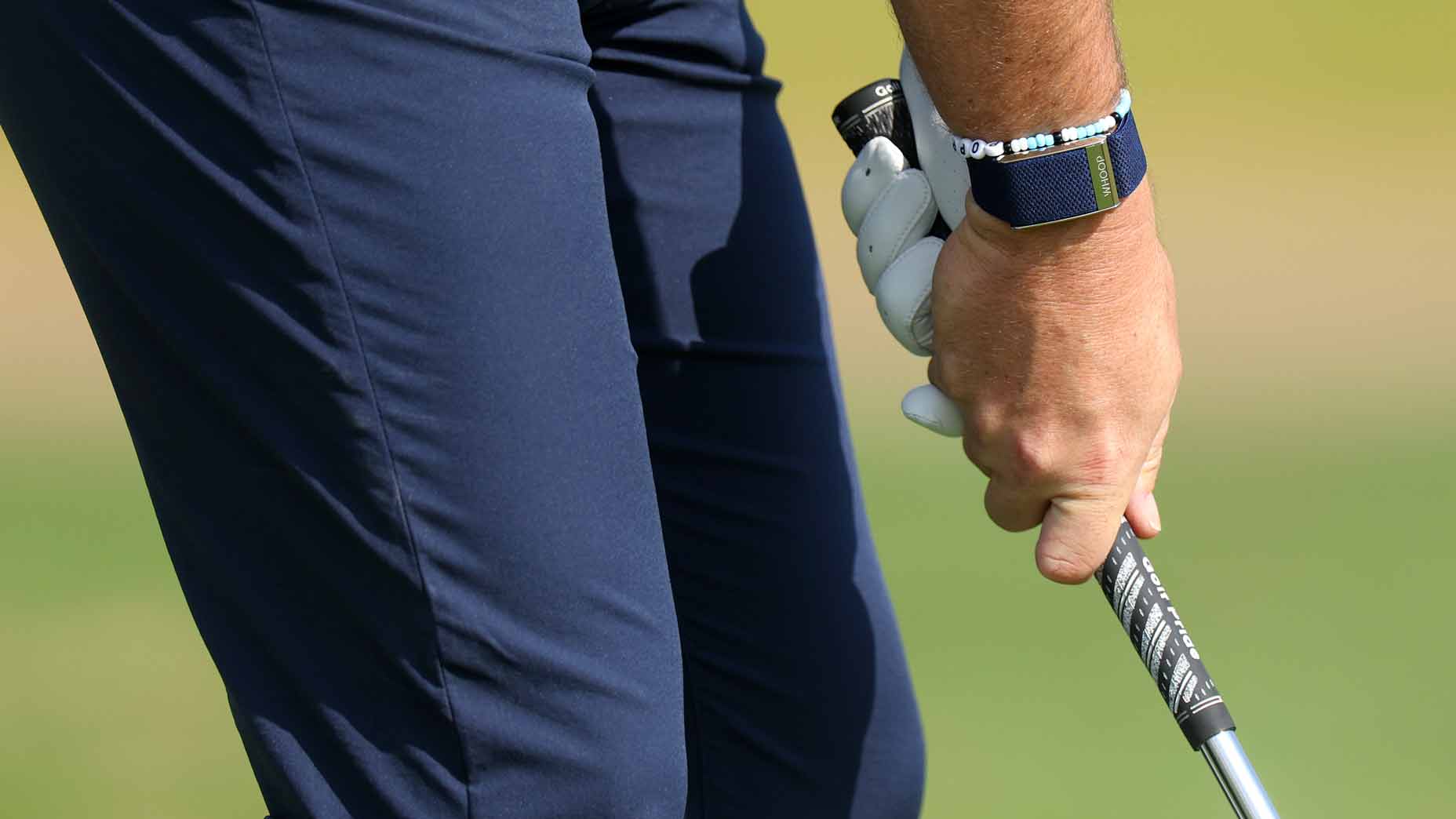


In the world of golf, the way you hold the club may seem important, but a recent study has shown that the tightness of your grip is what truly makes a difference in your swing. The study, conducted by Liam Mucklow and his team at the Golf Lab in Toronto, analyzed the grip pressure of various groups of golfers, including professionals, slicers, hookers, and high-handicappers. Using special pressure-recording grips and advanced technology, they found that the amount of pressure applied at different points in the swing can significantly impact the outcome of your shot.
One of the key findings of the study was that professional golfers maintain a consistent grip pressure throughout their swings, with a strong initial squeeze at setup and a drop in pressure as they transition from backswing to downswing. This allows them to control the clubface and generate efficient power. In contrast, weekend players and high-handicappers tend to grip the club too lightly, leading to inconsistent ball flights and poor control.
For slicers, who struggle with a left-to-right ballflight, the study revealed that they tend to add too much pressure with their trail hand as they start their downswing. This causes the club to move off-plane, resulting in an outside-in swing path. The solution for slicers is to squeeze the club harder with their lead hand and relax the pressure with their trail hand during the transition, allowing the club to fall behind them for more power and accuracy.
Hookers, on the other hand, tend to increase grip pressure as they start their downswing, leading to a club that gets too far behind them and an inside-out swing path. To correct this, hookers should increase grip pressure with their lead hand at setup and during the backswing, then relax the lead hand and push with the trail hand during the transition for a more controlled and square clubface at impact.
High-handicappers were found to have the most inconsistent grip pressure, with a tendency to apply more pressure with their trail hand than their lead hand. This leads to a lack of body rotation and sequencing in the swing, resulting in a loss of clubhead speed and accuracy. The fix for high-handicappers is to squeeze the handle harder with their lead hand and keep the trail hand relaxed, allowing the body to rotate and lead the club into impact.
Overall, the study highlights the importance of grip pressure in the golf swing and how adjusting the tightness of your grip can have a significant impact on your ball flight and overall performance. By understanding the proper grip pressure at each stage of the swing and making the necessary adjustments, golfers of all skill levels can improve their consistency, power, and accuracy on the course.


