








The 16th Hole Paradox: Why Golf’s Greatest Spectacle Isn’t Really About Golf
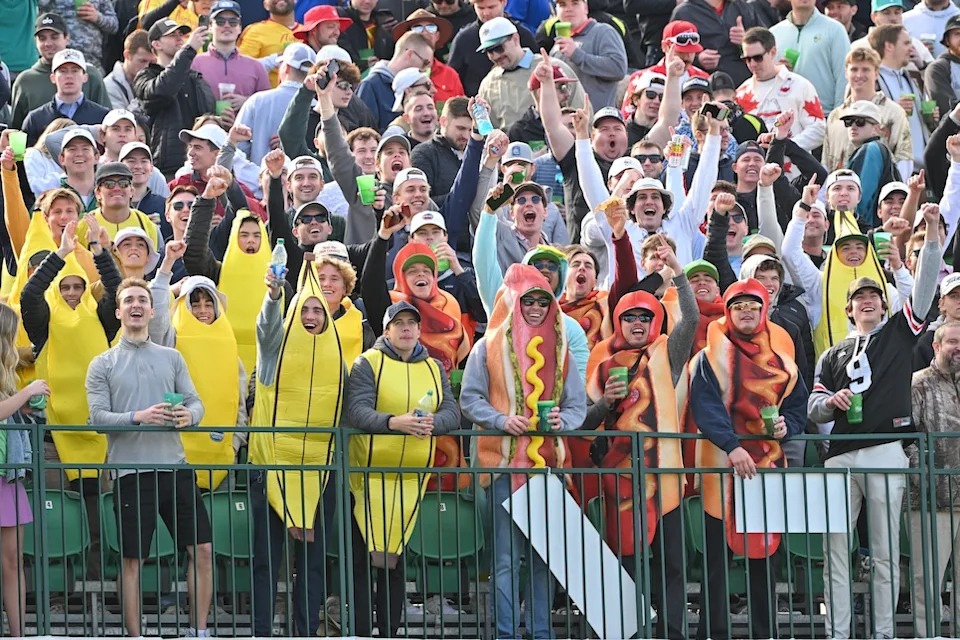
I’ve been covering the WM Phoenix Open for fifteen years now, and I’ll be honest—I’ve watched the 16th hole phenomenon evolve into something that would’ve seemed impossible back in my caddie days with Tom Lehman. What started as a lively gallery has transformed into a full-blown carnival that makes you wonder if anyone’s actually keeping score anymore.
Here’s what strikes me most about this year’s coverage: the players themselves have essentially admitted what we’ve all suspected. The 16th isn’t a golf hole anymore. It’s a social media moment, a rite of passage, a place where the actual game of golf has been relegated to secondary entertainment status.
The Admission Nobody Expected
What fascinated me while reading the quotes from this week’s competitors was their brutal honesty. These guys aren’t sugar-coating it. When pressed about where they’d actually watch golf if they were paying customers, the consensus was unanimous: get as far away from 16 as humanly possible.
“I think there are spots on the front nine where you can get a really good view of multiple holes. You can sit on the hill on 6 and see the par 3 and see the green. Once you get to that 16, 17, it’s pretty tough to see stuff. So the front nine is a little quieter, and then when you get out to 13, 14 it’s pretty quiet out there as well. I would not be in the masses if I was here to watch golf.”
That’s Joel Dahmen speaking—a guy who actually missed the cut and could only return as a spectator. The irony is delicious. The man who couldn’t make it past Friday still knows where the actual golf is being played.
Rickie Fowler, a veteran who’s seen this event evolve, essentially prescribed a one-hit visit: go to 16 briefly for the experience, then bounce around the quieter stretches where you might actually follow multiple players through a complete hole. And then there’s Max Homa’s perfectly honest assessment:
“If you just want to watch golf you go to the front nine. If you’re asking me, I would go to 16. Why? To drink.”
I’ve covered enough tournaments to know a watershed moment when I see one. That’s a guy saying the quiet part out loud.
Two Courses, Two Philosophies
Akshay Bhatia nailed it when he said TPC Scottsdale has become “almost two different courses.” The front nine? That’s traditional tournament golf—strategy, shot-making, genuine competition. The back nine, particularly that concentrated madness around 16, is experiential tourism wrapped in beer and false bravado.
And here’s the thing that most casual observers miss: both can coexist. The PGA Tour has actually managed to create a product so diverse that it serves completely different purposes. The serious golf fan can have an authentic experience. The party-goer can have the time of their life. The venue accommodates both, even if those $10,000 padded chairs are the only real intersection.
In my three decades covering this tour, I’ve watched venues struggle to balance authenticity with accessibility. Phoenix has essentially solved that problem—not by taming the beast, but by acknowledging it and letting serious players and serious fans seek out serious golf elsewhere on the property.
The Youth Factor Nobody’s Talking About
One thing that jumped out at me: Neal Shipley, the 25-year-old rookie making his Phoenix debut, has “no desire to be in those bleachers” now that he’s competing. But he also didn’t dismiss 16 entirely for spectators. He called it “special” and said he’d want the experience if it were his first time.
That generational perspective matters more than we might think. The 16th hole is creating memories. Will those people become golfers? Probably not all of them. Will some of them? Maybe. And is that such a bad thing?
Having worked with Tom in the ’90s, I watched him understand that golf needed new fans, not just better golf fans. There’s something to be said for an event that attracts 100,000 people, even if only 20,000 of them are genuinely interested in whether someone makes a birdie.
What This Really Means
The undercurrent of this story isn’t criticism—it’s evolution. The 16th hole spectacle represents the tour’s willingness to let different parts of its venues serve different purposes. The front nine remains sacred ground for purists. The back nine has become entertainment property.
“You have to embrace it. You just have to accept what they’re there for.”
Jake Knapp said that, and I think he nailed the mature perspective. The players aren’t resisting the atmosphere; they’re accommodating it. They understand that their tournament still works exactly as intended—the best golfer still shoots the lowest score. What’s changed is that some spectators came for a different kind of competition entirely.
After 35 years in this business, I’ve learned that the health of professional golf isn’t measured by whether every fan at every venue is a purist. It’s measured by whether people show up. They’re showing up. They’re waiting an hour in line. They’re coming back on weekends.
As long as the best players are still trying to win on the scorecard, and the serious fans can still find serious golf if they want it, I’d say Phoenix has pulled off something pretty remarkable. It’s not for everyone—and that might be the whole point.


