


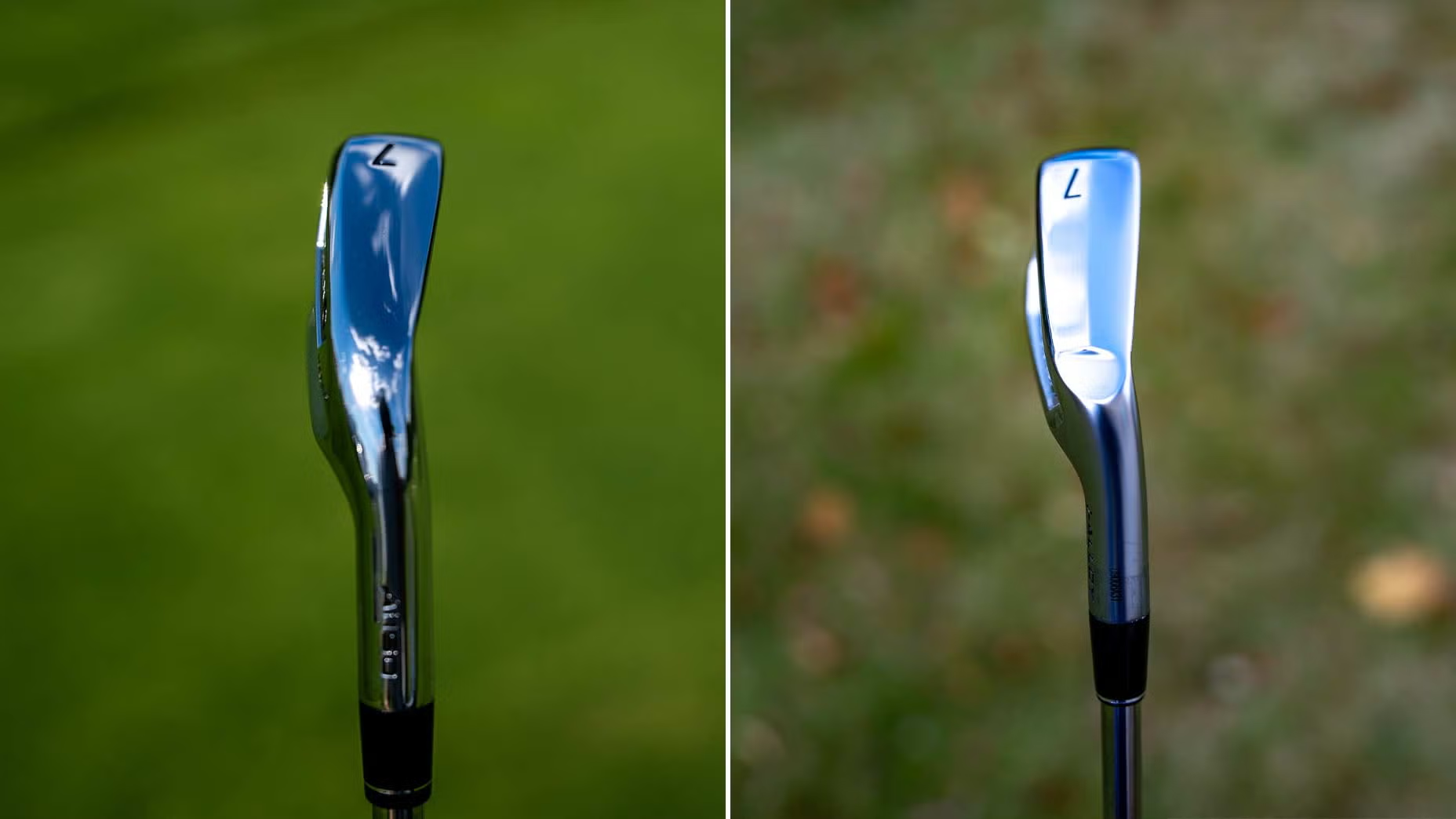
Understanding Bounce for Better Golf Performance: A Comprehensive Guide
When golfers hear the term "bounce," many instantly think of wedges. However, this vital aspect of club design has implications that extend to all types of irons, including your trusty 6-iron. Knowing how bounce affects your game can lead you to make more informed choices during club fittings and improve your performance on the course. This guide delves into the intricacies of bounce, focusing on how its principles apply to irons, particularly for different types of swings.
The Importance of Bounce in Irons
In a typical wedge fitting session, the player’s angle of attack (AoA) and divot pattern are examined, providing insights into their swing mechanics. However, it’s crucial to extend this analysis to irons, where the principles of bounce should be employed with equal importance. Selecting the right bounce can help golfers achieve a more consistent strike on the ball, impacting both launch angle and turf interaction.
Bounce essentially refers to the angle between the leading edge of the club and the lowest point of the sole. A greater bounce angle can help a player execute lower-launching shots by moving the strike down the blade. In contrast, less bounce elevates the strike point, producing higher-launching shots. Understanding how to match your swing style to your club’s bounce can be the key to lower scores.
When Less Bounce is Beneficial
Consider the case of "Client A," an accomplished golfer who tends to deliver the 6-iron with a shallow angle. He’s using a set of irons with a thick sole and a loft that creates a high bounce. This configuration may be causing his optimal strikes to produce a less-than-ideal launch angle and spin rate due to the way the club interacts with the turf. The result? Shots that either come in too shallow or launch at lower heights.
In Client A’s situation, the solution lies in switching to a club head with less bounce and increased loft. This adjustment allows for better positioning on the face, leading to higher-launching shots that land more softly on greens. The aim is to align client equipment with his unique swing dynamics, ensuring a balance between performance and playability.
Recognizing the Need for More Bounce
On the other end of the spectrum is "Client B," who has a different set of challenges. Although this golfer possesses ample clubhead speed, his steep delivery often results in a high impact on the clubface, diminishing both distance and control. This situation is not uncommon among players who may not have had formal lessons but attempt to leverage their athletic backgrounds to excel in golf.
Client B’s use of a set of muscle-back irons—typically better suited for low-handicap players—can work against him. His steep angle of attack causes the club to dig into the turf, which hinders both performance and consistency. Transitioning to a set with higher bounce can assist in optimizing contact with the ball, thereby improving both distance and accuracy.
Testing for the Right Bounce
After recognizing the impact of bounce on Client B’s performance, it’s essential to conduct a thorough testing session. This process may involve trying out different iron sets with variable loft and bounce angles. Through trial and error, Client B can gain insights into how adjusting the bounce can lead to noticeable improvements in both ball speed and launching conditions.
In many cases, increasing the loft while maintaining the appropriate bounce angle translates into better turf interaction and enhanced forgiveness on strikes. Client B experiences significant gains in ball speed and control, unlocking the potential for cleaner, more effective swings.
The Role of Fitting in Optimizing Bounce
Engaging with a professional club fitter can profoundly impact your golf game. Most players underestimate how intricate the selection process can be. A master fitter will assess various parameters, including swing path, AoA, and existing club condition. As demonstrated by the experiences of Clients A and B, bounce needs to be a focal point in fitting sessions to ensure golfers receive equipment tailored to their unique swing styles.
Fitting technology has advanced considerably, allowing professionals to provide detailed analyses of how a club’s specifications can optimize performance. A fitting not only informs a player about bounce but also brings to light essential aspects like shaft length, lie angel, and grip size, ensuring a holistic evaluation.
Common Misconceptions About Bounce
While many players understand the basics of bounce, misconceptions abound. One prevalent myth is that high-bounce clubs are unsuitable for better players. In reality, varying bounce can benefit even the most experienced golfers. For instance, changing conditions on the course— such as soft turf or deep rough—may require different bounce levels to maintain performance.
Conversely, some beginners might gravitate toward low-bounce options, assuming they equate to ease of use. This may not be the case; improper bounce can lead to inconsistency and disastrous results. Understanding your swing type is critical in developing an optimal choice.
Practical Tips for Optimizing Bounce
- Evaluate Your Swing: Determine whether you have a steep or shallow angle of attack.
- Engage in Fitting: Consult a professional club fitter for personalized assessments.
- Experiment: Don’t hesitate to try various combinations of loft and bounce during practice sessions.
- Analyze Performance: Pay attention to your ball flight and landing angle, tweaking your set-up accordingly.
Embracing Customized Equipment
The golf equipment landscape is ever-evolving, with clubs now designed to cater to a range of playing styles. Understanding bounce can enable golfers to make more informed choices in both purchasing and fitting. Customized clubs can lead to a vastly improved game, benefiting not just skilled players but also newcomers.
Conclusion
Delving into the intricacies of bounce can yield remarkable results for golfers seeking an edge in their game. Regardless of your skill level, understanding how bounce interacts with your swing mechanics is crucial for choosing the right iron set. Continuous evaluation and flexible adjustments are key, allowing golfers to engage with their game more deeply and enhance their performance on the course. By recognizing the influence of bounce, players take a significant step toward lower scores and greater enjoyment of the sport they love.
