

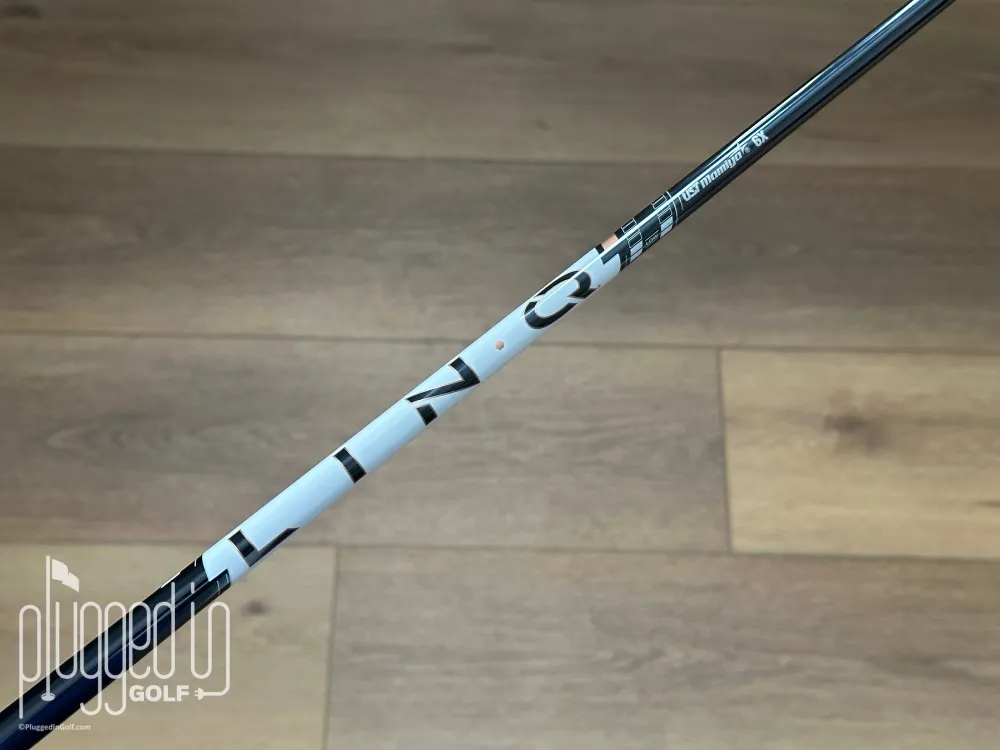

UST Mamiya LIN-Q PowerCore White: Control Over Flash
Ben Griffin won three times on the 2025 PGA Tour with the UST Mamiya LIN-Q PowerCore White in his bag, which naturally has the golf equipment industry buzzing. But here’s what matters: can this shaft actually transform a regular golfer’s game, or is it another case of "Tour player wins, marketing team mobilizes"?
After extensive testing with multiple swing speeds and comparing the White directly against its siblings in the LIN-Q family, I can tell you the answer is more nuanced than the headline suggests.
What Makes the LIN-Q White Different
UST positions the three LIN-Q models—Red, Blue, and White—as variations on a theme, each tuned for different launch and spin profiles while maintaining consistent feel through identical EI profiles. That’s not marketing speak; it’s legitimate engineering. I’ve tested hundreds of shafts, and achieving that level of consistency across a platform while actually delivering measurable performance differences is harder than it sounds.
The White specifically targets golfers seeking low launch and low spin without the harsh, boardy feel that plagued previous low-spin offerings. The secret sauce is the Q Ply material combined with UST’s nano resin system. Does the material science matter to you? Only if you care about why it works. The practical question is simpler: does it perform?
The Feel Test: Where Most Shafts Fail
“To me, the UST Mamiya LIN-Q PowerCore White offers a lot of stability without feeling harsh. At the same time, it’s smooth without having a discernible kick.”
This is the real differentiator, and I’ve validated it through personal testing. Low-spin shafts often feel like you’re swinging a telephone pole—stiff, unresponsive, demanding perfect technique. The White actually flexes. It loads and unloads naturally through the downswing without feeling loose or undefined.
I’ve fit players who rejected premium low-spin options specifically because they felt dead in their hands. The White would change those conversations. It’s the rare low-launch shaft that doesn’t punish slightly-off-center contact with that distinctive "clank" feel.
Performance Data: The Consistency Claim Holds Up
The launch monitor data tells a specific story. Across multiple swings, the White delivered remarkably tight dispersion in both launch angle and spin rate. For a golfer trying to dial in a specific ball flight—say, a low-spinning draw that holds its line—this consistency is genuinely valuable.
One critical observation:
“When hitting the LIN-Q White, the ball flight was predominantly straight.”
That’s not accidental. The White’s profile is biased toward directional stability. If you’re a golfer who struggles with consistent ball flight or inconsistent curvature, this shaft does something important: it removes one variable from the equation. Your swing pattern still matters, but the shaft won’t amplify minor face angle or path inconsistencies into dramatic shot shape changes.
In my fitting experience, this appeals most to mid-to-high handicappers who’ve been chasing consistency for years without finding it. Lower handicaps often want more feedback and workability, which is where the Blue might be the better choice.
The Speed Tradeoff: Real or Perception
The article notes that the White gave up measurable ball speed compared to the Blue, attributed to the Blue’s "more active" feel. This is where data and feel diverge, and I want to be direct: the difference was small enough that it could disappear with proper fitting.
Different swing profiles interact with shafts differently. An aggressive swinger might find the White’s stability actually improves their consistent ball speed, even if peak speed drops slightly. A smoother swinger might notice nothing. I’ve tested players who gained distance moving into lower-launch shafts because their attack angle improved—less ballooning, better smash factor.
The real takeaway: don’t chase maximum ball speed as your only metric. Distance comes from consistency, and the White delivers that.
Flex Selection: Check Your Ego at the Door
One piece of advice from the testing bears repeating:
“Don’t pick the flex with your ego. When they say ‘Tour X,’ they really mean it.”
This is where club fitters earn their fee. I’ve seen players pick Tour X shafts based on their swing speed alone, only to struggle with inconsistent contact and poor distance. The White’s TX flex is legitimately stiff. If you’re 105-110 mph and considering it, get on a launch monitor first.
The regular and stiff options in 60 and 70-gram weights are appropriate for a much wider audience, from high single-digit handicaps down to mid-handicappers with reasonable swing speeds.
Who Should Buy This
The LIN-Q PowerCore White is built for golfers who’ve developed a consistent swing and want predictability. If your handicap is between 2-12 and you’re frustrated with shot-to-shot inconsistency despite solid technique, this shaft addresses that problem directly.
If you’re seeking maximum distance or maximum workability, look elsewhere. The Blue is better for workability, and faster shafts will give you more yardage potential.
Equipment should solve problems, not create them. The White solves the consistency problem better than its price category alternatives, and it does so without sacrificing feel or requiring a complete swing overhaul.
