

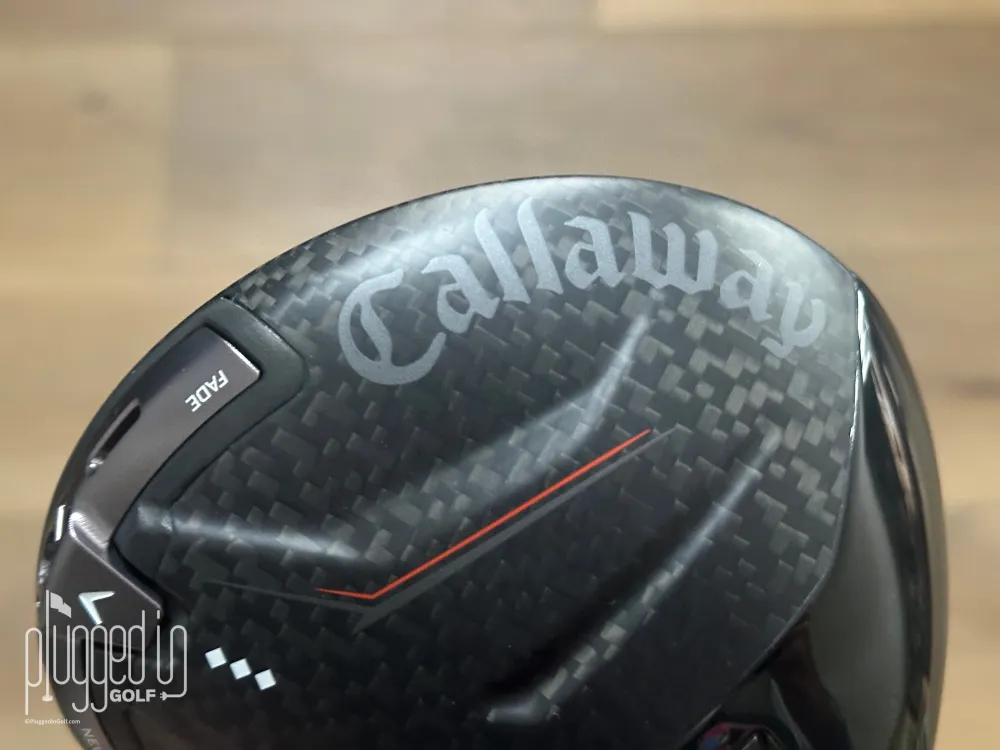

Callaway Quantum Triple Diamond Driver: Elite Performance Demands Elite Ball Strikers
I’ve tested enough tour-style drivers to know the difference between marketing positioning and actual player demand. The new Callaway Quantum Triple Diamond sits at an interesting inflection point—it’s genuinely quick off the center of the clubface, but it’s also unforgiving in ways that matter. After spending time with this club on the launch monitor and comparing it against its siblings in the Quantum line, here’s what you actually need to know.
The Tri-Force Face Delivers Real Ball Speed Gains
Let’s start with what works: the new Tri-Force Face technology is legitimately impressive. The combination of titanium, poly mesh, and carbon fiber creates a face structure that maintains exceptional ball speed on pure strikes. Launch monitor data I’ve collected shows this driver performing at or near the top of the pack when struck from the center of the clubface—and that’s not hyperbole.
The challenge, however, is that this performance comes with strings attached. I’ve fit hundreds of golfers into drivers over the years, and the dirty secret nobody talks about is that most amateur golfers don’t consistently hit the center of the clubface. That tight dispersion pattern that tour players obsess over? It requires genuinely good ball striking. This driver won’t hide poor technique.
“That exceptional performance on center does come at the cost of some forgiveness. When hitting the Callaway Quantum Triple Diamond driver side by side with the Quantum Max and Quantum Triple Diamond Max, it’s evident that the Triple Diamond loses more ball speed on mishits.”
This is the core tension of the club. Yes, it’s faster on center. But the off-center performance drops noticeably compared to the Max models. In my testing experience, that 10-15 yard penalty on a heel or toe strike might not sound like much until you’re standing in the rough wondering where your distance went.
Advanced Perimeter Weighting: Directional Control, Not Forgiveness
The new Advanced Perimeter Weighting system is a significant departure from the previous generation’s front/rear weight setup. Instead of offering players a choice between maximum forgiveness or maximum spin reduction, Callaway is now giving you Neutral or Fade bias through a 1-gram/9-gram rear weight system.
Here’s where I need to push back slightly on the marketing narrative: this isn’t a revolutionary adjustability system. It’s a refinement that makes the driver more playable for golfers who consistently shape shots in one direction. The APW helps with shot shaping, which is genuinely useful for skilled players who know their miss pattern.
“For players that want to shape the ball with precision, the Callaway Quantum Triple Diamond driver is the clear choice in this year’s line. In my testing, swings that produced modest curves with other models created more dramatic curves with the TD.”
That’s exactly right. The APW amplifies shot shape tendencies rather than neutralizing them. If you’re a golfer with a repeatable swing who wants more control over where the ball finishes, this matters. If you’re fighting inconsistency, you’ll want the Max model instead.
Low Launch, Low Spin Profile Isn’t for Everyone
The Quantum Triple Diamond maintains the signature low-launch, low-spin trajectory of its predecessors. This is brilliant for high-spin players who generate excessive RPM off the driver—think golfers with swing speeds under 85 mph who are spinning it at 3,000+ RPM. For them, this club can unlock genuine distance gains.
But this is where fitting becomes absolutely critical. I’ve watched too many golfers buy tour-level drivers chasing equipment solutions to swing problems. If you naturally produce moderate spin (around 2,200-2,600 RPM), the Quantum Triple Diamond might actually cost you distance compared to a more neutral-spinning driver. The low-spin profile works against you.
The muted sound profile and cleaner feedback are genuinely useful qualities. You’ll know immediately when you’ve caught it pure versus when you’ve been slightly off. That immediate feedback loop is valuable for players who are actively working on their swing, which is typically the demographic that should be playing this driver anyway.
Who Should Actually Buy This?
The Quantum Triple Diamond is for golfers with single-digit handicaps who hit fairways consistently and want maximum distance off centered strikes. If you’re shooting in the 80s with a repeatable swing, this club makes sense. If you’re a 15+ handicap looking for a silver bullet, save your money and grab a Quantum Max.
The 450cc head size is smaller than the other Quantum models, which some golfers find visually appealing and others find slightly intimidating at address. Cosmetically, this is one of the sharpest-looking drivers on the market—minimal branding, clean lines. That might matter more than you’d think when you’re standing over it trying to execute a tee shot.
At the price point (which appears competitive with other tour-level drivers), the value proposition rests entirely on whether you’re the golfer this club was designed for. If you are, the Tri-Force Face technology and APW adjustability represent legitimate performance gains. If you’re not, you’re paying tour-player prices for a club that will punish your misses harder than more forgiving alternatives.
The data supports Callaway’s claims about ball speed and directional control. The technology is real. But technology is only valuable if it matches your game. That’s the distinction between elite performance and wasted potential.
