

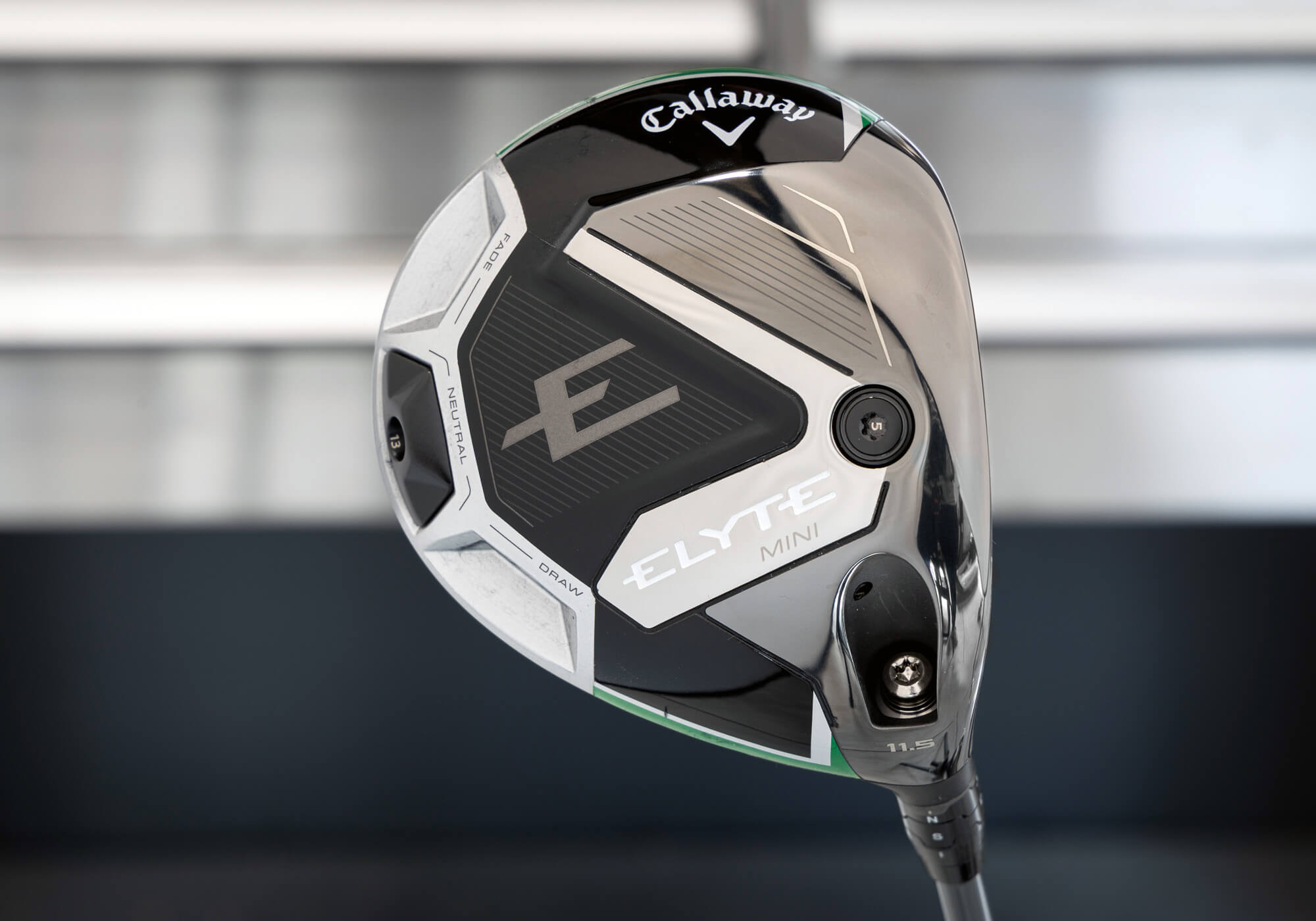

Understanding Low-Spin Fairway Woods: Are They Less Forgiving?
Low-spin fairway woods are frequently marketed as precision instruments for skilled golfers. Labels such as LS, LST, Triple Diamond, and Tour suggest a flatter flight path and improved distance control. While these promises may hold true for some players, many quickly discover that when the strike or launch isn’t perfect, their misses feel significantly more punishing.
Key Insights from the 2025 Fairway Wood Test
The 2025 fairway wood test data provides valuable insights into the performance characteristics of these low-spin models and whether they are less forgiving than their counterparts.
Fairway Woods Analyzed
This analysis specifically targets fairway woods designed to minimize spin rather than those simply focused on the lowest measured spin rates.
Models Tested:
- Callaway Elyte Triple Diamond
- COBRA DS-Adapt LS
- PING G440 LST
- TaylorMade Qi35 Tour
- Wilson DYNAPWR Carbon
These clubs feature designs focusing on lower spin rates through forward center-of-gravity placement and flatter flight characteristics. In contrast, higher-MOI (moment of inertia) models, like MAX, SFT, and X-style fairway woods, are engineered to offer greater height, spin, and stability on off-center hits.
Spin, Height, and Flight: Average Performance Data
Among low-spin designs, the average backspin ranges from 3,000 to 3,350 rpm. Higher-MOI fairway woods, however, typically fall within the 3,500 to 3,800 rpm range. The resulting differences in spin profoundly impact ball flight.
Performance Metrics for Low-Spin Fairway Woods:
- Peak Heights: Typically between 24 to 27 yards
- Descent Angles: Generally around 35 to 38 degrees
For Comparison:
- Higher-MOI and Draw-Biased Models:
- Peak Heights: Closer to 27 to 29 yards
- Descent Angles: Approaching 39 to 40 degrees
The higher peak heights and steeper descent angles of higher-MOI models provide a cushion of forgiveness, ensuring that slight variances in launch or strike quality still result in satisfactory carry and stability. Low-spin models, however, offer less accommodation for imperfect strikes.
The Importance of Peak Height
Low-spin fairway woods aim to reduce spin and height, catering to players who naturally produce sufficient lift. For golfers who struggle to achieve adequate peak height, transitioning to a low-spin model can exacerbate their challenges, resulting in shots that fall short and become increasingly sensitive to contact point.
Dispersion: The Trade-Offs
Dispersion, measured in square yards (yd²), reveals the following:
- Low-Spin Fairway Woods: Average shot areas in the high-2,000s to low-3,000s yd²
- Higher-MOI and Draw-Biased Models: Typically in the 2,000 to 2,400 yd² range
The differences highlight the level of protection the club provides when strike or delivery varies.
Forgiveness Scores: The Data Speaks
According to MyGolfSpy forgiveness scores, low-spin models consistently rank lower in terms of forgiveness compared to MAX and draw-biased designs. The discrepancies reveal:
- Retention of ball speed on off-center strikes
- Consistency in carry distance
- Stability of spin
- Control over dispersion
Who Should Use Low-Spin Fairway Woods?
Good Fit:
- Players who naturally launch fairway woods high
- Golfers generating adequate spin
- Consistent strikers
- Those preferring flatter, controlled ball flights
- Golfers desiring tighter distance control
Poor Fit:
- Players who struggle to elevate fairway woods
- Golfers fighting low spin or low peak height
- Inconsistent strikers
- Those relying on height for maximizing carry
- Players needing added MOI for protection against misses
The Bottom Line
Low-spin fairway woods are tailored for a specific demographic of golfers—those already capable of generating height and spin who benefit from reduced values. For these players, low-spin models can enhance distance control and deliver reliable flight patterns. Conversely, for golfers who depend on added spin, height, and moment of inertia to stabilize their shots, these clubs may lead to shorter carries and wider dispersion.
Conclusion
When considering a new fairway wood, it is essential to get fitted properly, paying attention to spin rates, peak heights, and dispersion to choose a model that aligns well with your playing style.
For a comprehensive look at fairway wood testing from 2025, stay tuned for our complete analysis and recommendations.
