


Is Your Swing Fast Enough for a 5-Iron?
The 5-iron is a unique club that sparks mixed emotions among golfers. For many, it can serve as a powerful tool on long par-3s or when executing low-flight shots, while for others, it may feel more like a neglected sibling to the 6-iron. In fact, analysis from Shot Scope revealed that the 5-iron is the club that costs golfers the most strokes. This makes it crucial to understand the factors that determine whether your swing speed is compatible with a 5-iron, and what alternatives exist if it isn’t.
Understanding “Fast Enough” for a 5-Iron
To effectively utilize a 5-iron, golfers must generate sufficient swing speed to achieve height, separation, and stopping power. These elements are crucial for making the club perform as intended. Typically, mid-handicap golfers swing a 5-iron at speeds between 70 and 80 mph, a range sufficient enough to create a playable peak height and maintain a 10 to 12-yard distance advantage over their 6-iron. If your swing speed drops below the low 70s, your 5-iron may struggle to launch adequately, leading to diminished carry distance and performance.
The First Red Flag
One of the clearest indicators that your swing speed may not be ideal for a 5-iron manifests when you notice your 5-iron and 6-iron traveling similar distances. Fitters use specific benchmarks for assessing performance gaps: for better players, it should be 12 to 15 yards; for average amateurs, around 8 to 10 yards; and for those with slower swing speeds, often 6 yards or less. If the gap diminishes or vanishes, it suggests that your 5-iron is no longer contributing meaningfully to your game and could indicate deeper issues with trajectory and carry.
Exploring Smart Options for a Non-Performing 5-Iron
If you find that your swing speed isn’t quite measuring up to the demands of a traditional 5-iron, you don’t have to abandon hope. A few smart alternatives can help you maintain the benefits of a 5-iron without compromising performance.
Option 1: Keep the Loft, Change the Head
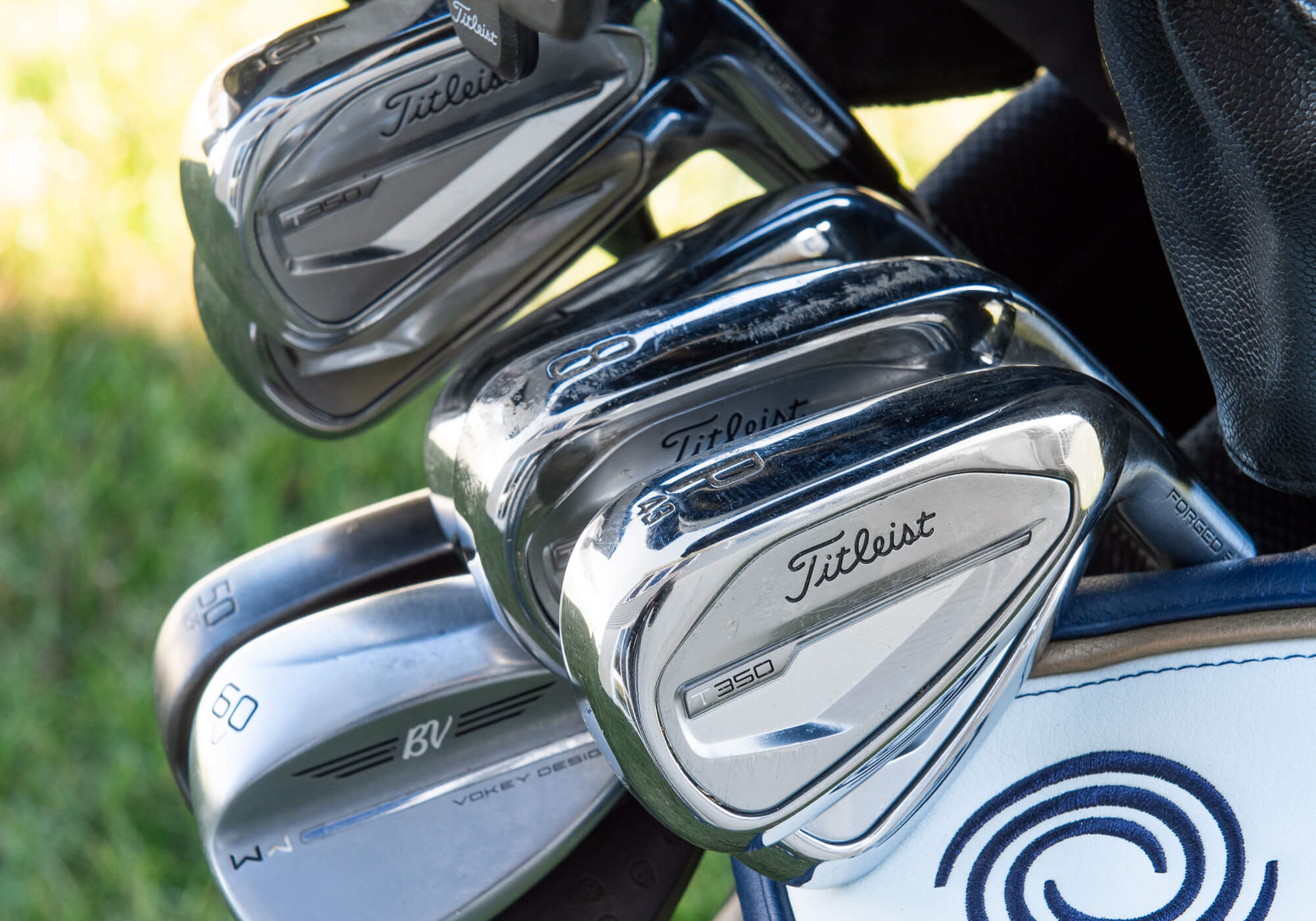
This is a solution I personally embraced. Despite my love for my T250 iron set, the 5-iron proved to be an outlier. Its 24-degree loft was similar to many modern 5-irons, but its design failed to provide the height and forgiveness I needed. Instead of replacing the entire club, I opted to swap the 5-iron for a T350 model. The loft change was minimal, moving from 24 to 23 degrees, yet the benefits were significant:
- Higher launch
- Improved peak height
- Enhanced ball speed on mishits
- More consistent carry
- Greater ability to hold greens
This solution is especially underrated; you don’t necessarily need to abandon the concept of a 5-iron. Sometimes, you merely need a more forgiving design.
Option 2: Keep Your Head, Change the Shaft
If you prefer the look and feel of your 5-iron yet seek increased speed and forgiveness, changing the shaft can offer a viable solution. Opting for a lighter steel or even a graphite shaft can provide several advantages:
- An added 2 to 4 mph of clubhead speed
- Increased launch angle and peak height
- Improved stabilization of face delivery
Modern graphite shafts have advanced considerably, providing stability and consistency that can be beneficial, particularly for golfers struggling to elevate their long iron shots.
Option 3: Replace the 5-Iron
For those who require additional help in the 22 to 26-degree loft range, a hybrid or high-lofted fairway wood might serve as a more effective alternative. These clubs often have hotter faces, making it easier for most golfers to achieve the necessary launch angle.
Testing Your 5-Iron Performance
If you’re questioning whether your swing speed is adequate for a 5-iron, a simple yet effective method is to take both your 5-iron and 6-iron to the driving range. Conduct a test hitting 10 shots with each club and pay attention to key factors such as:
- Carry distance
- Height of the ball flight
- Dispersion pattern
- Ability to hold a green
If your 5-iron isn’t showing a clear advantage over the 6-iron in these metrics, it doesn’t necessarily denote a shortcoming in your swing. Instead, it signals a mismatch between your swing delivery and the club’s design.
Understanding Your Swing Dynamics
For golfers of all skill levels, understanding how swing speed and club design interact can facilitate improvements in performance. A 5-iron requires a balance of speed and precision, as a slower swing typically leads to lower launch angles and diminished distance. Therefore, it’s crucial to assess whether your swing dynamics align with the performance capabilities of your 5-iron.
Final Thoughts
Ultimately, the 5-iron can be both a significant asset and a point of frustration. Understanding the swing speed that makes it effective for you, investigating alternative club options, and taking time for practice can make a world of difference. Each golfer’s equipment choices should align with their individual swing characteristics to maximize performance on the course.
In summation, realizing the potential of your 5-iron begins with testing and understanding your swing dynamics alongside modern equipment solutions. Whether it’s through changing the head, the shaft, or opting for a different club altogether, there’s always a way to optimize your performance.
By actively engaging with your equipment choices, you can elevate your game and harness the true power of your clubs, even when it comes to those mixed-feeling moments on the course.
