

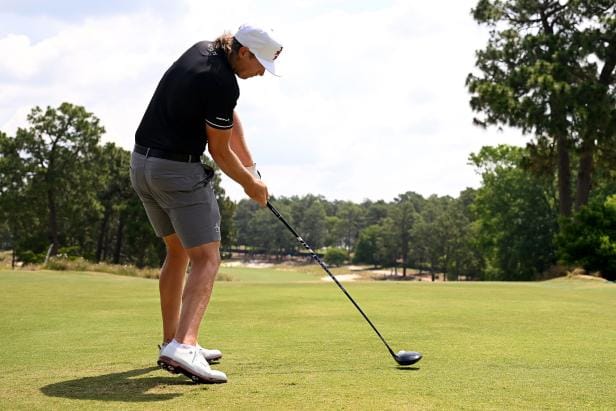

The efforts to roll back distance in golf started with the ball, and now the driver is also in focus. U.S. Open week saw discussions between LPGA Commissioner Mike Whan and R&A CEO Martin Slumbers about potential changes to drivers. Whan mentioned that they are interested in making a difference with the driver as well, but they need to find a way that doesn’t negatively impact recreational players. Proposed changes for equipment rules included reducing the spring-like effect, clubhead size, or forgiveness on off-center hits, which would affect average golfers more than elite players.
The R&A’s executive director Steve Otto emphasized the need for a comprehensive rollback that includes both drivers and golf balls. Making changes only to the ball could favor distance players, so a balance between skill and technology is necessary. Whan reiterated that the driver is still an area of interest in regulating distance, despite being shelved temporarily to explore more viable solutions. Elite golfers today have access to drivers with higher moment of inertia and a larger sweet spot, allowing them to swing faster without fear of severe mishits.
Although golf balls may not be significantly faster than in the past, ball speeds on the PGA Tour have increased alongside swing speeds. The average ball speed has gone up by almost 4.8 miles per hour since 2017, corresponding to a 2.8 percent increase. Each mile per hour increase in swing speed typically leads to a 1.5 miles per hour increase in ball speed, indicating that the rise in ball speed is largely due to faster swings. Interestingly, driving distance on the PGA Tour has slightly decreased in 2024 compared to the previous year.
The discussion around distance regulation in golf is ongoing, with a focus on finding a balanced approach that benefits all levels of players. Implementing changes to drivers, in addition to balls, is seen as a more effective solution to address distance concerns. The challenge lies in ensuring that any modifications do not hinder recreational players while still impacting elite players. It remains to be seen what specific changes will be made to equipment rules in the pursuit of controlling distance in golf.
In conclusion, the debate over distance in golf continues to evolve, with a potential shift towards addressing driver technology in addition to ball specifications. The aim is to find a solution that maintains the balance between skill and technology, allowing for a variety of playing styles across all levels of the game. As the rule makers continue to explore options for regulating distance, golf enthusiasts and professionals alike are watching closely to see how these changes will impact the future of the sport. Ultimately, the goal is to preserve the integrity of the game while adapting to modern advancements in equipment technology.
