

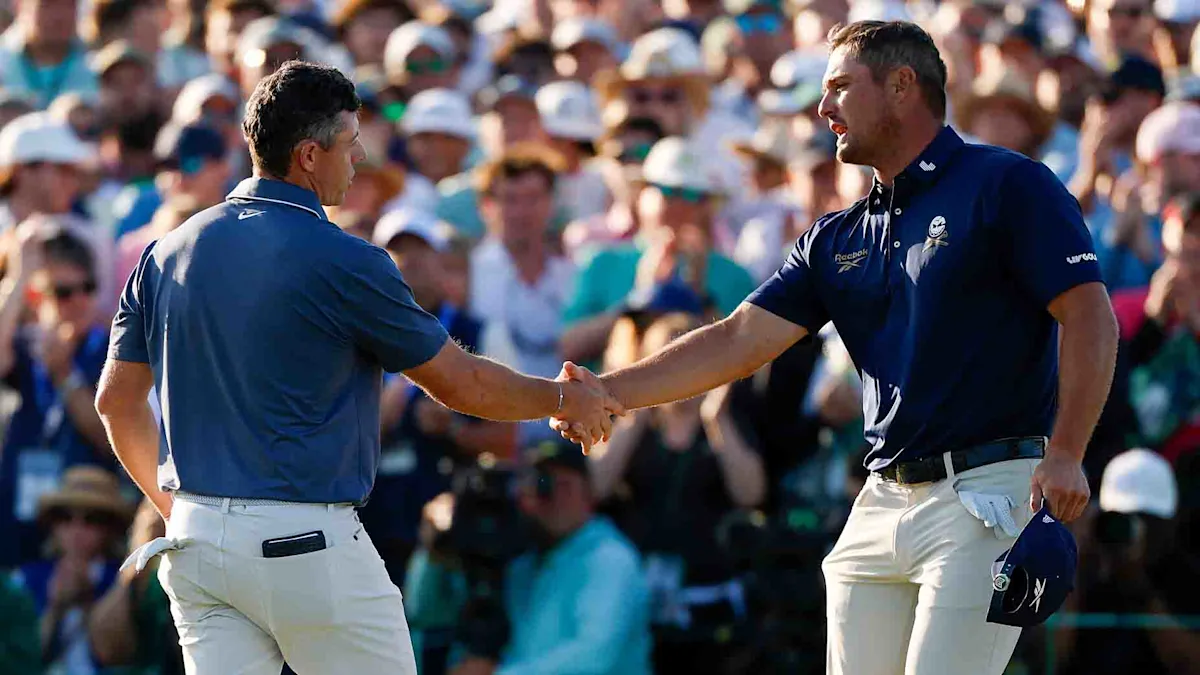

The Uncertain Future of Professional Golf: Insights from Rory McIlroy and Bryson DeChambeau
Rory McIlroy and Bryson DeChambeau don’t see the pro game coming back together anytime soon
Getty Images
The world of professional golf stands at a significant crossroads over two years after the PGA Tour’s framework agreement with LIV Golf was announced. Despite initial hopes for a unified future in the sport, leading figures from both sides, including Rory McIlroy and Bryson DeChambeau, remain skeptical about the imminent reunification of professional golf. This article delves into their views and the broader implications for the game.
In a recent appearance on CNBC’s CEO Council Forum, McIlroy emphasized the need for unification in professional golf but expressed doubts about how feasible such a goal is given the current circumstances. "I think for golf in general it would be better if there was unification," he stated, adding that the events of the past few years have created entrenched positions that are hard to reconcile.
DeChambeau echoed similar sentiments. The two-time U.S. Open champion believes that both sides have established firm boundaries, making it difficult to envision a path toward a collaborative future. "Man, I wish something major would happen, but I don’t think it’s going to in the immediate future. There are too many wants on both sides and not enough gives on the other," he noted in a recent interview with FOX News.
Both golfers are at the forefront of a debate that has deeply affected the landscape of the sport. McIlroy has previously called for players to set aside their differences and acknowledge the financial boons that both the PGA Tour and LIV Golf have brought to professional golf. "Whether you stayed on the PGA Tour or you left, we have all benefited from this," he commented during the Genesis Invitational earlier this year. His view suggests that the fracturing of professional golf—while unfortunate—may have triggered positive changes in how tournaments are structured and funded.
The financial dynamics, as McIlroy points out, have shifted dramatically. LIV Golf’s influence has prompted substantial prize funds, such as the $20 million up for grabs at the Genesis Invitational, something that may not have arisen without the competitive pressure exerted by LIV. McIlroy implored his peers to understand that the long-term financial stability of both tours hinges on collaboration rather than competition: "If we want the game to be better, we must work together," he emphasized.
DeChambeau’s thoughts revolved around the intrinsic conflicts that have emerged between the two factions. While he sees potential for progress, he believes it will require a shift in mindset and actions from all involved. "We’re just too far apart on a lot of things. It’ll take time, but ultimately, I do think the game of golf will grow internationally," he remarked.
As the golf world grapples with these complexities, it’s important to note that both McIlroy and DeChambeau are not entirely resistant to change. McIlroy has pointed out that the potential reunification will benefit everyone financially, particularly if players who left for LIV return to the PGA Tour. After a $1.5 billion investment into PGA Tour Enterprises, the financial landscape for professional golfers has drastically improved.
"If the PGA Tour has all the best players in the world, the value of the business and their shares will go up," McIlroy said, hinting at a symbiotic relationship that could potentially stabilize the future of professional golf. The challenge remains to persuade players who opted to join LIV to return without resentment.
Initially, McIlroy was dead set against LIV, viewing its emergence as detrimental to the overall health of the game. However, he has recently acknowledged that while the split has been troubling, it has spurred growth in certain areas, particularly in major championships, where players from both tours still compete.
Despite moments of optimism earlier this year, the talks between the PGA Tour and LIV have since stalled. As both organizations reevaluate their respective strategies, LIV has made significant changes, including a reapplication for Official World Golf Rankings points and a transition to a 72-hole format—moves that indicate they are not retreating but rather innovating within the existing framework of professional golf.
At the center of this ongoing debate is the potential for change. While both McIlroy and DeChambeau are uncertain about immediate reunification, DeChambeau maintains a hopeful outlook for the future. "I think there will be improvements for the game as time goes on," he stated, citing the need for "positive disruption" and time for the dust to settle.
In a sport where tradition meets modernity, the ongoing saga between the PGA Tour and LIV Golf is far from over. With the future uncertain, golfers and fans alike will remain vigilant, watching closely for any signs of potential reunification or further divergence. The stakes are high, and the impact of these decisions will echo across the landscape of professional golf for years to come.
As the world of professional golf continues to evolve, these discussions hold significant implications for the sport’s integrity, financial viability, and global appeal. The dynamic between legacy and innovation remains a critical point of exploration in the future of golf, setting the stage for a potentially transformed sport in the years ahead.
