

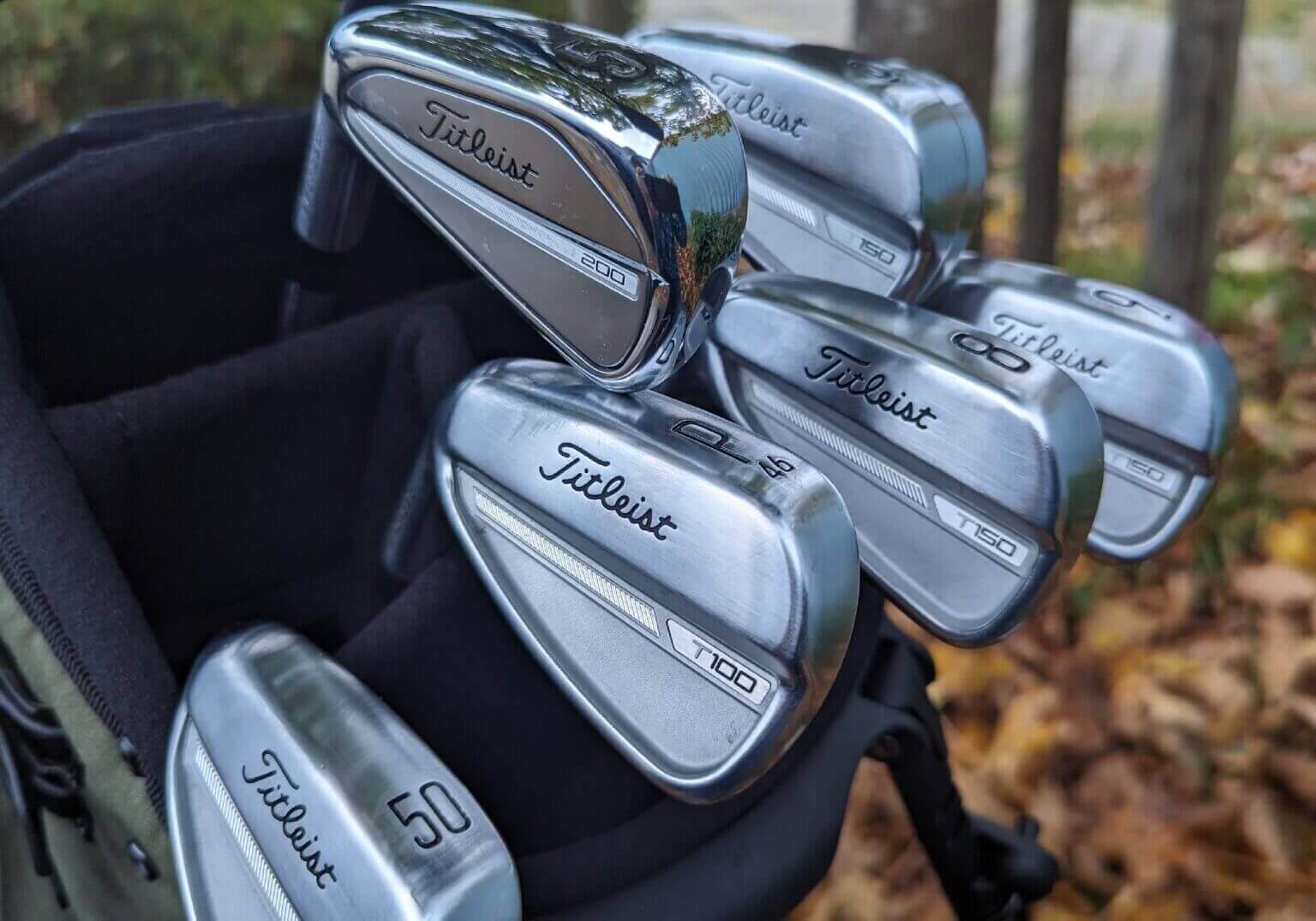

The Rise of Blended Iron Sets: A Guide for Golfers
When amateurs step onto the golf course, they often opt for complete iron sets based on preference or aesthetic appeal. However, as golf equipment technology evolves, many seasoned players, including professionals, are increasingly opting for blended iron sets—custom configurations that consist of different iron models working in concert. In fact, Titleist reports that about 80% of its tour staff utilizes blended sets, which often feature multiple iron models tailored to specific elements of their game. If you’ve contemplated making the switch to a blended iron set but need guidance, you’re in the right place.
Understanding Blended Iron Sets
A blended iron set—often referred to as a combo set—consists of two or more iron models that are selected for specific tasks. This configuration typically employs more forgiving long irons (like the 3-5 or 4-6) designed for elevated launches and user-friendly play. Conversely, short irons (7-PW/GW) are crafted with greater precision for elements such as spin consistency and control over yardage.
The ultimate goal of a blended iron set is to maintain consistent ball speeds throughout your bag. Additionally, fitters evaluate factors like peak height and descent angle to ensure the ball lands softly on the green, enhancing performance and lowering scores.
Brands That Excel in Blended Designs
Not all golf brands provide the best options for blended sets. Adjustments in loft, design, and shaping can make the difference between seamless transitions between clubs or a disjointed feel in your bag. Several manufacturers are particularly known for their blended offerings. For example, Srixon even includes a combo set builder option on its website, allowing for tailored configurations:
- Titleist: T-Series (T100, T150, T250, T350)
- Srixon: ZX and Z-Forged families
- Mizuno: Mizuno Pro series (241, 243, 245)
- TaylorMade: P-Series (P7MB, P7MC, P770, P790)
- Callaway: Apex Pro family (Apex Pro, Apex CB, Apex MB)
- COBRA: KING CB/MB “Flow Set”
By staying within these families, players can ensure a smooth transition from forgiving long irons to more precise short irons, making fitters more likely to recommend these options for customized builds.
Avoiding Common Pitfalls in Blending Iron Sets
While the concept of blending iron sets appears straightforward, amateur golfers should be aware of three significant pitfalls:
1. Loft and Distance Misalignment
When mixing distance-oriented long irons with traditional short models, the loft numbers may appear similar, but the actual yardages may not align. Distance heads often boast stronger lofts, faster face speeds, and reduced spin, which can create gaps or overlaps in yardages. It’s essential to have experienced fitters adjust lofts to minimize carry discrepancies.
2. Misplaced Technology Focus
For a blended set to be truly effective, it’s crucial that technological enhancements are employed where needed. Most golfers benefit from added tech—such as wider soles and more tungsten—in long and mid irons, enhancing launch and ball speed. However, these features could impair control in short irons. Therefore, seasoned players generally rely on more basic designs in short irons for improved spin and predictability.
3. Variability in Feel
Blending different iron models introduces a somewhat technical aspect, as variations in head weight and hosel depth can influence how the shaft behaves and feels. This variability may affect flex, balance, and overall performance, so it’s critical to work alongside fitters to ensure you find a blended set that aligns with your playing style.
Identifying the Optimal "Break" Point in Your Set
Knowing where to "break" your iron set is crucial for optimizing performance. Instead of selecting an arbitrary point, you can use two main indicators to guide you in selecting the right model to "swap in":
1. Ball Speed Consistency
Monitor where your ball speed takes a noticeable dip as you transition into longer irons. If you consistently achieve good speed with your 7-iron, 6-iron, and 5-iron, but your 4-iron fails to deliver similar gains, it may be time to consider a more forgiving long iron or a hybrid to replace it.
2. Peak Height Evaluation
Peak height serves as an effective checkpoint for determining where your current iron design ceases to support your game. Establish a baseline using your trusted 7-iron and assess how your longer irons perform in comparison. If one club consistently falls short of that height, it may well be time for a replacement.
Signs That a Blended Iron Set Is Right for You
A blended iron set isn’t exclusively for those who struggle with long irons; it’s beneficial for golfers feeling mismatches among their clubs. If you relate to any of the following situations, a blended iron set could significantly enhance your game:
- Your long irons tend to fly too low and fail to stop on greens.
- Your short irons feel cumbersome, impacting shot shaping.
- You experience anomalous distance gaps between your clubs.
- Certain clubs instill confidence, while others leave you uncertain.
Final Thoughts
The principle behind blended iron sets is straightforward: there’s no need to force a single iron model to perform all tasks. Professional golfers have long acknowledged that different sections of the bag require distinct characteristics—favoring technology and forgiveness in long irons while prioritizing control and consistency in short irons. By keeping an eye on ball speed and peak height and leveraging family designs that are compatible, you can craft a blended set tailored to your playing style.
In summation, adopting a blended iron set can revolutionize your approach to the game, enabling you to maximize your strengths while minimizing weaknesses. Take advantage of fitting sessions and professional guidance to discover how to assemble the perfect blend for your unique game, and watch your performance flourish on the course.
