


The Art of Knowing Your Tools: Why Wedge Fitting Is Actually a Lifestyle Choice
There’s a moment in every golfer’s journey when you stop looking for magic and start looking for certainty. It usually happens after you’ve spent years hitting the same shot differently, wondering why your 54-degree wedge feels like a stranger in your hands one day and your best friend the next. That’s when you realize something crucial: you’ve been renting your game instead of owning it.
I’ve spent enough time around elite players and their teams to know that the gap between a 9.8 and a 9.79 in equipment isn’t about the product anymore—it’s about the person holding it. And the gateway to that ownership? Understanding that your wedges aren’t just clubs. They’re tools. And like any craftsperson, you need to know which tools actually work for your hands, your swing, and your game.
This is the lifestyle shift happening in golf right now, and it’s quietly transforming how serious players think about their short game.
The Confidence Gap Nobody Talks About
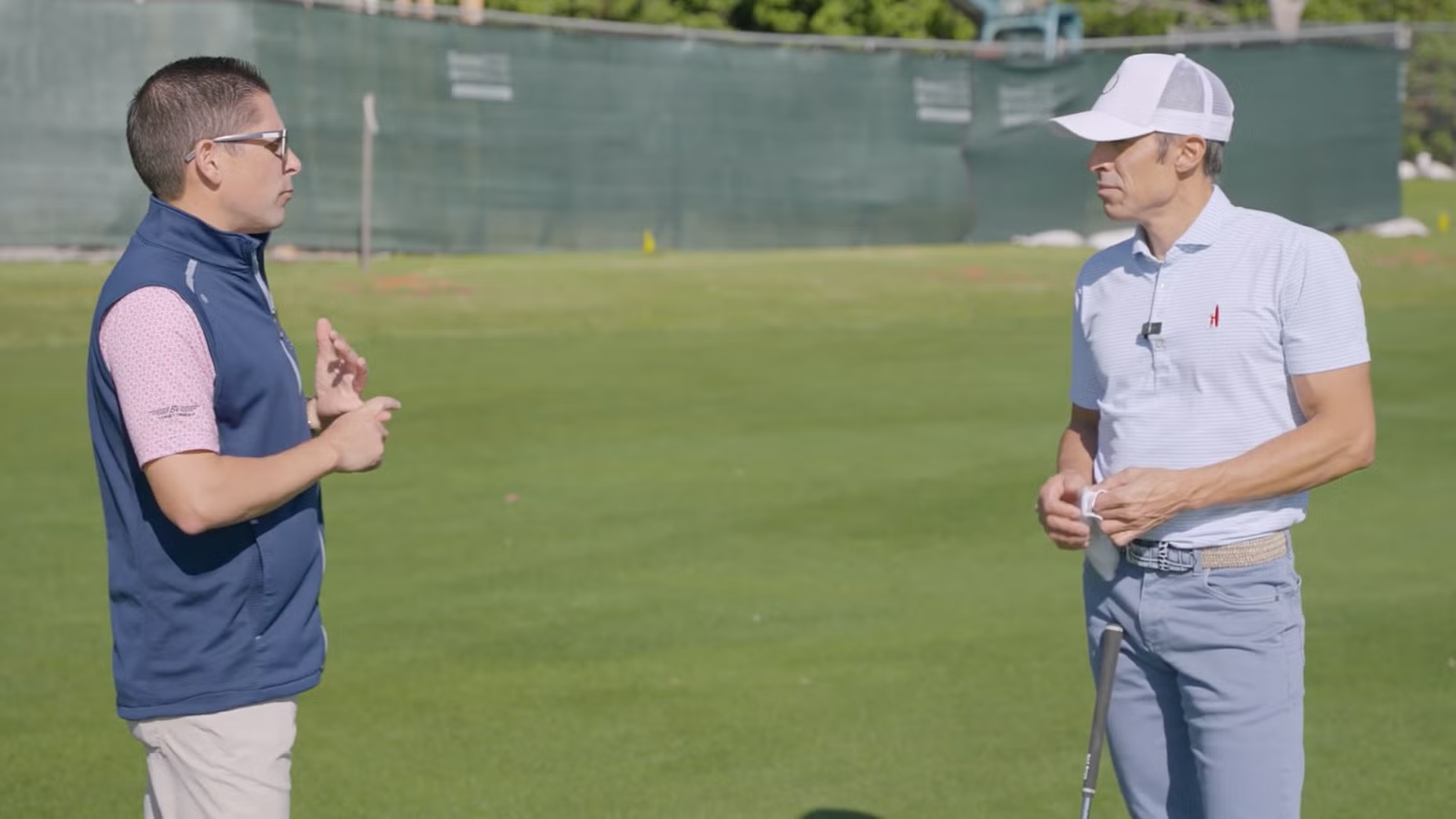
When you watch a professional golfer work with a fitter like Aaron Dill, you’re not just seeing equipment optimization. You’re witnessing the construction of confidence. And confidence? That’s a lifestyle component that extends far beyond the 18th green.
“The strike dictates everything. From 135 yards out until the time I grab my putter, I am allowed four tools to navigate that space.”
Think about what that statement really means for your game. It’s not about having the newest wedge with the flashiest technology. It’s about having a system so dialed in that you can stop thinking and start trusting. That’s the lifestyle payoff—the mental freedom that comes from owning your tools instead of hoping they work.
I’ve noticed something in conversations with golfers across all skill levels: the ones who’ve gone through a proper fitting session play with a different kind of ease. They’re not second-guessing their club selection on every approach shot. They’re not trying to adapt their swing to fit equipment that was never meant for them. They’re simply playing golf.
The Real Work Happens Between the Ears
Here’s what fascinates me about modern equipment fitting: everyone at the elite level is making incredible products. Callaway, TaylorMade, Cleveland, PXG, Cobra, Ping—they’re all operating at god-like levels of manufacturing precision. The wedges themselves have never been better. So why does Vokey maintain dominance? Why do five of the top 10 players in the world trust them?
It’s not sorcery. It’s systems. It’s having 27 different grind options available because the fitter understands that loft, grind, and bounce need to run in the same direction. It’s the difference between trying on clothes that fit your body versus having them tailored to your life.
“If you can find a wedge setup that consistently gets you out of that part of the face, regardless of your delivery, you are in that happy place Aaron always talks about.”
That “happy place” is what we’re all chasing. It’s the zone where your short game becomes an extension of your will instead of a source of anxiety. And getting there requires one radical act: admitting you might not know what you need.
Making the Fitting Commitment
For everyday golfers, the fitting process doesn’t require flying in a tour rep or testing equipment in a warehouse. But it does require showing up with honesty about your game. Here’s what a proper fitting actually does:
First, it establishes your baseline. What are your actual yardages at 85 percent speed? Not your aspirational distances—your real ones. I’ve watched so many golfers discover that their gaps are all wrong, which explains why they’ve been leaving approach shots short for years. It’s not a swing flaw. It’s a mathematics problem.
Second, it looks at strike patterns. Where do you make contact on the face? Is it consistent? The magic happens in grooves two through five. If you’re hitting outside that zone regularly, no amount of premium equipment is going to help. The fitter’s job is to find a setup that makes solid contact inevitable, not accidental.
Third—and this matters to your life off the course—it builds a system you understand. You know why you have four wedges. You know why that 54-degree is your most versatile tool. You know the gapping. When you understand the why behind your equipment, you play with intention instead of uncertainty.
The Lifestyle Payoff
Here’s what I’ve observed about golfers who take fitting seriously: they’re more confident in high-pressure moments. They’re less likely to make panic swaps mid-season. They spend less time obsessing over equipment and more time practicing what matters. They enjoy their golf more because they’re not fighting their tools.
That’s a lifestyle choice. It’s the difference between gear acquisition as a hobby and equipment strategy as a foundation for performance.
“In all honesty, I have never had so much trouble picking a set of sticks. If the ones I picked were 9.8/10, the ones I didn’t were 9.79/10.”
When everything is this good, the differentiator becomes knowledge—knowing which tool is right for you. And that knowledge only comes through fitting, through conversation with someone who understands the intersection of equipment and swing.
If you’re serious about your game in 2026, here’s the lifestyle pivot worth making: stop shopping for wedges. Start getting fitted for them. Bring a fitter your gapping chart, your swing tendencies, and your honest assessment of where you struggle. Let them build a system instead of assembling a collection. Then get to the range and actually own what’s in your bag.
That’s when golf stops being frustrating and starts being fun.
