

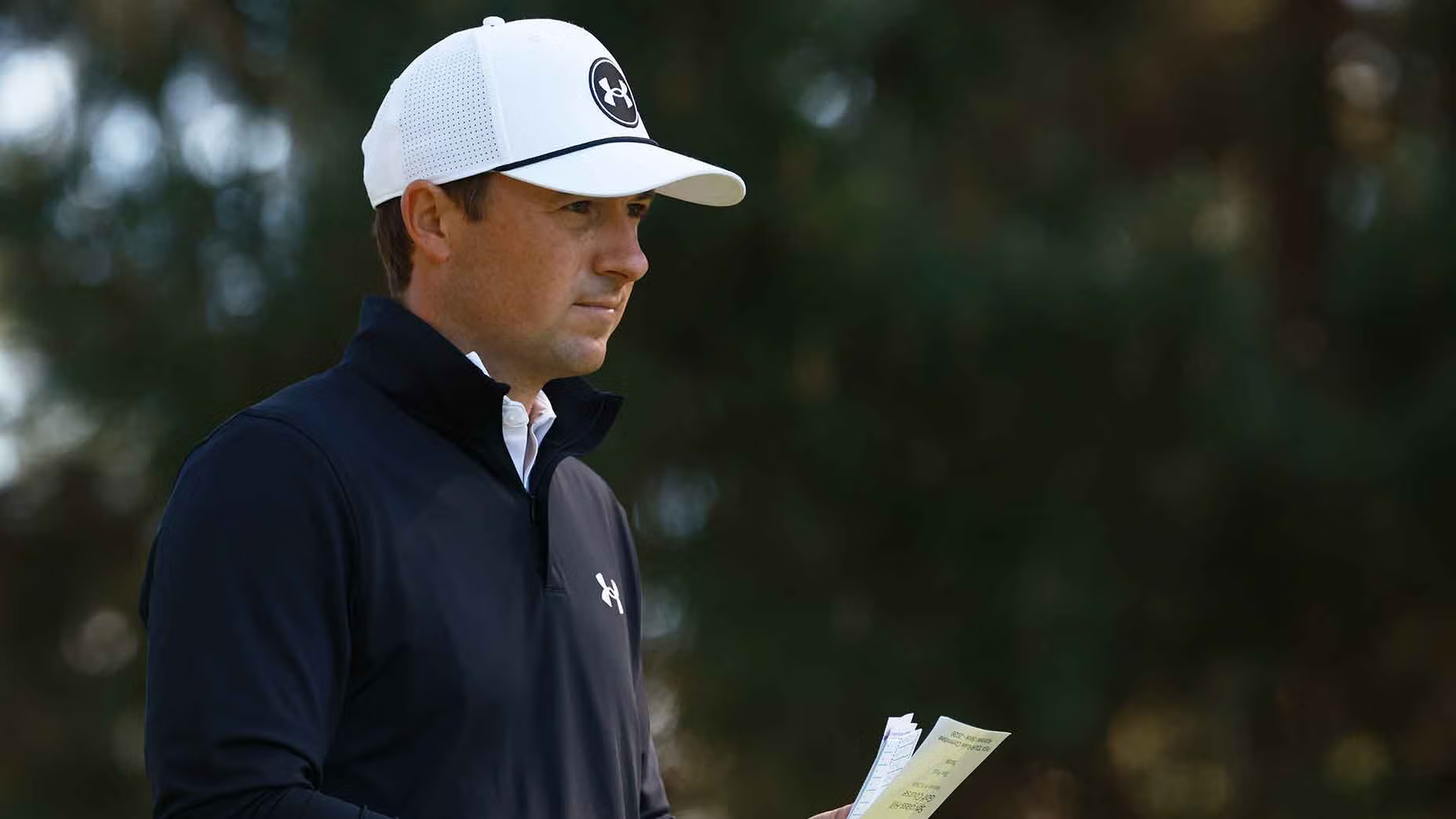


Every golfer knows the feeling of standing over a challenging shot, the wind whispering, the stakes high. Maybe it’s a make-or-break putt on your Saturday morning league, or perhaps a tricky chip over a bunker for bragging rights with your buddies. For Jordan Spieth, playing golf in the incredible, yet perilous, setting of Pebble Beach, those stakes once involved a touch more… drama.
I recall reading an anecdote from Spieth about a particularly memorable swing thought he had while perched precariously on the cliffs overlooking the 8th hole at Pebble Beach in 2022. It wasn’t about clubhead speed or hip rotation; it was far more primal.
“Let’s not shift our weight forward or we might die,” Spieth said with a chuckle, recalling the cliff scene from ’22 on Thursday. “That’s probably the weirdest [swing thought] I’ve ever had.”
While most of us aren’t facing life-or-death scenarios on the course (thankfully!), Spieth’s candidness about his mental state, both on and off the course, offers a powerful reminder of the deep wellspring of human experience that golf taps into. It’s a game of skill, yes, but also of profound psychology, resilience, and self-talk – elements that profoundly impact not just our scores, but our overall well-being.
The Inner Game: A Universal Struggle
We often look at professional athletes as almost superhuman, immune to the self-doubt and mental hurdles that plague us mere mortals. But Spieth’s recent reflections from the AT&T Pebble Beach Pro-Am show that even the best grapple with their own minds. He opened up about a challenging moment leading up to the tournament after a missed cut at the WM Phoenix Open.
“I got in a bad kind of mental place Friday,” Spieth said, referring to the second-round 75 that ended his week at the WM Phoenix Open prematurely with a missed cut. “I was swinging it well and I decided to tell myself I wasn’t. I just had a bad day.”
Sound familiar? How many times have we, as everyday golfers, found ourselves in a similar mental rut? Telling ourselves we can’t make a shot, dwelling on a bad hole, or letting one poor swing derail an entire round. Spieth’s transparency here is a powerful validation that this “inner game” is a universal experience in golf.
Washing the Slate Clean: A Lesson in Resilience
What I find particularly inspiring about Spieth’s approach is his ability to reset. After that tough Friday, he didn’t let it linger. Instead, he consciously decided to “throw it out the window.” He played a fun round with his brother, enjoyed the beauty of Pebble and Cypress, and then, as he put it, he decided to “get prepared for a normal week.”
“I mean, it was just an off day and a week that is typically a really good one for me,” Spieth said. “The last five [or] six years Phoenix has been a big springboard for me, and I thought, ‘let’s just forget about it and use this as our pseudo-Phoenix and try to get dialed in.’”
This isn’t just about golf; it’s a valuable life skill. How often do we carry the weight of a bad meeting, a frustrating chore, or a minor setback into our next activity, impacting our performance and enjoyment? Spieth’s ability to compartmentalize and reset is a masterclass in mental fortitude – a critical part of wellness for any golfer.
Jordan Spieth (-7) is back at Pebble Beach, the location of the weirdest swing thought of his career.
The thought, as he told me Thursday?
“Let’s not shift our weight forward or
we might die.” pic.twitter.com/FiOnNSWerw— James Colgan (@jamescolgan26) February 12, 2026
Actionable Takeaways for Your Game and Life:
- **Practice the Reset Button:** Next time you hit a bad shot or have a frustrating moment, take a deep breath. Acknowledge it, but then consciously decide to leave it behind. Walk to your next shot with a fresh mindset. This isn’t just for the course; apply it to daily challenges.
- **Embrace the “Fun Round”:** Spieth played a “fun round” with his brother before the tournament. Remember that golf is a game meant to be enjoyed. Don’t let the pressure of perfection steal your joy. Sometimes, stepping back and just playing for fun is the best reset.
- **Mind Your Self-Talk:** Just like Spieth, we can sometimes be our own worst critics. Pay attention to the narrative running in your head. Are you telling yourself you can’t, or are you encouraging yourself? Positive self-talk can significantly impact your performance and overall mood.
- **Heal and Recover:** Spieth’s long-standing wrist injury, now fully healed, highlights the importance of listening to your body and prioritizing recovery. Pain-free golf is a game-changer! Don’t push through discomfort; seek professional advice for any nagging aches or pains.
Jordan Spieth’s journey reminds us that golf is often a mirror to life itself. There will be high points, breathtaking moments, and frustrating setbacks. But it’s how we navigate these challenges – our mental resilience, our ability to reset, and our conscious effort to foster a positive mindset – that truly defines our experience, both on the greens and in the beautiful, sometimes precarious, landscape of our lives.
“>
