

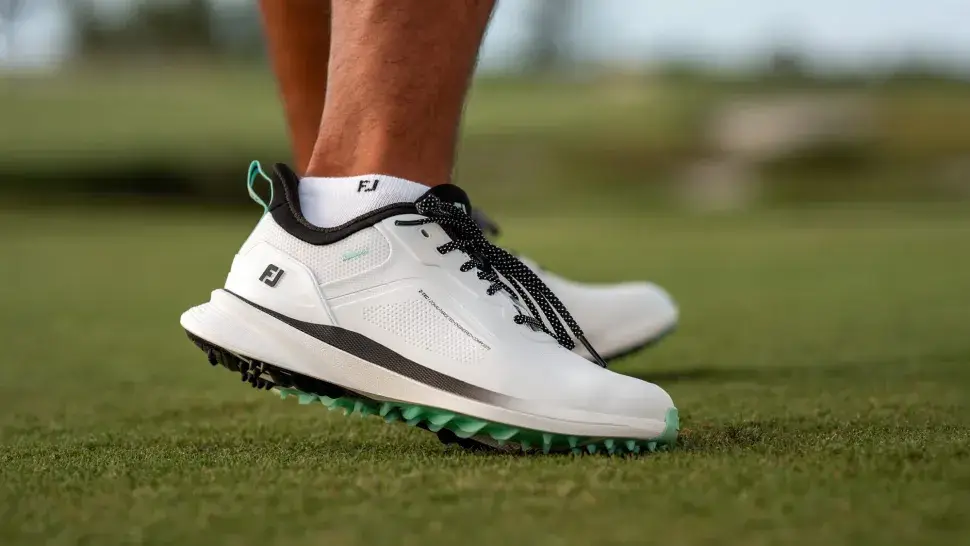

Alright, let’s talk about golf shoes. Specifically, the FootJoy Pro/SL, which has effectively etched its name into the spikeless shoe hall of fame. When it first dropped, it genuinely shifted the conversation. For years, “spikeless” often meant compromising on stability, especially for aggressive swings. But the Pro/SL made a strong case for performance without spikes, and the market responded in droves.
Now, FootJoy is rolling out the 2026 iteration, and as the Equipment Editor for The Daily Duffer, my ears perk up. Manufacturers love to say “designed from the ground up” with every new release, and while that’s often hyperbole, with a shoe like the Pro/SL that’s been so foundational, any significant overhaul is worth a deep dive.
“The FootJoy Pro/SL shoe has become a bit of an institution in the decade or so since it was first introduced. It’s one of the best-loved and highest rated spikeless shoes on the market, and really helped to convince golfers that spikeless shoes can still provide great performance.”
That quote nails it. The previous models set a high bar, so the question for 2026 is: did they clear it, or did they just polish the old standard? Based on the reported changes, there are some intriguing elements.
The Tech Talk: Z-Tec Upper and ARCTrax/SL Outsole
My eyes immediately go to the Z-Tec upper and the ARCTrax/SL outsole. These are the two primary components cited for performance enhancements. The Z-Tec upper is described as a “multi-layer construction that surrounds the whole foot, with targeted support and flexibility.” The claim is that this design “helps to transfer more energy more efficiently through the swing.”
As a club fitter, I see a direct correlation here. Footwear stability is crucial for maintaining posture and generating ground force. If a shoe allows for too much foot movement or slippage, it compromises the kinetic chain. This directly impacts clubhead speed and, subsequently, ball speed. A more efficient energy transfer from the ground up means less energy lost, potentially translating to an extra MPH or two on a driver swing. I’ve often seen golfers, particularly those with higher swing speeds, gain significant consistency and even a few yards just by improving their ground connection through proper footwear. This isn’t marketing fluff; it’s biomechanical reality. The “targeted support” part suggests FootJoy has looked at specific pressure points and movement patterns during the swing, which is a smart application of biomechanical principles.

Then there’s the new ARCTrax/SL outsole, with its “strategically placed cones and fins.” This is directly addressing traction. In my testing, spikeless shoes often fall short of spiked shoes when conditions get wet or uneven. However, advancements in outsole design have significantly closed that gap. The claim of “maximising ground contact” and “enhancing force and stability” is, again, critical. When I’m on the launch monitor, one of the first things I look at with golfers struggling with consistency is their footwork. Any lateral slide or rotational instability in the feet can cause a loss of power, a change in attack angle, and inconsistent contact.
“FootJoy say that the new Pro/SL has been designed ‘from the ground up’ to provide the best possible performance from a spikeless model.”
They better be right, because that’s a bold statement in a competitive market. The key here, for me, will be how these “cones and fins” interact across various terrains – from firm tee boxes to soft, wet fairways. A shoe that performs well on a perfectly manicured indoor mat often doesn’t hold up on a dew-covered morning tee time.

Comfort and Weight Savings: The Practical Side
The Pro/SL also boasts a significant 29% weight reduction. This is huge. Walking 18 holes, especially if you carry your bag, can be a grind. Lighter shoes inherently reduce fatigue. Combine that with a StratoFoam heel pad for impact absorption and a “wider toe box,” and it sounds like FootJoy is seriously prioritizing walking comfort. I’ve fitted hundreds of golfers who prioritize comfort over marginal performance gains, especially if they’re playing multiple rounds a week. The wider toe box also caught my attention. Many golfers, myself included, dislike the cramped feeling of some golf shoes. A wider toe box allows for a more natural splay of the toes, which can improve balance and stability – again, directly impacting ground connection and power transfer.
“Compared to the previous Pro/SL the new model is 29% lighter, making walking and wearing them much easier.”
This isn’t just about comfort; it plays into performance. A tired golfer is a less efficient golfer. Reducing the physical strain during a round allows for more consistent swings, especially on the back nine when fatigue often sets in. It directly affects stamina, which indirectly affects swing mechanics and ultimately, ball striking and consistency. Data on late-round clubhead speed drops often correlate with increased physical exertion.

The availability in both Laced and BOA systems is a nod to personal preference, and I commend FootJoy for offering both. While the BOA system often offers a more uniform and precise fit, many golfers still prefer the traditional feel of laces. It’s about giving the golfer choice, which is always a plus in fitting.
The price point of £160 for laced and £185 for BOA positions them firmly in the premium spikeless category. This isn’t a budget shoe, but if the performance claims hold up, it’s a justifiable investment for serious golfers. I often tell my clients that investing in proper footwear is as important as investing in a good putter or a driver. Stability and comfort directly impact your swing and your ability to enjoy the round.
Who is this for?
Based on the technical claims, the new Pro/SL appears to cater to a broad range of golfers, from the low handicapper who demands maximum ground force and stability to the recreational player who prioritizes all-day comfort without sacrificing performance. The “tour player feedback” suggests that high swing speed players found previous models sufficient, and this iteration aims to improve upon that. If the Z-Tec upper and ARCTrax/SL outsole deliver on their promise, I’d expect to see slightly improved power transfer for faster swings, and enhanced stability for all.
For golfers who walk a lot, the 29% weight reduction and improved cushioning are significant. While I can’t put a number on the “increased miles per gallon” you’ll get from less tired feet, the qualitative difference will be noticeable over 18 holes.
My Takeaway

Make sure you SUBSCRIBE to our channel so that you don’t miss another video!
The FootJoy Pro/SL 2026 isn’t just another incremental update. The focus on a genuinely redesigned upper for enhanced energy transfer and an outsole for improved ground contact, coupled with significant weight savings and comfort features, suggests FootJoy is serious about maintaining its leadership in the spikeless category. While I’ll reserve final judgment until I can get these on a golfer and quantify the results on a launch monitor – looking for subtle shifts in ground pressure, swing speed, and consistency statistics – the initial technical blueprint is very promising. If you’re due for new golf shoes and prioritize both performance and comfort, I’d highly recommend giving these a serious look. The Pro/SL has always been a smart buy, and this new iteration seems poised to continue that trend.
