


Hello, Daily Duffer readers! Sarah Chen here, and I’m thrilled to share some insights with you today. As a PGA-certified instructor for over 15 years, I’ve had the privilege of working with golfers of all skill levels, from tour professionals to passionate weekend warriors. My core belief? Anyone can improve their game with the right guidance and a dedicated approach.
Today, we’re going to talk about a fundamental aspect of golf that often gets overlooked in the pursuit of the “perfect swing”: your equipment. Specifically, how the right set of irons can profoundly impact your game, and what you should consider when thinking about an upgrade or getting a new set.
The Critical Link Between Your Irons and Your Score
Think about it: your irons are your scoring clubs for a significant portion of your rounds. From precise approach shots to delicate chip-outs, they are your workhorses. A well-fitted, confidence-inspiring set of irons can literally shave strokes off your game. Conversely, playing with irons that don’t suit your swing can lead to frustration and inconsistency.
I often tell my students, it’s not just about hitting the ball further; it’s about hitting it *better* – more consistently, with the right trajectory and spin. The technology in modern golf clubs, especially irons, is designed to help you do just that. They offer forgiveness, optimize launch, and provide the feel you need to score.
Recently, I was browsing the GolfWRX forums, that wonderful community where golfers share their passion and knowledge, and I noticed something that perfectly illustrates this point. The opportunity to find clubs that could genuinely elevate your play is always there:
“At GolfWRX, we are a community of like-minded individuals who all experience and express our enjoyment of the game in many ways.”
This sense of community is fantastic, and it’s where interesting opportunities often pop up. For instance, I saw a listing that immediately caught my eye:
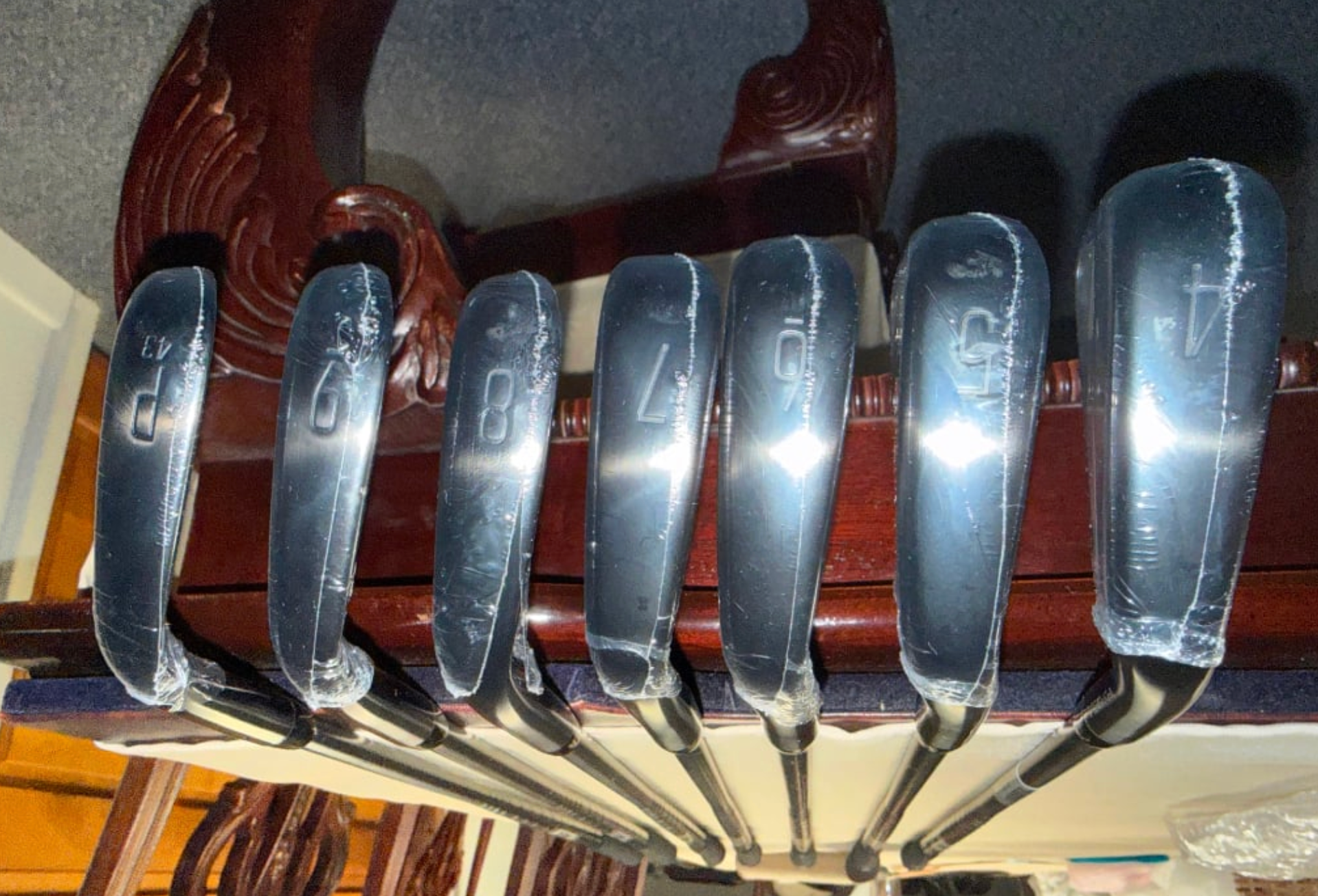
“Currently, in our GolfWRX buy/sell/trade (BST) forum, @BigBocci has a set of brand New Titleist 3G T200 Black irons up for grabs.”
This is precisely the kind of opportunity I want you to be prepared for. When a great set of irons, like these brand new Titleist T200 Black irons (3rd gen, 4-PW), comes along, you should understand how to assess their potential impact on your game.
Understanding Your Iron Game: It’s More Than Just Distance
When we evaluate irons, it’s not just about how far you hit them. It’s about predictability, dispersion, and consistency. Do you consistently hit the sweet spot? Do your shots fly straight, or do they tend to fade or draw unintentionally? Are you getting the desired launch angle and spin for your approach shots?
These are the questions I encourage my students to ask. If you’re struggling with these areas, it might be time to look at your existing irons or consider an upgrade.
“From the listing: “Looking to sell a brand new, still in plastic set of Titleist T200 black irons, 3rd gen, 4-PW. Shipped CONUS only. $1,500 includes shipping and PayPal G&S fees.”“
A set like the Titleist T200s, known for their combination of distance, feel, and playability, can offer significant advantages. But how do you know if they’re right for *you*?
Actionable Drills: Assessing Your Current Iron Performance
Before you even think about new clubs, let’s get you thinking about your current iron game. Knowing your tendencies is key to making informed decisions.
Drill 1: The “Dispersion Checker”
What it teaches: This drill helps you understand your typical miss patterns and shot dispersion with your irons. Are you consistently missing left or right, or are your shots scattered?
How to do it: Head to the range with your 7-iron. Pick a specific target. Hit 10-15 balls, aiming for that target. After each shot, walk up and place a tee where your ball landed. Don’t worry about distance, just accuracy relative to your target. After hitting all the balls, step back and look at the cluster of tees. Is it tight and centered around your target? Or is it spread out, maybe heavily favoring one side? This visual feedback is incredibly powerful.
Why it works: Understanding your typical miss helps you identify if your current clubs are exacerbating an issue or if a change in club design (like more forgiveness) could help tighten that dispersion. If your cluster is very wide, it also tells us there’s work to do on your swing mechanics, but better clubs can certainly shrink the “bad” shots.
Drill 2: The “Landing Zone” Challenge
What it teaches: This drill focuses on controlling launch and descent angle, crucial for holding greens. It reveals if your irons are providing the right trajectory for your swing speed.
How to do it: Again, with your 7-iron, choose a target flag or a specific yardage. The goal isn’t just to hit it to that distance, but to try and land the ball softly. Imagine a small “landing zone” around your target. After each shot, assess if the ball truly “landed soft” or if it flew too low, too high, or had too much run-out. Pay attention to the sound and feel at impact – a well-struck iron often has a distinct feel.
Why it works: Modern irons are designed with specific launch characteristics. If you’re consistently hitting low-flying, hot shots that run away, your clubs might not be optimized for your swing, or you might need to adjust your dynamic loft at impact. Conversely, if your shots balloon, you might be losing distance and control in windy conditions.
Next Steps: The Path to Better Irons
Once you have a clearer picture of your iron game, you’re better equipped to make a decision about an upgrade or getting fitted. If you’re consistently seeing poor dispersion or struggling with trajectory, it’s a strong indicator that new technology or a proper fitting could make a world of difference.
Remember, your golf journey is a continuous process of learning and refinement. Don’t be afraid to explore new equipment if it can help you get closer to your golfing goals. The advancements in golf club design are truly remarkable, and they are there to help *you* play better.
Keep practicing those drills, and always remember to enjoy the process. I believe in your ability to improve!
