


Every year, golf manufacturers roll out a fresh wave of drivers, each promising unprecedented distance and forgiveness. As the Equipment Editor for The Daily Duffer and someone who’s spent countless hours watching numbers on a launch monitor and fitting hundreds of golfers, I’ve learned to separate genuine breakthroughs from clever marketing. When a brand like Mizuno, traditionally respected more for its buttery-soft forged irons than its metalwoods, starts making serious noise with a new driver technology, my ears perk up.
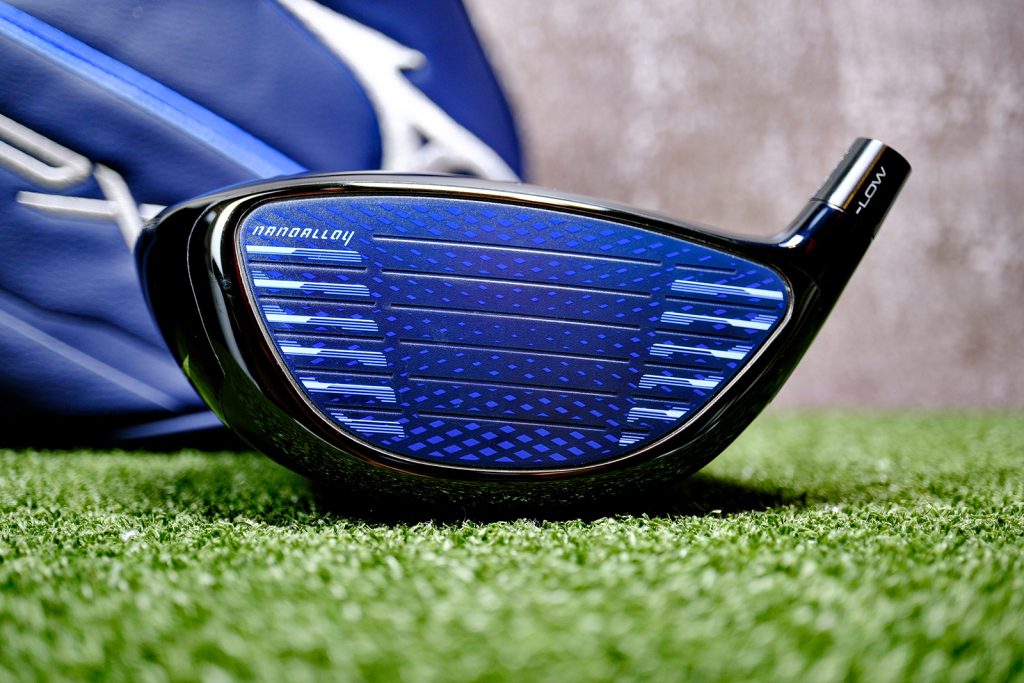
The buzz surrounding Mizuno’s JPX ONE driver lineup and its Nanoalloy technology has been impossible to ignore. Initially, I approached it with my usual skepticism. After all, “new materials” are a dime a dozen in this industry. But the deeper I’ve delved into what Nanoalloy truly is and how it’s applied, the more I’m convinced this isn’t just another incremental step. This could be a legitimate game-changer for Mizuno in the driver market.
Most golfers understand that a driver’s face is a complex engineering marvel, designed to flex and rebound at impact to transfer as much energy as possible to the ball, all while adhering to strict USGA regulations. For years, titanium alloys have been the undisputed champions of driver face construction. But Mizuno is taking a different approach by integrating a polymer alloy, Nanoalloy, into their forged titanium face structure.
“With Nanoalloy, we are talking about a nylon based polymer alloy which has been engineered with a level of microscopic control that allows its structure to behave in incredibly unique ways, especially when it comes to how it responds to impact.”
This “nylon-based polymer alloy” isn’t a replacement for titanium; it’s a strategic enhancement. And here’s where my technical interest, and hopefully yours, gets piqued. We’re used to metal alloys being engineered for strength and flexibility. The idea of a polymer alloy responding to impact in a way that *improves* energy transfer is fascinating. The article highlights this duality: “At rest, the material is incredibly firm and stable. However, when pressure or force is applied, in this case impact with a golf ball, it becomes highly flexible and reactive at the molecular level.”
Think about that for a second. Traditional titanium faces have a flex point, and that’s largely where maximum ball speed comes from. But what if you could have a material that dynamically alters its properties *during* impact to maximize that energy return across a larger area? That’s the promise of Nanoalloy.

From my experience on the launch monitor, the holy grail is not just high initial ball speed, but *consistent* ball speed. Even the pros don’t hit the center of the face every time. For the average golfer, off-center strikes are a reality, and that’s where MOI (Moment of Inertia) and forgiveness come into play. While MOI primarily dictates how much the clubhead twists on off-center hits, the face material dictates how much ball speed is retained *around* the sweet spot. This is where Nanoalloy claims its true advantage.
The Real Science of Speed Retention
Mizuno’s internal testing suggests that Nanoalloy leads to a “CORAREA (the rebound area) significantly larger than not only their previous models, but also the most popular driver heads on the market.” This isn’t just engineering jargon; it’s directly translatable to real-world performance. A larger CORAREA means that strikes slightly toward the heel or toe, or a little high or low on the face, will still generate ball speeds much closer to a perfect center strike. For golfers who typically lose 5-10 mph of ball speed on these common mishits, this is a huge deal.
The source article mentions a reduced face thickness by “approximately 11% (0.25–0.33 mm) compared to the ST-MAX 230.” While thinner faces generally mean more flex and higher ball speeds, the key here is how Nanoalloy helps manage that flex. It’s what Mizuno calls “controlled deformation redistribution.” Instead of impact force concentrating solely on the strike point, the Nanoalloy layer helps spread that energy more efficiently across the face. This leads to:
- Greater face deformation efficiency
- Reduced reliance on ball deformation alone
- Improved compression efficiency across a larger strike area
My first thought when I read this was about spin rates on off-center hits. Often, thinner faces can lead to excessive spin on shots hit high on the face. If Nanoalloy is indeed redistributing energy more effectively, it theoretically could help maintain more optimal spin rates on those slightly higher strikes, which can be a common miss for many mid-to-high handicappers. We’ll need to see extensive launch monitor data across various swing speeds and strike locations to confirm this, but the premise is solid.
In my fitting bay, I’ve seen countless golfers struggle with inconsistent ball speeds. A golfer might clock 155 mph ball speed on a perfect strike, but then drop to 140 mph with a heel miss. If the JPX ONE can tighten that ball speed window – say, consistently hitting 150-153 mph across a wider area – that translates to significant gains in average carry distance, even if the peak ball speed isn’t necessarily higher than the competition.

“To nail it all down, Mizuno’s application of Nanoalloy to the face essentially rewrites how driver faces perform on mishits. When you bring it into one concise thought, it means more ball speed retention even when you don’t catch it flush, to maximize distance potential not only on your best strikes, but your everyday ones as well.”
This statement, if proven out in independent testing, is huge. This isn’t about marketing hype for a couple of extra yards on a trackman. This is about real-world playability and maximizing a golfer’s existing swing speed on a wider range of shots. That’s where the true value lies for most golfers.
Who is this driver for?
Given the focus on ball speed retention on off-center hits, the JPX ONE driver with Nanoalloy technology seems particularly well-suited for a broad range of golfers. Mid-to-high handicappers who often struggle with consistency and lose distance on mishits could see significant benefits. Faster swing speed players who are already pushing the COR limit might not see massive gains on perfect strikes, but the increased consistency across the face could still lead to lower dispersion and more predictable total distance. In my fitting experience, these golfers often prioritize tight dispersion charts over a few extra yards on their best hit.
The “material shift” described in the article is a strong claim, but one I’m eager to validate through extensive testing. If Mizuno has truly unlocked a new avenue for face performance, they could challenge the established giants in the driver space. They’ve long held a reputation for “understated” metalwoods, as the article notes, but Nanoalloy could be their declaration that they’re no longer content to build reliable clubs; they’re building cutting-edge ones.
“The innovation and technology have always been there, but with Nanoalloy it no longer feels like a brand trying to keep up, instead they are now redefining what innovation looks like off the tee box.”
This is a big statement, and one that resonates with my observations of Mizuno’s recent push. They’re historically a brand that believes in the science of feel and precision, and now they’re applying that same meticulous engineering to the driver face. I’m looking forward to getting these drivers into the hands of golfers, gathering more extensive launch monitor data, and seeing if the on-course results truly live up to the promise of this genuinely interesting material science breakthrough.
