


Alright, Daily Duffer faithful, Tyler Reed here, and we’re diving deep into the bag of the current undisputed king of the links, Scottie Scheffler, fresh off his 20th PGA Tour win at The American Express 2026. Twenty wins before 30? That’s Tiger and Jack territory, folks. What’s powering this dominant run? Let’s peel back the layers and see what true performance looks like, beyond the glossy ads.
“Scottie Scheffler joined Jack Nicklaus and Tiger Woods as the only players to win 20 times on the PGA Tour before the age of 30, coming from behind to win in his first start of the season.”
That kind of performance doesn’t happen by accident, and while Scheffler’s talent is undeniable, his equipment plays a critical role in consistently delivering those results.
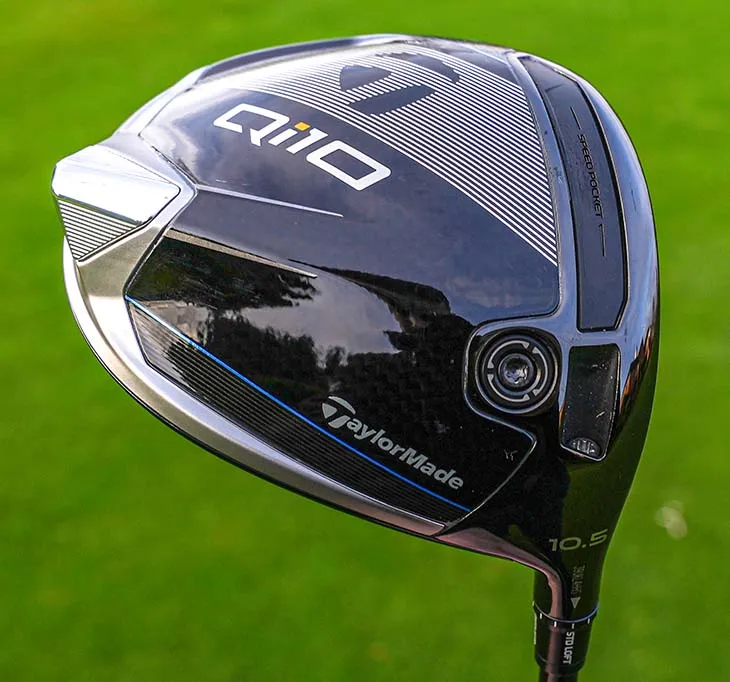
The Metalwoods: TaylorMade Qi10 – More Than Just “Speed”
First up, the big stick: the TaylorMade Qi10 Driver (8 degrees) with a Fujikura Ventus Black 7 X shaft. Now, I’ve tested the Qi10 extensively on the launch monitor, and what I consistently see is exactly what TaylorMade promises: high MOI stability. It’s not just about raw ball speed anymore, though the Qi10 certainly delivers there. What sets it apart is the inertia. We’re talking about a significant increase in MOI across the face, which translates directly to forgiveness on off-center strikes. For a player like Scheffler, who already finds the center more often than not, this means less dispersion on those rare misses and maximum energy retention across a wider impact area. The 8-degree loft, combined with that incredibly stable Ventus Black 7 X, tells me he’s looking for a penetrating flight with low spin numbers to maximize his already impressive carry distance. In my fitting experience, the Ventus Black line maintains a remarkably tight spin window, even at high swing speeds, which is crucial for consistency.
His 3-wood is also the TaylorMade Qi10 (15 degrees) with a Ventus Black 8 X. The pattern continues: stability and control. But the interesting choice here is the 7-wood, a TaylorMade Qi4D (21 degrees) with a Fujikura Ventus Black 9 X. “D” typically indicates a more forgiving, easier-to-launch head. For a player of Scheffler’s caliber, ditching a traditional long iron for a 7-wood isn’t about lack of ability; it’s about optimizing flight and landing angle. A 7-wood naturally launches higher and lands softer than a 3-iron, making it hugely valuable for holding greens on long par-3s or attacking par-5s, especially into wind. The Ventus Black 9 X shaft suggests he’s still maintaining that aggressive, low-launch, low-spin profile, just with a clubhead designed for more versatility. I’ve seen countless amateurs benefit from swapping out a low-lofted hybrid or long iron for a higher-lofted fairway wood – it’s often a better recipe for consistent gapping and softer landings.


Irons: Forged Feel and Tour-Level Control
Moving into the irons, we see a blend often favored by elite players: Srixon ZU85 Utility 3 and 4 Irons, followed by TaylorMade P7TW (5-PW). The Srixon ZU85 utilities are known for their hollow-body construction, which moves weight low and deep for easier launch and increased ball speed compared to traditional muscle-back equivalent irons. Paired with the Nippon N.S. Pro Modus 3 Hybrid Prototype 10 X, these are built for a strong, penetrating flight, essentially serving as highly controllable driving irons. What’s interesting here is his use of the specific Modus 3 Hybrid Prototype – typical tour player seeking extremely precise feel and dispersion characteristics.

For his scoring irons, he opts for the TaylorMade P7TW blades (5-PW), co-designed by Tiger Woods. These are pure player’s clubs—minimal offset, compact head, traditional lofts, and phenomenal feel. For someone striking the ball like Scheffler, feedback is king, and these irons deliver that in spades. Paired with True Temper Dynamic Gold Tour Issue X100 shafts, these clubs are built for consistent trajectory, spin, and workability. The X100 is a classic for a reason – heavy, stable, and provides superb control through the impact zone for high swing speed players. This setup isn’t for the faint of heart, or indeed, most amateurs. I’ve seen many mid-handicappers attempt to play blades, and the data rarely supports it. Forgiveness matters unless your strike is absolutely impeccable, like Scottie’s. For the vast majority, a cavity-back or player’s distance iron would offer far better results in terms of consistent ball speed and carry.

Wedges: Vokey Dominance and Grind Specifics
Unsurprisingly, the Titleist Vokey Design SM8 wedges (50-12F, 56-14F) and a Titleist Vokey Design WedgeWorks SM10 (60-06K) fill out his short game arsenal. The F-grind (SM8) is a versatile, all-around sole for full swings and standard shots, indicating he prefers consistent turf interaction. The most telling detail is the 60-degree K-grind. That K-grind is a wide, high-bounce sole, designed for ultimate bunker performance and forgiveness around the greens, especially from softer turf conditions or when opening the face. This is a very popular choice among Tour pros. The True Temper Dynamic Gold Tour Issue S400 shafts here are standard for tour-level wedges – providing that heavy, stable feel and predictable trajectory for maximum control on those crucial approach shots and delicate short game efforts.


The Putter and Ball: The Foundation of Scoring
Ah, the putter. For a while, this was the piece of Scheffler’s bag that generated the most chatter. He’s found solace in the TaylorMade Spider Tour X Putter. The Spider line is renowned for its high MOI and stability, which helps maintain face angle through the stroke, even on less-than-perfect putts. Tour players are very specific about their putters, often sticking with one model for years unless they hit a slump. The move to a Spider from a blade or smaller mallet usually signifies a desire for more forgiveness and consistency on varying green speeds and lengths. It’s a smart choice for maintaining composure under pressure, and the results speak for themselves.
“But a final round of 6 under 66, including 9 birdies, was enough to give him a comfortable four stroke victory.”
Those 9 birdies didn’t just come from phenomenal full swings – the short game and putting were clearly dialed in. The putter, and the ball, are arguably the most important clubs in the bag for accumulating those critical strokes.

Finally, the ball: Titleist Pro V1. This is almost a non-discussion for a Tour pro. The Pro V1 and Pro V1x are the industry standards for a reason. They offer an unparalleled combination of distance, greenside spin, and consistent flight characteristics. While other brands make excellent balls, the Pro V1’s feel and predictability around the greens are often the deciding factor for players at this level. When I put a Pro V1 on the launch monitor, I know exactly what spin and launch numbers to expect, and that consistency is priceless.

The Tyler Reed Takeaway: What Can We Learn?
Scheffler’s bag is a masterclass in optimizing for consistency and control, even for a player capable of immense power. It’s not about chasing outright distance with every club; it’s about meticulously gapping and ensuring each club performs reliably under pressure. The stability of the Qi10 woods, the precision of the P7TW irons, the versatility of the Vokey wedges, and the forgiveness of the Spider putter all work in concert to give him confidence. The choice of heavy, stiff shafts across the board, particularly the Fujikura Ventus Black line and Dynamic Gold Tour Issue, is no surprise for someone with his aggressive transition and high clubhead speed. These shafts minimize deformation and maintain a square clubface through impact, crucial for tight dispersion.
For the average Duffer struggling to find fairways or stick greens, Scheffler’s setup serves as a reminder: focus on stability and control first. While the Qi10 driver offers impressive forgiveness for pros, it’s even more impactful for the rest of us. Consider how a more forgiving fairway wood or hybrid could replace a difficult long iron. And for goodness sake, if you struggle with putting consistency, don’t be afraid to try a higher-MOI mallet putter. It pays dividends. Scheffler’s bag isn’t just a collection of clubs; it’s a finely tuned instrument, tailored to his elite game, proving that even the best in the world benefit from equipment that enhances their strengths and shores up any potential weaknesses. It’s a data-driven approach, plain and simple, and it’s why he keeps winning.
