

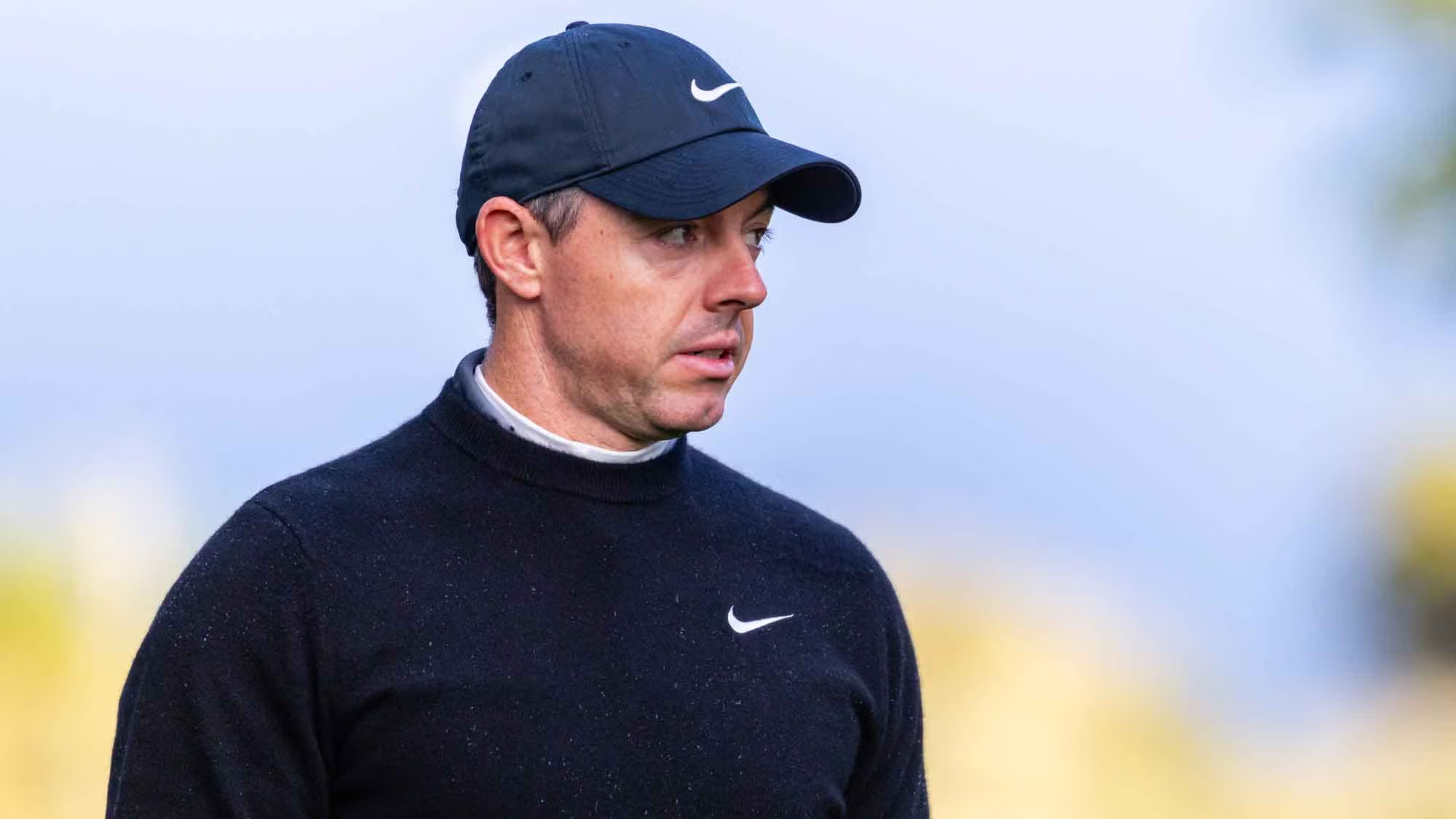

As a lifestyle editor, I’m always looking for those moments in golf that transcend the scorecard and truly reflect the human spirit—the grit, the frustration, the pursuit of mastery. Recently, the buzz around Riviera Country Club, specifically its infamous 4th hole, has offered a fascinating glimpse into this very aspect of our beloved game. It’s a powerful reminder that even for the game’s elite, golf isn’t always fair, and resilience is as vital as a perfectly struck shot.
We’ve all been there, right? Standing on a tee box, eyeing a particularly daunting hole, feeling that mix of challenge and trepidation. For the pros at Riviera, that feeling amplified tenfold when faced with the brutally redesigned par-3 4th. This isn’t just about a longer hole; it’s about a complete mental and physical challenge that leaves even the best players questioning their strategy and sometimes, their sanity.
Last year, this 230-yard beast at Riviera played to a hefty stroke average of 3.204, making it the third hardest hole on the course. Adam Schenk, a veteran pro, minced no words after missing the cut, calling the hole “terrible” in a tweet where he even tagged tournament host Tiger Woods. He suggested changes to make the redan green more accessible.
Fast forward to this year, and Schenk’s wish was partially granted—but not in the way he hoped. Instead of softening the blow, Riviera doubled down. The hole has been lengthened by about 40 yards, now playing up to an astonishing 270 yards from a repositioned tee box. The club cites aligning with designer George Thomas’s original vision, but the players? Well, their reactions speak volumes.
World No. 2 Rory McIlroy characterized the new-look 4th as a “horrible change.”
McIlroy elaborated on his frustration, highlighting how only 15% of the field hit the green at its original 230 yards. Now, at 275 yards, with sticky kikuyu grass fronting the green, he emphasized the need for a different kind of grass to allow shots to run up, rather than requiring an impossible carry.
This situation at Riviera’s 4th isn’t just a pro tour talking point; it’s a reflection of how we, as everyday golfers, approach challenges on (and off) the course. How often do we encounter something seemingly insurmountable, whether it’s a tricky bunker shot or a demanding par-5, and feel that surge of frustration? It’s in these moments that our true character, and our resilience, shines through.
Consider the mental fortitude required. Collin Morikawa, after playing the retooled 4th, commented that even from pushed-up tees, he still needed a 3-wood. His reaction? “Hit and hope, I guess.” He continued,
“It’s too soft, unfortunately, to have a lot of control to say, man, I’m going to play a tight 5-iron and run it up. I think a lot of us play it left to chip uphill, but with a 3-wood in hand, that cart path on the left honestly comes into play. … I think it’s just a very long par-3. There’s not a lot of thought to it other than just kind of hitting the green and moving on, unfortunately.”
“Hit and hope” – doesn’t that resonate? This sentiment isn’t reserved for tour pros facing 270-yard par-3s. It’s the feeling we get when we’re trying a new shot, attempting to play in less-than-ideal conditions, or even just trying to get through a tough week at work. It’s about adapting when the “ideal” isn’t an option.
Jordan Spieth’s take further illustrates the point, calling the 4th the “only weak spot on the course.” Even players not in the field, like Graeme McDowell, weighed in, expressing concern that an “obsession with total yardage can destroy individual great holes.” These reactions aren’t just complaints; they’re expressions of a deep connection to the artistry and strategy of golf.
What can we, as recreational golfers, take from this high-stakes drama? A few things come to mind:
Embrace the Challenge, Even When it Feels Unfair
Life, like golf, throws us curveballs. Sometimes, the path we thought was clear gets significantly longer or more challenging. Instead of dwelling on the unfairness, how do we pivot? Do we “hit and hope” with a positive attitude, or do we let frustration get the best of us?
Focus on the Shot at Hand, Not the Scorecard
Morikawa’s observation that there’s “not a lot of thought to it other than just kind of hitting the green and moving on” is a profound lesson. On particularly tough holes, sometimes the best strategy is simply to execute the best shot you *can* make, and then let it go. Don’t carry the baggage of a tough hole to the next tee.
Know Your Limits and Your Strengths
The pros are armed with the best equipment and intense physical training. Yet, even they struggle with a hole playing 270 yards. For us, this means understanding what our clubs can truly do, acknowledging our fitness level, and choosing a shot that maximizes our chances, even if it’s not the “hero” shot. Could you lay up? Play for a clean bogey instead of a disastrous double?
Speaking of physical demands, the discussion around Riviera’s 4th highlights the incredible athleticism of today’s golfers. A 3-wood on a par-3 is a testament to power and precision. For us, this reinforces the importance of golf fitness. While we might not need to crush a 3-wood 270 yards, improving our core strength, flexibility, and overall conditioning can make those everyday challenges on the course feel a lot more manageable. It’s not just about hitting it further; it’s about moving more fluidly, preventing injury, and enjoying the game for longer.
This lifestyle of golf is about more than just technique; it’s about the emotional journey, the mental resilience, and the continuous pursuit of personal bests. It’s about how we react when Viktor Hovland quips,
“I just think all the best par-3s are under 200 [yards]. You can maybe have it just over 200, but as soon as you start to take head covers off on par-3s, I just think it gets a little silly.”
We’ve all faced moments that feel “a little silly” in golf—a seemingly simple chip that goes awry, a perfectly good drive that finds an unexpected hazard. The beauty is in the return, the next hole, the next chance. The redesigned 4th at Riviera is a testament to golf’s unyielding demand for respect, adaptability, and an undefeatable spirit. It’s a challenge to the world’s best, but also a relatable metaphor for every golfer’s journey: facing the unknown, adapting to change, and always, always coming back for more.

Riviera shut down Viktor Hovland’s sneaky shortcut. He’s not amused
