

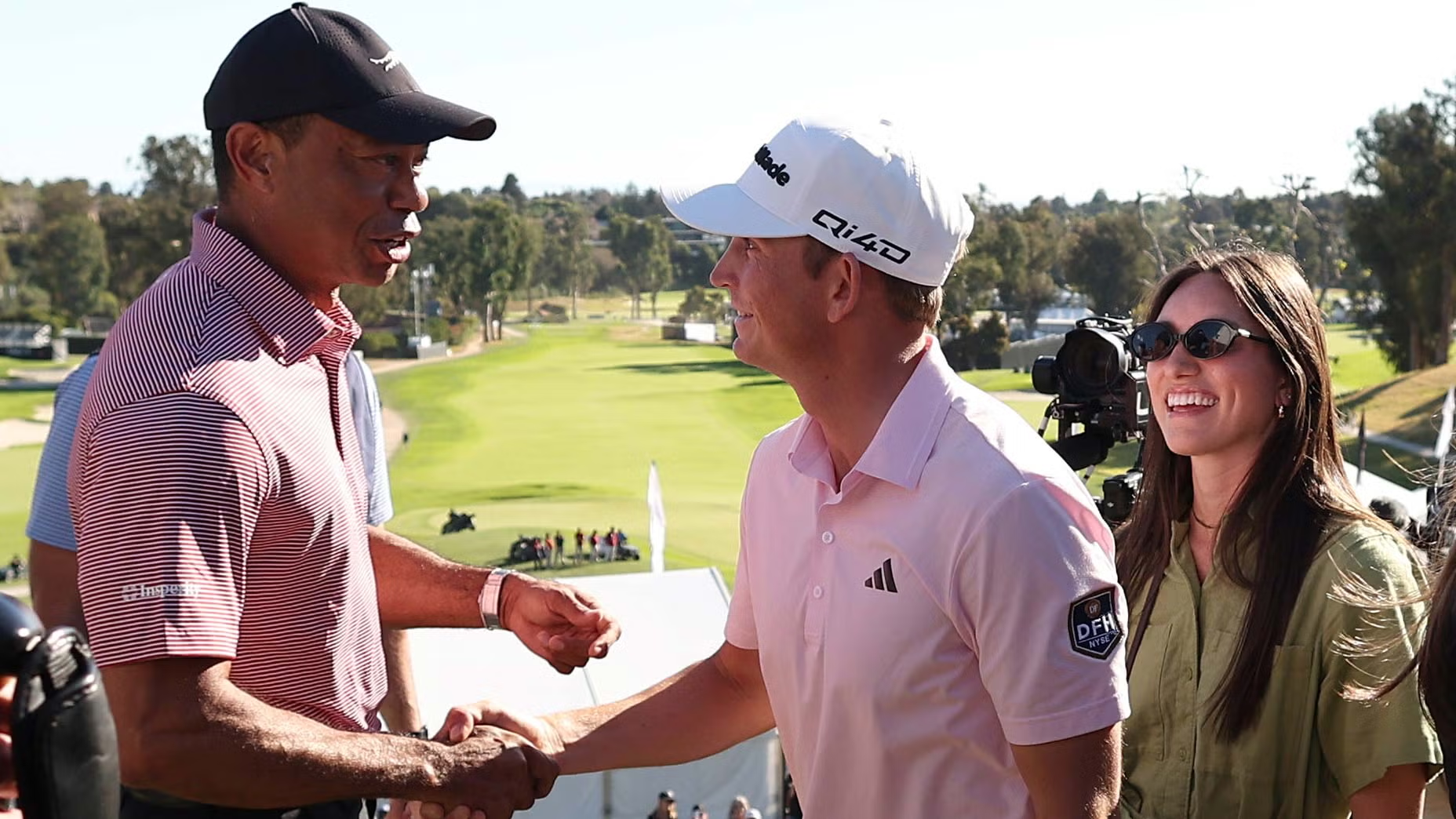

As the Lifestyle Editor for The Daily Duffer, I’ve long championed the idea that golf is so much more than just a game. It’s a lens through which we can explore fitness, fashion, wellness, and the very essence of human resilience. This past weekend’s Genesis Invitational offered a masterclass in this philosophy, particularly through the eyes of Jacob Bridgeman as he navigated the final holes at Riviera.
We often celebrate the wins and dissect the techniques, but what truly captivates me is the journey – the raw, unscripted human experience that unfolds on the course. Bridgeman’s incredible victory wasn’t just about sinking putts; it was a profound illustration of managing immense pressure, embracing the moment, and finding your rhythm when everything around you screams for chaos.
Think about it: that dreaded three-and-a-half-foot putt. Every recreational golfer has faced it. The one that feels like a formality until it feels like a chasm. Bridgeman faced that very putt on the 18th hole, with his first PGA Tour win hanging precariously in the balance, a six-shot lead having dwindled to a single stroke. Imagine the emotional rollercoaster!
The Art of Staying Present When Pressure Mounts
What struck me most was how Bridgeman described the sudden shift in his mental state. For much of the round, he was in control, almost cruising. Then, disaster struck, or at least, the *threat* of disaster. His tee shot on 16, a bogey, then a tricky second shot on 17. The pressure wasn’t a slow build; it was a freight train hitting him head-on.
“I didn’t really feel really crazy nervous until I had a five-footer for bogey on 16; that one was sketchy,” he said. “I hit a really good putt and luckily it went in, and then I was really nervous from there on out. I couldn’t even feel my hands on the last couple greens, I just hit the putt hoping it would get somewhere near the hole.”
This feeling of “not being able to feel your hands” is so relatable, isn’t it? It’s that moment in life, golf or otherwise, when the stakes are so high that your body responds physically. For us everyday golfers, it might be the first tee shot on a corporate outing, or a crucial putt to win a friendly wager. The physiological response—the adrenaline, the loss of fine motor skills—is a shared human experience.
But here’s the fascinating part: despite the jitters around the green, Bridgeman found a way to compartmentalize.
“I felt like I was just kind of in robot mode and autopilot, I could just swing the club and it would do exactly what it’s supposed to do,” he said. An envious feeling.
This “robot mode” is what I want us all to tap into. It’s the result of countless hours of practice and trusting your process. It’s muscle memory taking over when your conscious mind is overwhelmed. Whether it’s your golf swing, a presentation at work, or even cooking a complicated meal, having that foundational skill to fall back on is incredibly powerful.
The lessons here are profound: practice until it’s automatic. Build that internal ‘robot mode’ through repetition. It’s what allows you to perform under pressure, even when your hands feel numb.
Embracing Discomfort: The Only Way to Grow
Bridgeman’s journey to the PGA Tour wasn’t a shortcut. From his early days of needing a swing coach to improve his control, to his caddie G.W. Cable taking a pay cut to join him on the Korn Ferry Tour, it’s a narrative of hard work and belief. His success didn’t come overnight, and it wasn’t without its challenges.
Hole-out from the bunker! 💪@McIlroyRory makes a monster birdie on 12 to move within five shots of the lead. pic.twitter.com/fQn2UaX1fU
— PGA TOUR (@PGATOUR) February 25, 2024
We often shy away from discomfort, but as Bridgeman exemplifies, it’s where growth happens. He admitted, “I’m glad it’s done now.” That relief is a testament to the sheer mental and emotional energy expended. It reminds us that pushing our boundaries, whether on the golf course or in our personal lives, is hard. But the reward, as Bridgeman found, is “way, way better than I’ve ever dreamt it.”
The Final Putt: A Trust in the Process
Back to that three-and-a-half-foot putt on 18. The crowd groaning, the prospect of a playoff. It’s the kind of moment that defines careers and reveals character. His friend Chris Gotterup’s advice about hitting a putt aggressively even when your hands are numb resonated with him, providing a strange sense of camaraderie in that high-stakes moment.
“The hole’s really white and it looked pretty big for whatever reason on 18,” he said. He had his read — hit it at the middle of the middle — and he knew what he could control. “I was just hoping that the ball would roll where it was supposed to roll.”
This is the ultimate lesson for all of us. When the pressure is immense, simplify. Focus on what you can control: your process, your breath, your intention. Bridgeman didn’t overthink it; he trusted his read, trusted his stroke, and hoped. That’s a powerful mindset that extends far beyond the green. It’s about doing the work, preparing diligently, and then, in the crucial moment, letting go and trusting that your efforts will carry you through.
So, the next time you step onto the course, or face any challenge in life, remember Jacob Bridgeman at Riviera. Embrace the pressure, trust your process, and when your hands feel numb, just let that robot mode kick in. You might be surprised at what you achieve.
That feeling when you make a hole-out from the bunker 🤩@McIlroyRory | @TheGenesisInv pic.twitter.com/fQn2UaX1fU
— PGA TOUR (@PGATOUR) February 25, 2024
