

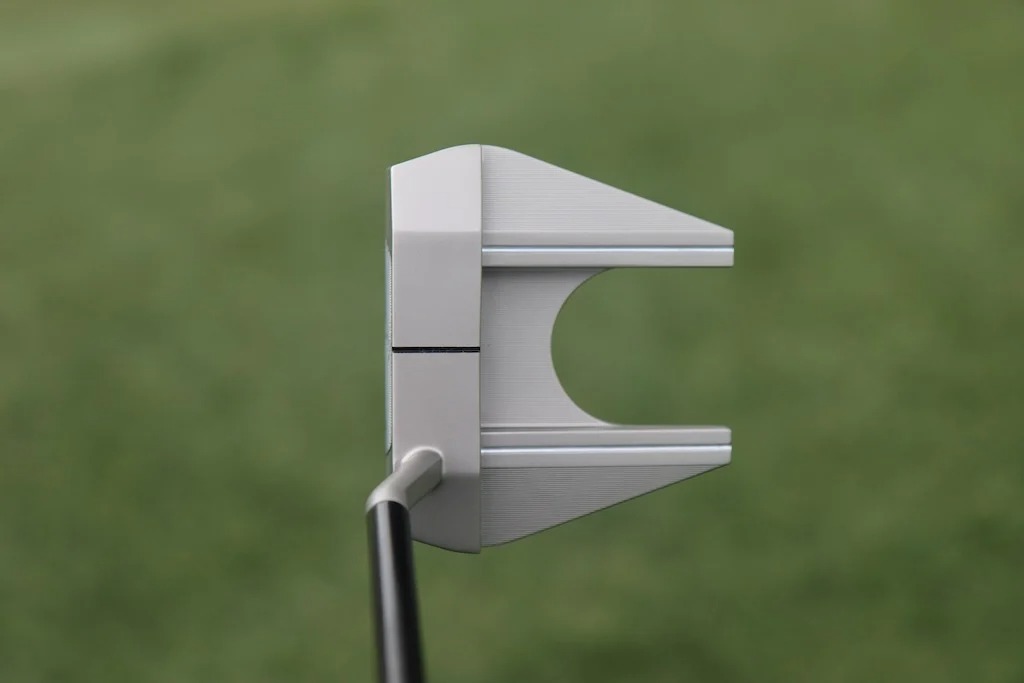

Alright, Sunday golfers and gearheads, Tyler Reed here, Equipment Editor at The Daily Duffer. We’ve just rolled off the high of THE PLAYERS, and already pros are out there grinding, tweaking their setups for the next challenge. This week, our spotlight lands on Andrew Novak at the Valspar Championship, specifically his putter situation. He’s dabbling with a new slant-neck Odyssey Seven featuring what’s being dubbed an exclusive “Damascus insert.”
Now, my ears always perk up when I hear “exclusive insert” on Tour. Is it genuine innovation, or just another shiny object designed to catch a pro’s eye (and eventually, ours)? Let’s dive in.
A Familiar Head, A New Heart
Novak, who’s been putting with an Odyssey Ai-One Milled Seven T S, is making a subtle but significant change. He’s sticking with the Seven head shape, which makes perfect sense. The data from my own testing, and countless fittings, consistently shows that head shape preference often comes down to comfort and trust. Switching up a familiar silhouette can be jarring and actually detrimental to putting performance. Novak understands this:
“It’s similar head shape, so it’s not a huge change for me. Just change up the visuals a little bit. … Hopefully, it will help my eyes a bit. It’s coming off the face great. Repped it for one day here, so we’ll see how it goes, but I am liking the early returns on it.”
This is crucial. Consistency in head shape often translates to consistency in aim and stroke path. Where the real curiosity lies is in this Damascus insert. Odyssey has a long history of innovative insert technology – from the original Stronomic to the White Hot and now the Ai-One. Each has claimed benefits in feel, roll, and distance control. The question here is: what does “Damascus” bring to the table?
The Performance Promise: Feel and Feedback
Novak’s putting journey highlights a common theme I see in fittings: sometimes a change isn’t about radically different tech, but about finding a feel that resonates. He’d previously used a Toulon San Diego blade and an Ai-One Milled Two T CH, neither of which launched him into the top 50 in Strokes Gained: Putting. It wasn’t until he switched to the Seven head shape for the 2025 season that his fortunes changed, climbing to 8th in overall putting average and securing a win. This underscores the importance of MOI (Moment of Inertia) in putters – mallet designs like the Seven generally offer higher MOI, providing more stability on off-center strikes and maintaining truer roll. While specific MOI numbers for Novak’s Seven aren’t presented, it’s clear the stability of the design has been a game-changer for him.

Now, with the Damascus insert, Novak and Callaway Tour Rep Harrison Shih are zeroing in on an even finer point: feel and feedback. After an afternoon testing session, Novak noticed a difference:
“I would say audibly, is maybe where I was seeing most of the difference. I felt there was maybe slightly more feedback versus what I was using before, the feel was not much different off the face so far. I’ll have to rep it a little bit more to have like a concrete answer on that. But the first thing I did notice was slightly different sound. I felt maybe slightly more feedback on this one.”
This is where the rubber meets the road for putter inserts. Sound is an often-overlooked component of feel. A more distinct, pleasing sound can absolutely enhance a player’s perception of impact and, by extension, their confidence and ability to judge distance. In my fitting bay, using high-speed cameras and SAM PuttLab data, I’ve seen countless times how a subtle change in sound or vibration can influence a golfer’s pace control. It’s not always about raw ball speed off the face, but the consistent, predictable launch. A more responsive insert can translate to better “feel” for how much energy is being transferred to the ball, which directly impacts speed control on different length putts.

Beyond the Bling: Does “Damascus” Mean Performance?
The term “Damascus” typically refers to a type of steel forging known for its distinctive wavy pattern, often associated with high-end knives for its strength and edge retention. In a putter insert, it likely refers to the aesthetic and perhaps the unique milling or layering process that gives it this look. Novak himself acknowledges the visual appeal:
“It’s definitely beautiful, it’s pretty thing. It’s got a different little swirl to it looks cool. But again, you know, how does it perform? That’s what I’m really looking for.”
And that’s the million-dollar question. While a beautiful club can certainly inspire confidence (the “feel good, play good” phenomenon is real), I’m always looking for the quantifiable gains. Is there anything inherent in a “Damascus” material or manufacturing process that would unequivocally improve interaction with the golf ball, beyond aesthetics and subjective feel? Without specific details on the material composition, density, and durometer (hardness for non-metal inserts), it’s hard to make a definitive technical claim. If it’s a metal alloy, its density and milling accuracy could certainly influence sound and minor variations in ball speed transfer. If it’s a composite, the science of its layers could be fascinating.
What I gather from Novak’s early impressions is that this insert is likely yielding a more pronounced auditory feedback compared to his previous Ai-One Milled insert. This could be due to a slightly harder material, a different density profile, or even the unique milling pattern influencing how sound waves propagate. A firmer insert generally provides crisper feedback, which some players equate to better distance control, especially on longer putts where misjudging contact can lead to significant errors. I wouldn’t expect radical changes in launch angles or spin rates from a putter insert; those are far more influenced by loft and stroke mechanics. The primary variables here are feel, sound, and the consistency of energy transfer across the face, which ultimately impacts roll.

Practical Advice for Your Bag
So, does this mean you should start hunting for a “Damascus” putter? Not necessarily. For the average golfer, especially those struggling with consistency, the overall putter fitting — ensuring proper length, lie, loft, and head style (blade vs. mallet, high vs. low MOI) that matches your stroke path — will yield far greater improvements than chasing the latest exotic insert. Novak’s biggest leap came from switching to a high-MOI mallet (the Seven head), and that’s a lesson for everyone.
However, once you’ve dialed in those fundamentals, if you’re a player who values subtle feedback and finds a particular sound or feel inspiring, then experiments with different insert materials can certainly be beneficial. For Novak, who is already a top-tier putter, these marginal gains in feel and feedback could be the difference-maker. For us mortals, it’s about optimizing the big picture first. If something like a “Damascus” insert gives you a mental edge and makes putting more enjoyable, then that’s a legitimate performance gain in itself.
My take? It’s a Tour-exclusive tweak, likely a limited-run offering that adds a touch of bespoke craftsmanship and a refined feel for pros like Novak. It’s cool, it’s unique, and it might just give him that extra confidence needed to sink a few more putts. But don’t expect this “Damascus” wizardry to magically shave five strokes off your handicap if you haven’t yet addressed the foundational elements of your putting stroke and equipment setup. Focus on getting fitted for the right head shape, weight, and balance first. After that, if an “exclusive insert” ever makes its way to retail and genuinely enhances your feel, then by all means, give it a roll. For now, it’s a fascinating look into the minute details pros often obsess over to gain any possible edge.
