


Hello, Daily Duffer readers! Sarah Chen here, your golf instruction editor. I’ve spent over 15 years on the range and course, helping golfers of all levels unlock their true potential. From tour pros to weekend warriors, I truly believe anyone can improve their game with the right approach and a little dedication.
Today, I want to talk about something crucial to your game: your irons. There’s a certain magic to hitting a pure iron shot – that crisp sound, the ball soaring on a perfect trajectory, landing softly near the pin. It’s a feeling every golfer chases. But beyond that perfect strike, there’s another element at play: the quality and fit of your equipment. While we might not all be in the market for a brand-new, top-of-the-line set every season, understanding the impact of your clubs can truly elevate your game, and help you appreciate value when you see it.
I was browsing the forums recently – the GolfWRX community is fantastic for connecting with other golf enthusiasts – and something caught my eye.
“At GolfWRX, we are a community of like-minded individuals who all experience and express our enjoyment of the game in many ways.”
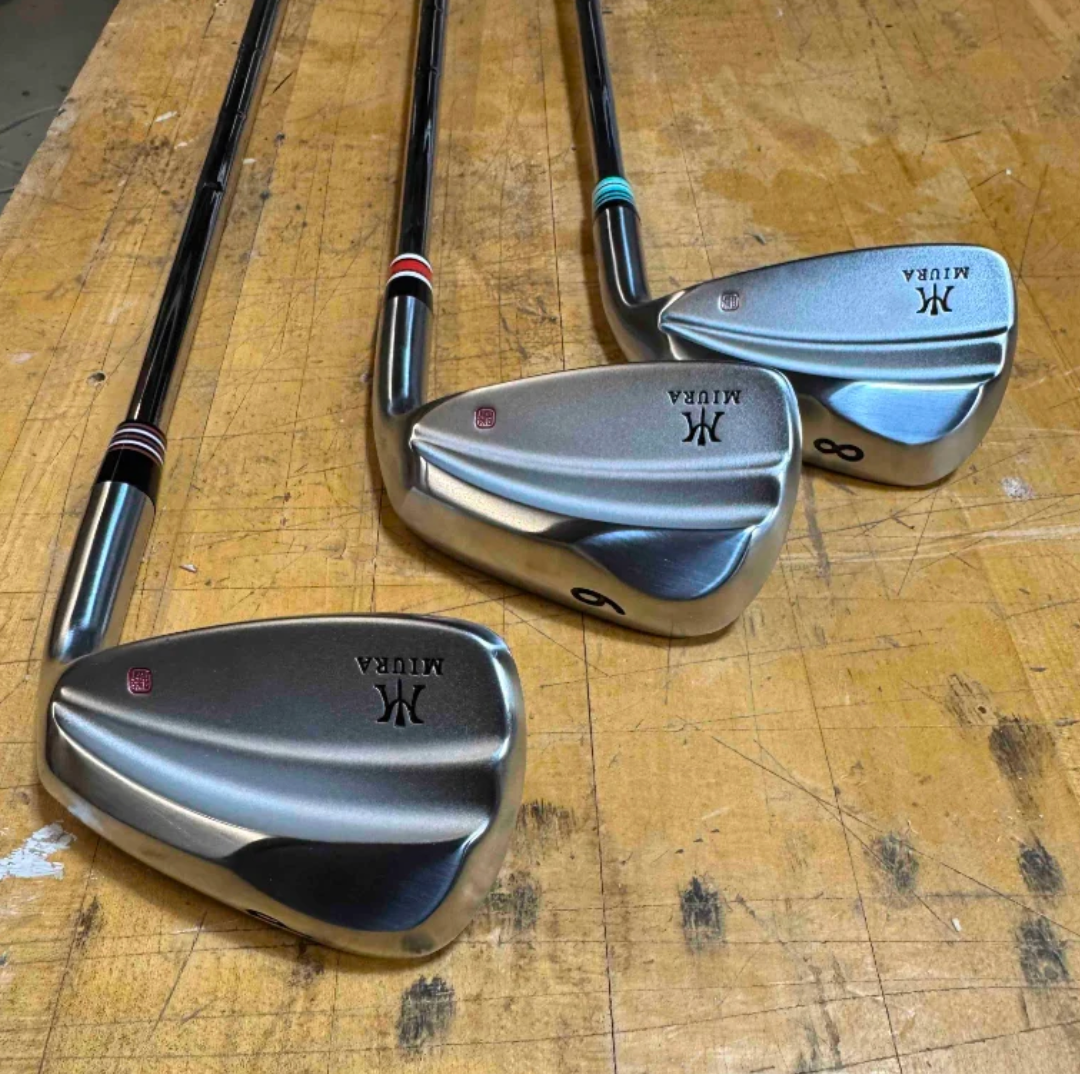
That sense of community is so important in golf, isn’t it? It reminds us that we’re all on this journey together. And speaking of journeys, a beautifully crafted set of irons can certainly make yours more enjoyable. I saw a listing for a set of Miura KM700 irons that sparked this discussion today.
Now, I know what you might be thinking: “Sarah, I’m not a scratch golfer, do high-end irons really matter for me?” The answer is yes, in a way. While you might not notice the nuanced differences a tour player does, understanding what goes into a high-quality club – and how it’s tailored – can help you appreciate your own equipment and make informed decisions down the line. It’s about optimizing your potential, regardless of your skill level.
Understanding Your Iron Specs: Length, Loft, and Lie
The listing for these Miura irons provided some great insight into specific club characteristics:
“Set is standard Length, Loft & Lie and currently has Golf Pride Tour Velvet 360 grips.”
These three terms – length, loft, and lie – are absolutely critical to how your irons perform for *you*. Let’s break them down:
- **Length:** This is fairly straightforward – how long the shaft is. If your clubs are too long, you might struggle to hit the center of the face consistently, leading to pushes and slices. If they’re too short, you might compensate by bending over too much, causing pulls and hooks. Standard lengths are a good starting point, but a proper fitting ensures they match your height and arm length.
- **Loft:** This is the angle of the clubface relative to the ground. It primarily dictates how high or low the ball flies and how far it travels. Modern irons often have stronger lofts than older clubs, meaning a 7-iron today might have the loft of an old 6-iron. Consistency in loft throughout your set helps ensure proper gapping between clubs.
- **Lie:** This is the angle of the sole of the club relative to the ground at impact. If your lie angle is too upright, the toe of the club will be off the ground, causing the ball to go left (for a right-handed golfer). If it’s too flat, the heel will be off the ground, causing the ball to go right. An incorrect lie angle makes it incredibly difficult to hit the ball straight, even with a perfect swing. This is why a proper lie angle is often overlooked but profoundly impacts accuracy.
In my teaching experience, many amateur golfers don’t realize how much these factors contribute to their struggles. A well-fit set of irons, even if they aren’t the latest and most expensive, can simplify your swing thoughts and allow you to focus on solid contact.
The Importance of Quality Shafts and Grips
The listing also mentioned “Dynamic Gold Tour Issue x100 shafts” and “Golf Pride Tour Velvet 360 grips.” These aren’t just details; they’re integral components that affect feel, control, and performance.
- **Shafts:** The shaft’s weight, flex, and kick point will influence your swing speed, ball flight, and overall feel. A shaft that’s too stiff for your swing speed will feel harsh and limit distance, while one that’s too flexible will result in a lack of control and inconsistent contact. The Dynamic Gold Tour Issue X100, for example, is a very stout shaft, favored by stronger players who need low spin and penetrating ball flight.
- **Grips:** Your grips are your only connection to the club. They need to be the right size and in good condition. Worn-out grips can lead to excess grip pressure, tension, and a lack of control. Maintaining fresh grips is one of the easiest and most affordable ways to improve your connection to the club.

The overall value of a custom-built set is evident. The original listing stated:
“Retail price as built with tax is over$3250. This is your chance to get a great deal at $2450 shipped.”
This highlights the investment in a truly tailored set, and the opportunity to find quality equipment, even if pre-owned, can be a fantastic way to enhance your game without breaking the bank. It’s about recognizing value and understanding what goes into a club that helps you play your best.
Actionable Drills: Get Your Body and Clubs Working Together
You don’t need a custom-built set of expensive irons to work on solid contact and understanding your club’s impact. Here are a couple of drills I give my students:
Try this: The Towel Drill for Consistent Contact
This drill helps you focus on hitting the ball first, then the turf, which is crucial for pure iron strikes. Place a small hand towel about 6-8 inches behind your golf ball. Your goal is to hit the golf ball cleanly without touching the towel. This forces you to descend on the ball, creating a divot *after* impact, not before. Start with half swings, focusing on crisp contact, then gradually increase your swing speed and length.
Here’s a drill: The Lie Board Check (Range Only)
If your range has a lie board (a plastic adhesive strip you put on the sole of your iron), this is an excellent way to see if your lie angles are correct for your swing. Hit a few shots off the board with your irons. The mark left on the sole will tell you if you’re consistently hitting off the toe (club too upright) or the heel (club too flat). This visual feedback is invaluable for understanding how your clubs might be misdirecting your shots. If you see consistent toe or heel marks, it’s a good indication you might benefit from having your lie angles adjusted by a professional club fitter.
It’s All About Optimizing Your Potential
Whether you’re hitting custom Miura irons or your trusty hand-me-down set, the goal remains the same: to hit the ball consistently, control your shots, and enjoy the game more. Understanding the nuances of club design and fit simply empowers you to make better choices and better understand your own game.
Stay focused, keep practicing efficiently, and remember that every swing is an opportunity to learn and improve. You’ve got this!
