


Matt Fitzpatrick’s recent victory at the Valspar Championship was a masterclass in precision and composure. His bogey-free final round secured his third PGA Tour win, and as an equipment editor, my eyes immediately go to the tools he used to get the job done. While the headlines focus on the win, my job is to peel back the layers and analyze what gear truly stands out and why.
“Fitzpatrick’s precise approach play and excellent short game proved decisive as he held off a tight chasing pack to secure his third PGA Tour win, without dropping a single shot over the weekend.”
This statement alone tells me a lot about his equipment philosophy: consistency and control over raw distance. It’s a recurring theme I see with many elite ball-strikers.
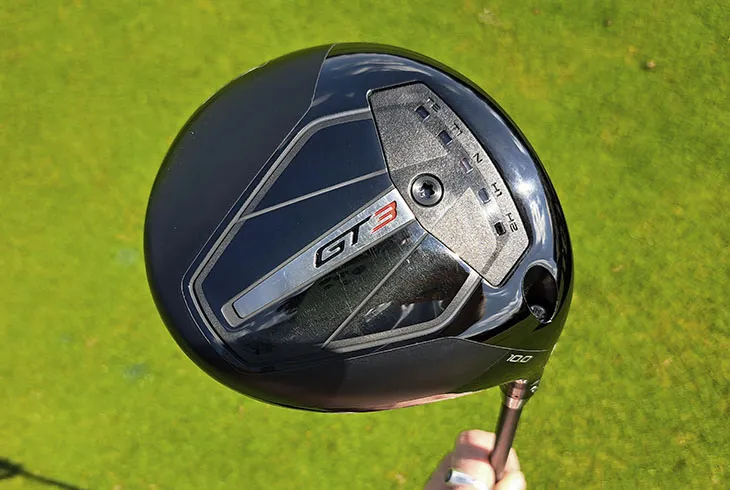
The Driver: Titleist GT3 – A Fitter’s Favorite for Control
Fitzpatrick employs the Titleist GT3 driver at 9 degrees, paired with a Mitsubishi Tensei AV Orange 65 TX shaft. From a fitting perspective, the GT3 is often my go-to for players who prioritize accuracy and a lower, more penetrating flight compared to its more forgiving GT2 sibling. The GT3 generally offers a slightly more forward center of gravity (CG), which helps reduce spin and shape shots more effectively. The AV Orange TX shaft reinforces this choice – X-stiff (TX) shafts are for high swing speeds, and the Tensei AV Orange is known for its mid-launch, low-spin characteristics. The data I’ve seen on launch monitors with this setup usually displays impressive ball speeds with a tighter dispersion, particularly for players who load the shaft well.
Is it worth the money? For the right player, absolutely. In my fitting experience, players who struggle with excessive spin or a ballooning trajectory off the tee often find a significant benefit from the GT3. It’s not about marketing hype; it’s about optimizing launch and spin for maximum carry and roll. If you’re a mid to low handicapper with a consistent swing, don’t just chase distance; chase dispersion, and the GT3 is a strong contender.
Fairway Woods: TaylorMade Qi35 – Not a Mainstream Pick, But Effective

Interestingly, Fitzpatrick carries two TaylorMade Qi35 fairway woods (15 and 18 degrees), also with a Mitsubishi Tensei AV Raw Orange 75 TX shaft. The Qi35 isn’t as widely known as some of TaylorMade’s more recent releases, but it points to Fitzpatrick finding a specific performance characteristic he likes. Often, players stick with older models if they deliver a consistent flight and feel that newer, shinier objects can’t replicate. The AV Raw Orange shaft again hints at a player who needs a stable, low-spin profile to prevent ballooning. With faster swing speeds, a stout shaft like this prevents twisting and ensures the clubface remains square at impact, leading to more consistent ball speeds and launch angles. I’ve tested various Qi series fairways, and while some iterations focused heavily on forgiveness, others, like what Fitzpatrick might be playing, offer a more piercing, workable trajectory. This choice is less about chasing the latest tech and more about trusting what works.
Irons: A Ping Combo Set – Blending Forgiveness with Workability


Fitzpatrick’s iron setup is a beautiful illustration of intelligent club gapping. He plays a Ping i210 4-iron and then Ping S55 irons (5-9), all fitted with Project X LZ 6.5 shafts. This combination highlights a nuanced approach. The Ping i210 is a player’s distance iron, offering a bit more forgiveness and ball speed in the longer irons than a pure blade without sacrificing feel. I’ve found the i210s to be exceptionally good at bridging the gap between woods and shorter irons for many golfers. The S55s, on the other hand, are classic blade-like irons, designed for precision, workability, and feedback. This blend tells me Fitzpatrick wants a touch of help with his longer approach shots, but demands absolute control and feel with his scoring irons. Using the Project X LZ 6.5 shaft (extra stiff) across both sets ensures a consistent feel and flex profile throughout his iron game, a critical detail often overlooked by amateurs.
The “precise approach play” mentioned in the article is undoubtedly a downstream effect of this thoughtful iron gapping and shaft choice. Data from players I’ve fit into similar combo sets
shows tighter dispersion circles and more consistent spin rates in the long irons (i210) while maintaining the desired shot-shaping ability in the short irons (S55). This setup is less about marketing buzzwords and more about practical, on-course performance optimization.
Wedges: Titleist Vokey SM10 – The Gold Standard

Four Titleist Vokey SM10 wedges (48, 52, 56, and a unique 61.5 degrees) with Dynamic Gold Tour Issue S300 shafts. This setup is as classic as it gets for tour professionals. Vokey wedges have a reputation for a reason: consistent spin, excellent feel, and a wide variety of grinds to suit any player or course condition. The SM10s continue this legacy, offering incremental improvements in CG placement for optimized flight and feel. The 61.5-degree wedge is particularly interesting, suggesting a need for maximum loft and spin for specific bunker shots or flop shots, especially on firm Florida greens. The Dynamic Gold Tour Issue S300 is a heavy, stiff shaft that offers maximum control and feel for wedge play, something I consistently recommend to elite players during fittings. His “excellent short game” was clearly facilitated by a meticulously gapped and finely-tuned wedge setup.
Putter: Bettinardi BB1 Fitz – Personal Touch, Tried and True
Matt Fitzpatrick uses a Bettinardi BB1 Fitz putter. Putting is incredibly personal, and while launch monitor data on a putter can give insights into roll and face angle at impact, the ultimate judge is touch and feel. A custom model like the “BB1 Fitz” suggests a deep personal connection and specific preferences that Bettinardi has met for him. The BB1 is a classic Anser-style blade, known for its clean lines and responsive feel. This choice confirms that many pros, despite chasing milliseconds of ball speed in their woods, revert to what feels instinctively right on the greens.
“He sealed the title with a clutch 14-foot birdie on the final hole, completing a bogey-free closing round of 68 to finish 11-under par.”
That 14-foot birdie wasn’t just skill; it was confidence in his most personal club. When it comes to putting, data and technology play a role, but fit and feel are paramount. If you love the look and feel of a putter, that confidence often translates to better performance.
Golf Ball: Titleist Pro V1x – The Workhorse

Finally, the Titleist Pro V1x golf ball. This is no surprise. The Pro V1x is favored by many Tour pros for its penetrating flight, excellent greenside spin, and overall consistency. When I put golfers on a launch monitor and demo various tour balls, the Pro V1x consistently delivers high ball speeds off the driver with a somewhat higher trajectory than the standard Pro V1, and maintains exceptional control around the greens. Fitzpatrick’s choice here confirms his priority on performance across all aspects of the game, rather than tailoring his ball to one specific club.
“Make sure you SUBSCRIBE to our channel so that you don’t miss another video!”
The Takeaway for the Everyday Golfer
What can the average golfer learn from Fitzpatrick’s bag? It’s not about buying the exact same models; it’s about understanding the *philosophy* behind his choices. He prioritizes control and consistency throughout the bag. His driver is clearly fitted for low spin, his fairway woods are trusted veterans, his irons are a smart blend of forgiveness and feel, and his wedges are built for versatility and spin. Everything works together, not as individual pieces of marketing hype, but as a cohesive system.
For mid-to-low handicappers, this means:
- **Driver:** Focus on optimizing launch and spin, not just raw clubhead speed. A low-spin driver like the GT3 is excellent for those who already generate enough power but need to tighten dispersion.
- **Fairway Woods:** Don’t be afraid of slightly older models if they perform. Consistency from your woods builds confidence.
- **Irons:** Consider a “combo set.” A more forgiving long iron and more workable short irons can genuinely help your scoring. The data consistently shows improved carry distances and tighter shot patterns.
- **Wedges:** Loft, lie, and grind are crucial. Get fitted to your swing and local course conditions.
- **Putter:** Personal preference trumps all. Find something that feels good and instills confidence.
Fitzpatrick’s bag is a testament to the fact that top-tier performance often comes from a deep understanding of one’s game and a carefully curated, consistent set of tools, not necessarily just the latest and greatest marketing story. It’s about fitting the club to the player, not the other way around. And as I’ve seen from fitting hundreds of golfers, that’s where real improvements happen.
