


Alright, Daily Duffer faithful, Tyler Reed here, and today we’re diving into Tommy Fleetwood’s latest “What’s In The Bag” (WITB) setup. Now, Fleetwood is known for his silky swing and relentless consistency, so when a player of his caliber makes gear changes, my ears perk up. But let’s be honest, just because a tour pro plays it doesn’t mean it’s right for you. Our job is to cut through the marketing fluff and see what’s truly driving performance here.
The first thing that jumps out is the near-total TaylorMade dominance. Not exactly surprising given his sponsorship, but it’s interesting to see the specific models he’s opted for, especially in the woods setup.
The Driver: Qi4D LS – A Contradiction in Terms?
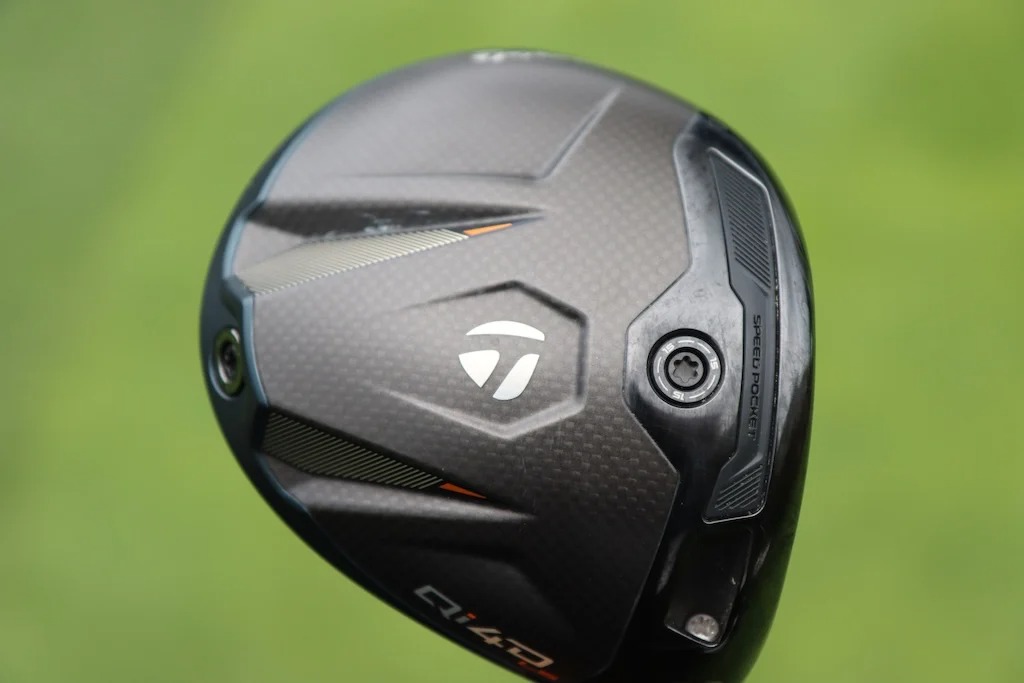
Fleetwood is rocking the TaylorMade Qi4D LS at 10.5 degrees, paired with a Fujikura Ventus TR Blue 6 X shaft. Now, the “Qi4D” naming is a bit of a head-scratcher from TaylorMade. Typically, the “LS” in their drivers stands for Low Spin, designed for players with high clubhead speeds who need to knock down spin for optimal distance. The “4D” implies “4000 MOI” or super forgiveness, but the LS models are inherently less forgiving than their standard counterparts due to weight placement. It’s like saying you’ve built a super-fast, ultra-comfortable race car. Pick one, TaylorMade.
In my testing, the LS models from TaylorMade generally deliver on their low-spin promise, but often at the cost of some forgiveness. For a player like Fleetwood, who has a highly consistent strike pattern, that trade-off is absolutely worth it. When I’ve had golfers with well-centered strikes on the launch monitor, the Qi10 LS (and previous Stealth 2 Plus) delivers exceptional ball speeds and a penetrating flight. The Ventus TR Blue is a workhorse for tour pros, a tip-stiff, mid-launch, low-spin profile that handles aggressive swings with ease. For us mere mortals, “X” flex and 60 grams is a serious commitment. Most amateurs, even with good speed, would struggle to load this correctly and would benefit from a softer flex or higher launch profile.
Driver: TaylorMade Qi4D LS (10.5 degrees)
Shaft: Fujikura Ventus TR Blue 6 X
A Blast from the Past: Mini Driver R7 Quad
This is where it gets interesting, and frankly, a bit nostalgic for an old fitter like me. Fleetwood has a TaylorMade R7 Quad mini driver at 13.5 degrees, again with the Ventus TR Blue 6 X. The R7 Quad! That takes me back to my earlier days on the fitting bay. This is a classic choice, and it speaks volumes about Fleetwood’s priorities. Mini drivers, in general, are for players who want more control and a lower dispersion off the tee than a standard driver, but still need more distance than a 3-wood.
The R7 Quad was revolutionary in its day, not necessarily a high MOI club by today’s standards, but known for its solid feel and workability. The “Quad” in its name referred to its four movable weights – a precursor to modern adjustability. It’s a testament to TaylorMade’s early innovations that a club from that era can still find a spot in a tour pro’s bag. What this tells me is Fleetwood values feel and a specific flight window from his tee shots on tighter holes over maximum ball speed. In my fitting experience, many golfers overlook how valuable a mini driver can be as a “fairway finder” weapon. If your driver feels wild on some holes, a mini driver can shrink your dispersion dramatically. This isn’t a marketing gimmick – it’s a strategic choice for specific course management. The R7 Quad probably offers more controlled spin than a modern 3-wood for him.
Mini driver: TaylorMade R7 Quad (13.5 degrees)
Shaft: Fujikura Ventus TR Blue 6 X

Fairway Woods: Long and Strong
Moving on, Fleetwood carries a TaylorMade Qi35 (18 degrees) and a TaylorMade Qi10 (24 degrees), both with Mitsubishi Kuro Kage 80 TX shafts. The Qi series fairways are generally solid performers, offering a good blend of distance and forgiveness. The “35” and “10” distinction likely refers to some subtle differences in head characteristic – possibly a slightly lower spin/more workable profile for the Qi35 (comparable to a “Tour” model) and a more forgiving, higher launch profile for the Qi10 9-wood.
At 18 and 24 degrees, these are clearly gapped for long-distance approaches or par-5 second shots. The Kuro Kage 80 TX is another tour-level shaft – heavy, stable, and designed for powerful swings to maintain control. What’s crucial here is the constant weight throughout his driver, mini-driver, and fairway wood shafts (all in the 60-80g range, and X or TX flex). This ensures a consistent feel and tempo across his long game, a principle I always preach in fitting. It might seem minor, but consistency in shaft feel translates to consistency in swing and strike.
9-wood: TaylorMade Qi10 (24 degrees)
Shaft: Mitsubishi Kuro Kage 80 TX


Irons: Forged Feel and Tour-Specific Grinds
Fleetwood’s iron setup starts with a TaylorMade GAPR Lo (4-iron) and then transitions into TaylorMade P7TW (5-PW), all with Project X 6.5 shafts. The GAPR Lo is a driving iron, designed for piercing flight and control. It’s a lower-launching, lower-spinning alternative to a hybrid, ideal for players who want that iron-like feel and workability from roughly 220-240 yards. In my experience, these are best for golfers with ball speeds north of 100 mph with their mid-irons, otherwise, they tend to launch too low with insufficient spin to hold greens.
The P7TW irons are Tiger Woods’ signature blades. They are exactly what you’d expect: compact, minimal offset, thin toplines, and a blade-like construction that prioritizes feel and workability over forgiveness. The Project X 6.5 shafts are extremely stout, promoting low launch and low spin, perfect for his aggressive, powerful iron play. If you’re not consistently hitting the center of the face, these irons will punish you mercilessly. For 90% of golfers, even single-digit handicappers, the forgiveness of a cavity-back iron will yield better results on the course, despite the allure of a tour blade. I’ve seen countless golfers on the launch monitor with bladed irons who would instantly gain consistency and a tighter dispersion pattern by switching to a more forgiving Players Cavity Back model.
Irons: TaylorMade GAPR Lo (4), TaylorMade P7TW (5-PW)
Shafts: Project X 6.5


Wedges: Spin and Feel Around the Greens
He’s carrying two TaylorMade wedges: a Hi-Toe 4 (52-09) and an MG5 (60-09). Both use True Temper Dynamic Gold Tour Issue S400 shafts. The Hi-Toe design, with its extended toe section, pulls vertical CG higher, which for many players helps with consistent spin and feel, especially on open-faced shots. The MG5 is TaylorMade’s latest milled grind offering, known for its precision grooves and versatile sole grinds.
The 9 degrees of bounce on both wedges is fairly standard and versatile for various turf conditions, but a little less bounce on the 60-degree can be beneficial for tighter lies or firm conditions. The S400 shaft is a slightly lighter version of the X100, offering tour-level stability for wedge shots requiring precise control and feel. Matching wedge shafts to iron shafts is crucial for feel, and Fleetwood’s setup here is textbook for a tour pro. He wants to know exactly how these wedges will perform on every shot, which the consistent shaft choice helps provide.
Wedges: TaylorMade Hi-Toe 4 (52-09), TaylorMade MG5 (60-09)
Shafts: True Temper Dynamic Gold Tour Issue S400

Putter and Ball: Consistent Choices
Fleetwood opts for a TaylorMade Spider Tour Black putter with a SuperStroke Mid Slim 2.0 grip. The Spider Tour putter has been wildly popular on tour for years, and for good reason. Its high MOI design helps immensely with off-center strikes, maintaining speed and direction across the face. For golfers who struggle with consistency on the greens, a high MOI mallet like the Spider Tour can be a game-changer. The SuperStroke grip is another tried-and-true choice, dampening wrist action and promoting a more stable stroke.
Finally, he plays the TaylorMade TP5x Pix ball. The TP5x is TaylorMade’s firmer, lower-spinning tour ball, generally preferred by players needing to reduce spin off the driver for maximum distance and a penetrating flight. The “Pix” pattern is a visual aid that many players find helpful for alignment and tracking the ball in flight. While the ball won’t fix a swing flaw, matching the ball to your swing characteristics (especially driver spin) can lead to significant gains in overall performance, a concept frequently overlooked by recreational players.
Putter: TaylorMade Spider Tour Black
Grip: SuperStroke Mid Slim 2.0

My Takeaway: A Study in Strategic Gapping and Control
Tommy Fleetwood’s bag is a masterclass in strategic gapping and control. He’s not chasing every last yard; he’s optimizing for precision and consistency across all facets of his game. The inclusion of the R7 Quad mini driver is a brilliant move for someone playing on demanding tour courses, prioritizing accuracy over outright distance from the tee when required. His iron and wedge selection are pure tour-spec, built for feel and workability.
For the average golfer reading this, understand that while you might crave the P7TW irons, they are likely not the best choice for your game. Focus on optimizing your driver with the right shaft for your swing speed and launch characteristics. Don’t be afraid to experiment with adding a mini driver or a higher-lofted fairway wood if it helps you find more fairways or hold more greens. The core lesson here? Every club has a purpose, and Fleetwood’s setup is a meticulous collection designed to execute *his* game plan to perfection. Don’t just copy; understand the *why* behind his choices, and then go get properly fit for what works for *you*.
