

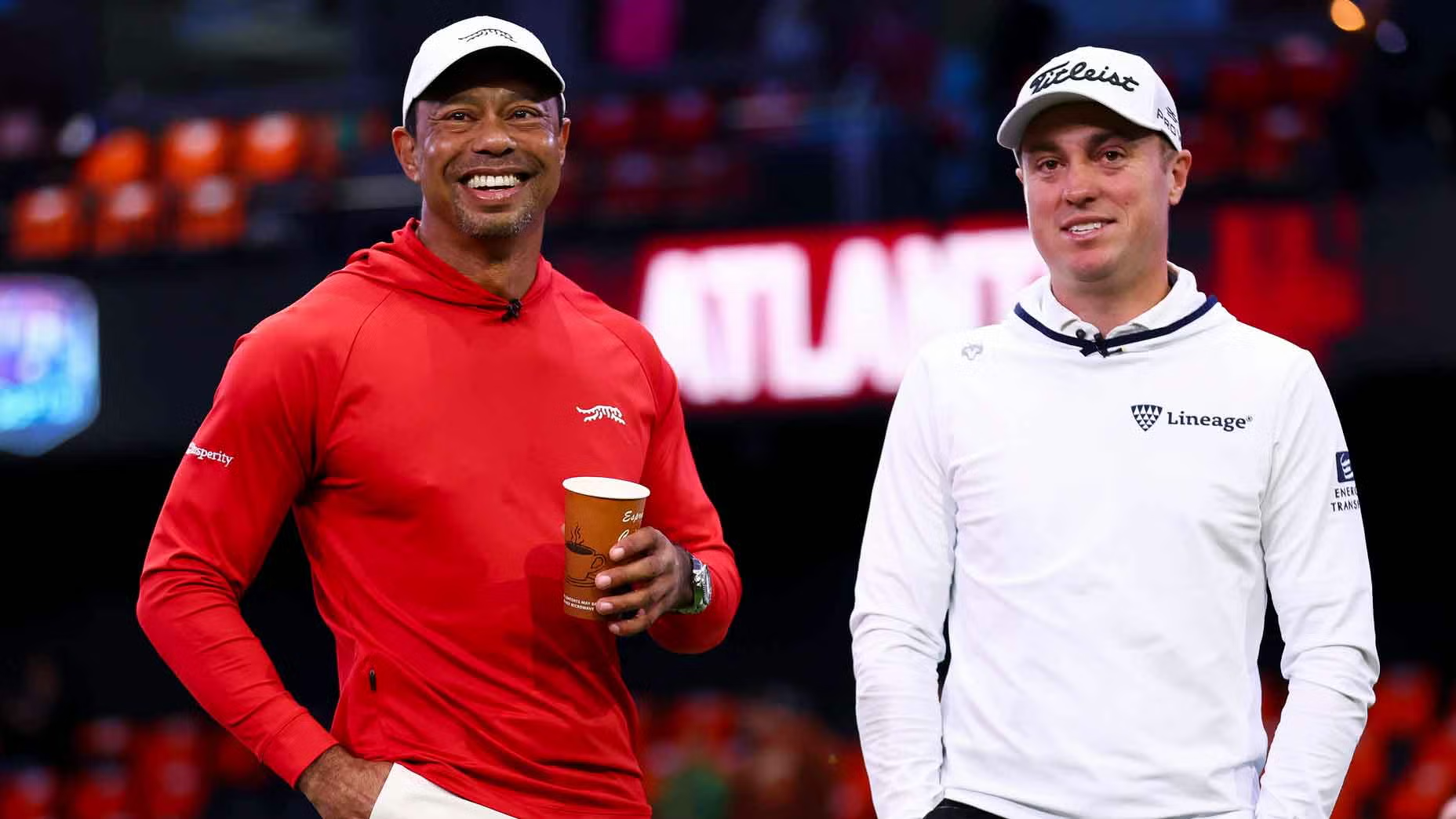

As Lifestyle Editor for The Daily Duffer, I’m always looking for those moments where the world of professional golf intersects with our own lives. It’s easy to get caught up in the glitz and glamour, the astounding swings, and the massive prize purses. But if you peer closely, the human stories behind the headlines often reveal universal truths about ambition, resilience, and navigating the sometimes-tricky pathways to success.
This week, I was particularly interested in a conversation sparked by two-time major champion Justin Thomas concerning sponsor exemptions. Now, for the everyday golfer, “sponsor exemption” might sound like something purely for the pros, a bureaucratic term far removed from our weekend rounds. But bear with me, because at its heart, this topic touches upon something we all deal with: the moments when we need a helping hand, the grace of an opportunity, or the tough decisions of whether to ask for one.
The Art of Asking: Humility and Opportunity
Sponsor exemptions, in essence, are opportunities granted by tournament organizers to players who wouldn’t otherwise qualify for a spot in a prestigious event. Think of it like a wild card entry, or a special invitation. And while the pro game has its own complex rules about who gets these coveted spots, the underlying concept is deeply relatable. How many times have we, as golfers, wished for that extra chance?
Perhaps it’s a spot in the club championship we didn’t quite qualify for but feel we deserve. Maybe it’s an invitation to a coveted foursome at a bucket-list course. Or, on a grander scale, a career opportunity that feels just out of reach without a connection or a special nod. What I found so compelling about Justin Thomas’s perspective is the blend of pride and pragmatism.
“It was extremely stressful,” Thomas said Wednesday in Florida. “But also I’m extremely proud of the fact that I, it was a big deal for me that I didn’t have to rely on one exemption that year. I played my way into all of them. That was a big goal of mine. Because, first off, I hated having to ask, but I did ask. It’s like I’m not shameful or like above that. I mean, I want to be playing in these tournaments.”
His honesty resonated deeply. Here’s a player at the pinnacle of his sport, admitting that even he “hated having to ask.” That feeling of vulnerability, of needing to request help, is something we all grapple with. Yet, his willingness to ask when necessary, to be “not shameful or like above that,” speaks volumes. It’s a reminder that sometimes, the biggest opportunities come from humbling ourselves and seeking support, even when our natural inclination is to tough it out alone.
For us, this might mean asking a more experienced golfer for advice on a tricky course, reaching out to a mentor for career guidance, or even just asking for a mulligan (within friendly limits, of course!). There’s no shame in recognizing when an extra push or an open door is what you need to move forward.
The Power of Influence and Perception
The topic of sponsor exemptions also brings up the fascinating interplay between merit, influence, and the larger ecosystem of a sport (or any industry, for that matter). In the pro golf world, these exemptions are not always given based purely on ranking or recent performance. Sometimes, they’re about drawing a crowd, generating buzz, or recognizing a storied career.
;)
Why you should never feel guilty accepting a sponsor’s exemption, according to a star athlete who did
James Colgan
“But I just think that sponsor exemptions are part of — I mean, it’s a massive part,” he continued. “What, are you going to tell Tiger Woods he can’t play if he wants to play? Like, I’m sorry, but you’re an idiot if that’s what you think. Like, he needs to play in whatever he wants to play in, and that’s better for the golf tournament and the game of golf.”
Thomas wisely points out the commercial reality: sometimes, certain individuals are simply good for the “game of golf” as a whole. This reminds me of the power of community and mentorship within our golf circles. Who are the people whose presence elevates the game for everyone? The pro who volunteers time for junior clinics? The elder statesman at the club with decades of wisdom? Recognizing and valuing these contributors, even if they aren’t the lowest handicappers, strengthens the entire golfing community.
Actionable Takeaways for the Everyday Golfer:
So, what can we take from this debate on sponsor exemptions and apply to our own golf lifestyle? Here are a few thoughts:
- Embrace Humility & Seek Opportunities: Don’t be afraid to ask for help, advice, or even an introduction. Whether it’s to play a new course, join a new group, or learn a new technique, recognize that sometimes the path forward involves leaning on others. As Thomas said, it’s not shameful to ask.
- Be a Sponsor of Others: Think about who you can “exempt” into your golfing life. Is there a new golfer at your club who could benefit from playing a round with you? A junior player who needs encouragement? A friend whose game needs a spark? Extending an invitation or a helping hand can be transformative. The article mentions how sponsor exemptions have launched careers, including those of Tiger Woods and Phil Mickelson. Imagine being that person for someone else!
- Understand the Ecosystem of Golf: Recognize that golf, from the local club to the PGA Tour, is a community. Sometimes, people are chosen for reasons beyond pure numbers – perhaps for their personality, their contributions to the culture, or their ability to inspire. Being a good golf citizen, friendly and encouraging, almost always pays dividends.
- Persistence is Key: While exemptions can be a lifesaver, Thomas’s ultimate triumph was playing his way into tournaments when possible. This highlights the importance of consistent effort and practice. Relying on an “exemption” should be a backup, not the sole strategy. Keep working on your game, and you’ll open many doors on your own merit.
The conversation around sponsor exemptions is nuanced, complex, and as Thomas says, “a tough one to perfect.” But it also offers a valuable lens through which to view our own golfing journeys. It’s a reminder that golf, at every level, is a mix of hard work, good fortune, and the invaluable human connection that makes this game so much more than just hitting a ball. It’s truly a way of life.
