



Hello, fellow golfers! Sarah Chen here, your golf instruction editor for The Daily Duffer. As someone who has spent over 15 years on the range and course helping players, from rising professionals to dedicated weekend warriors, I’ve seen firsthand that improvement isn’t just possible—it’s inevitable with the right approach and a clear understanding of the fundamentals.
Today, we’re diving into a topic that is foundational to striking the golf ball effectively: finding the “sweet spot” on your clubface. It sounds obvious, right? But the secret to consistent ball striking isn’t just about endless practice; it’s also about understanding how your equipment can help you, and how to practice smarter, not just harder.
The North Star of Ball Striking: Why the Sweet Spot Matters
Every golfer, regardless of skill level, yearns for that crisp, solid contact where the ball explodes off the clubface exactly as intended. That feeling, that sound—it’s the golf equivalent of a perfect harmony. We often call this striking the “sweet spot,” finding the precise center of the clubface where the club is optimized to deliver maximum energy to the ball.
As the recent article highlighted:
“Since the beginning of time, finding the middle, the sweet spot, the Tiger strike, grooves 2 through 5, etc., has been the North Star for anyone who has ever picked up a golf club.”
This isn’t just about feel; it’s about efficiency. When you hit the sweet spot, you maximize ball speed, control trajectory, and generate optimal spin. This translates directly to more consistent distances, better accuracy, and lower scores. Neglecting this crucial contact point can lead to a host of issues, from slices and hooks to significant distance loss.
Beyond Skill: The Role of Equipment and Fitting
Many golfers believe that hitting the sweet spot consistently is solely a matter of raw talent and endless hours of practice. While skill is certainly a component, it’s a misconception to think it’s the *only* factor. In my experience, proper equipment fitting plays an enormous, often underestimated, role.
Modern golf technology is nothing short of incredible. Today’s clubs, especially wedges, are designed with sophisticated features like specific CG (Center of Gravity) placements and sole grinds that can make it easier for you to find that ideal contact point. For example, the author of the source article benefited greatly from his Vokey SM11 wedges:
“When Vokey implemented the new CG package into the SM11 it created opportunities for me that I would have had to manipulate in the past.”
This means the manufacturing improvements, in this case, a precise CG helping stabilize the clubface at impact, made finding the sweet spot more consistent even when his swing wasn’t absolutely perfect. This is particularly true for short irons and wedges, where the shorter shaft and typically less-than-full swings make it easier to deliver the clubface purely.
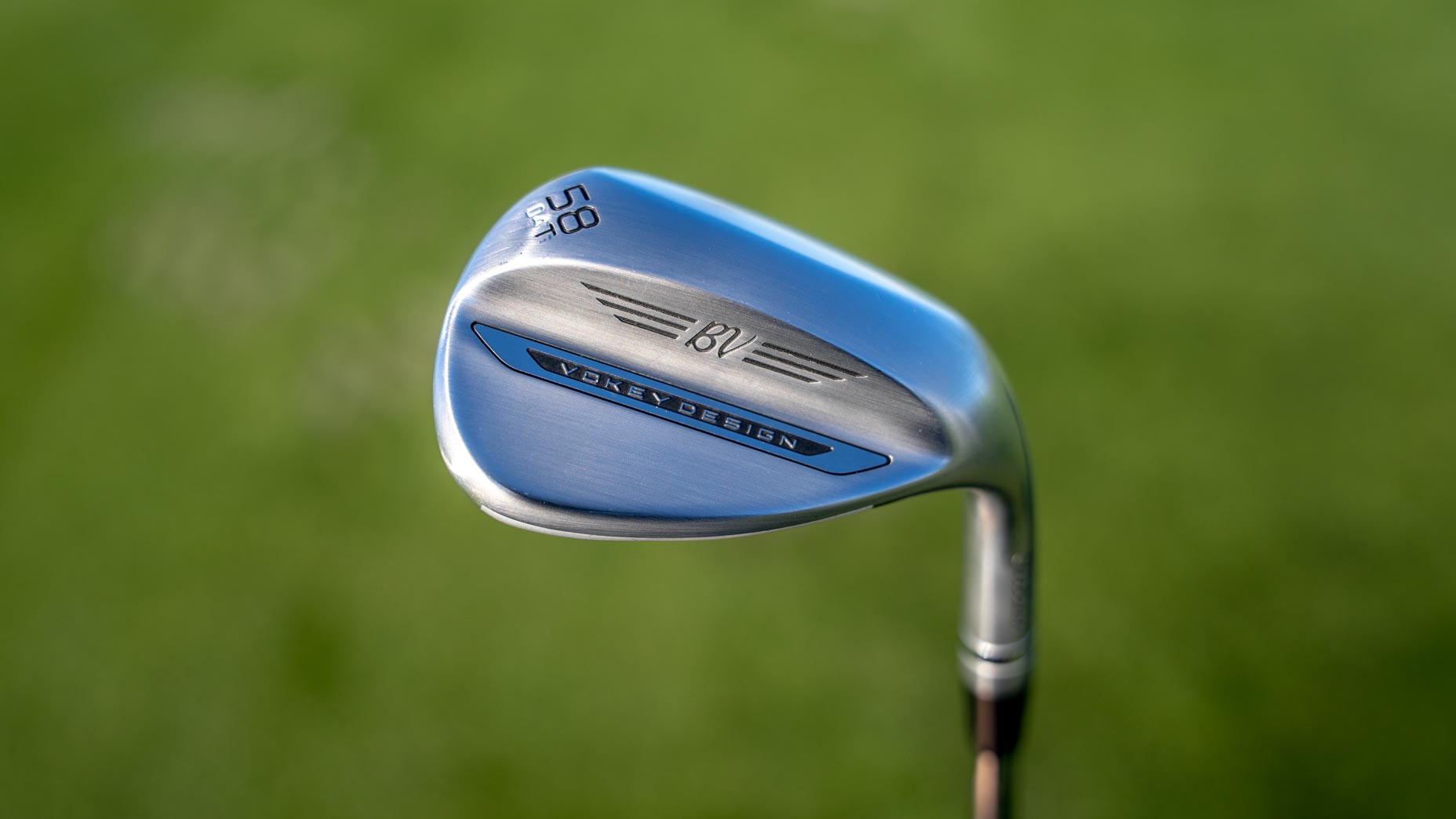
Titleist Vokey SM11 Tour Chrome Wedge
Titleist Vokey Design’s new SM11 wedges feature a new precise CG position across each grind in a loft, meaning every wedge will now perform the same way with the same strike.
Putting It Into Practice: Drills to Find Your Sweet Spot
Regardless of your equipment, improving your clubface awareness and finding that sweet spot consistently is a skill you can absolutely develop. Here are a couple of my favorite drills:
Drill 1: The “Face Tape” Feedback Drill
This is a classic for a reason. Grab some face tape (or even a dry erase marker and a cleaning cloth) and apply it to your iron or wedge face. Hit 10-15 balls, paying close attention to where the ball mark appears after each strike. You want those marks concentrated in the horizontal middle, ideally between grooves 2 and 5. The beauty of this drill is the instant, undeniable feedback. Are you consistently hitting off the toe? The heel? Too high or too low on the face? This immediately tells you what adjustments your body needs to make. Repeat this regularly, and you’ll train your hands and eyes to deliver the club more squarely.
Drill 2: The “Tiny Target” Drill
Often, golfers swing too hard, sacrificing precision for power. For wedges, in particular, a controlled, repeatable swing is paramount for sweet spot contact. Find a practice area and set up a small target (a tee, a divot, even a coin) about 20-30 yards away. Your goal isn’t distance; it’s to hit that tiny target consistently. Focus on a smooth, rhythmic swing and feel the club through impact. Start with half swings, feeling the club release towards the target. This drill forces you to slow down, control your club path, and prioritize contact over raw power—the perfect recipe for finding the sweet spot.
This focus on control is what allows players to optimize their performance, even with a strong fit, as the article demonstrates:
“It’s also important to mention that having wedges that keep you in that 2-5 groove section gives you the feeling of controlling your golf ball.”
That feeling of control is incredibly empowering and confidence-boosting!
The Impact of Precision: Data Doesn’t Lie
The gains from consistent sweet spot contact and properly fitted equipment might seem subtle, but they add up to significant improvements on the course. Consider the data points shared:
44-degree Wedge:
SM10: 24 launch, 132 carry, 8825 RPM
SM11: 21 launch, 132 carry, 9350 RPM
50-degree Wedge:
SM10: 26.5 launch, 117 carry, 9735 RPM
SM11: 25 launch, 119 carry, 9700 RPM
54-degree Wedge:
SM10 (M-Grind): 29 launch, 103 carry, 10100 RPM
SM11 (D-Grind): 26 launch, 105 carry, 10300 RPM
Notice the common theme? Lower launch angles and, importantly, consistent or increased spin. For shots within 130 yards, this means a more penetrating ball flight that fights the wind better, and more importantly, a ball that lands and stops precisely where you want it. This combination is a game-changer for short game scoring.
As the data shows, these aren’t “biblical upticks,” but from 130 yards and in, that feeling of control and slightly enhanced performance consistently empowers a player. It raises your “floor” (your worst shots are better) and your “ceiling” (your best shots are even better). And when you can consistently hit greens and control your distances, your scores will undoubtedly fall.
So, take the time to understand your equipment, get properly fitted, and most importantly, dedicate practice time to improving your clubface awareness and targeting. You have the power to improve your ball-striking and truly control your golf ball. Go out there and find your sweet spot!
