

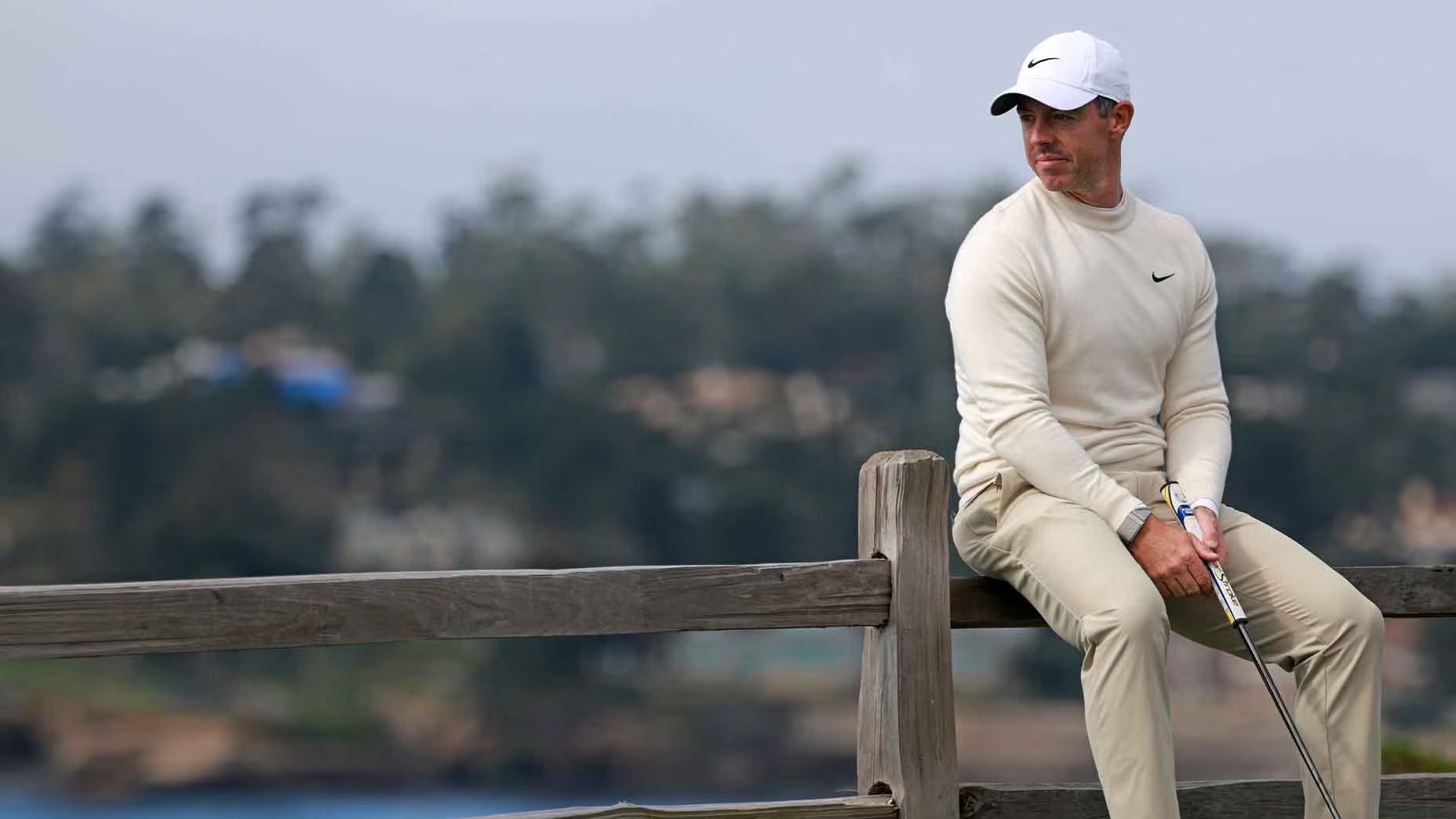

Hello, Daily Duffer readers! Sarah Chen here, your golf instruction editor. As a PGA-certified instructor with over 15 years of experience, I’ve had the privilege of working with golfers at every level, from weekend warriors to tour professionals. One truth I’ve observed repeatedly is that improvement isn’t just about perfect mechanics; it’s also about a mindset of decisiveness and clarity. We all want to progress, and today, I want to talk about how to achieve that by “not sitting on the fence” – both on and off the course.
I recently read an inspiring piece about Rory McIlroy and his journey to conquer golf’s “cathedrals.” It struck a chord with me because it highlights a universal truth about success in golf: decisiveness. The article opens with a powerful image:
“NO SITTING ON FENCE.”
This isn’t just a warning at Pebble Beach’s 18th tee; it’s a profound piece of advice for your golf game. How many times have you stood over a shot, wavering between clubs, doubting your target, or indecisive about your swing thought? That hesitation, that ‘sitting on the fence,’ is far more detrimental than a slightly imperfect swing executed with conviction.
The Power of Decisiveness in Your Swing
When you’re indecisive, your body reflects that uncertainty. Your tempo suffers, your balance becomes precarious, and your muscles tense up. Conversely, a clear decision, even if it’s not the “perfect” one, allows your body to react more naturally and athletically. It’s about committing to a plan and executing it with confidence.
“Of the many skills required to thrive here, decisiveness is perhaps the most important.”
This rings true for every golfer, not just those competing at Pebble Beach. If you want to improve, you need to make clear choices about your technique, your targets, and your practice.
Drill 1: The “Commitment Count”
Here’s a drill you can incorporate into your practice and even your on-course routine: Before every shot, especially on the range, choose your target and your club. Then, count silently to three, fully committing to that decision. During this three-count, visualize the shot you want to hit. On “three,” pull the trigger. If you find yourself changing your mind or hesitating after “one,” reset. The goal is to train your brain to make a decision and stick with it. This builds the mental muscle of commitment.
Decisiveness in Your Practice Routine
Just as you need decisiveness on the course, you need it in your practice. Many golfers spend time at the range hitting ball after ball without a clear purpose. This is another form of “sitting on the fence,” simply hoping repetition will lead to improvement without a specific goal.
Rory McIlroy’s pursuit of golf’s major championships showcases a clear, decisive goal-setting process:
“There’s a lot of golf courses with a lot of history. There’s a lot of old U.S. Open sites that have had some great things happen at them,” McIlroy said. “Yeah, this is certainly one, Augusta was another, and the last one I think — not the last one, but the biggest one on the list would probably be St. Andrews.”
He’s not just playing; he’s actively working towards conquering specific challenges. You should adopt a similar approach to your practice.
Drill 2: The “Focused 20”
Instead of hitting a hundred balls aimlessly, try this: Choose one specific aspect of your game you want to improve – maybe it’s hitting a draw, controlling your wedge distance, or improving your putting stroke’s rhythm. Dedicate your first 20 balls (or 20 minutes) of practice exclusively to that one goal. Don’t deviate. For instance, if you’re working on a draw, exaggerate the feel of your club path and face angle, and don’t stop until you see consistent improvement for those 20 balls. This focused intensity, born of a clear decision, is far more effective than scattered practice.
Taking Action Off the Course
Decisiveness isn’t just for your swing; it applies to your overall golf improvement journey. Are you unsure about getting lessons? Are you putting off working on your short game? Is there a particular weakness you’re avoiding?
In my teaching experience, the golfers who improve fastest are those who identify a clear area for improvement and then decisively take action. They commit to a lesson plan, dedicate practice time, and follow through. They don’t just talk about getting better; they *do* what’s necessary.
Drill 3: The “Skill Selector”
Sit down with a pen and paper. List three areas of your game you’d like to improve most in the next month (e.g., driver accuracy, chipping from 20 yards, 5-foot putts). Next to each, write down one specific action you will take this week to address it. This could be a 30-minute practice session focused only on that, booking a lesson, or even just watching an instructional video with a clear goal in mind. The key is to choose the action and then execute it. No “sitting on the fence” about what needs to be done!
Remember, improvement is a journey, and every step, every swing, every practice session is an opportunity. Just like Rory McIlroy, who keeps adding new “cathedrals” to his list even after achieving the Grand Slam, you can always find new goals and challenges in your golf game. The most important thing is to approach them with purpose and, above all, with unwavering decisiveness.
You can do it! Stay committed, stay focused, and enjoy the process. I’ll catch you on the links!
