


As the Equipment Editor for The Daily Duffer, I’ve seen countless equipment setups come across my desk, from weekend warriors’ eclectic bags to the meticulously crafted arsenals of touring professionals. This latest bag breakdown offers some genuinely insightful choices that stand as a testament to tried-and-true performance over fleeting fads. Let’s dive into what makes this particular bag tick, and what lessons we can glean for your own game.
The Driver: TSi2 – A Workhorse, Not a Show Pony
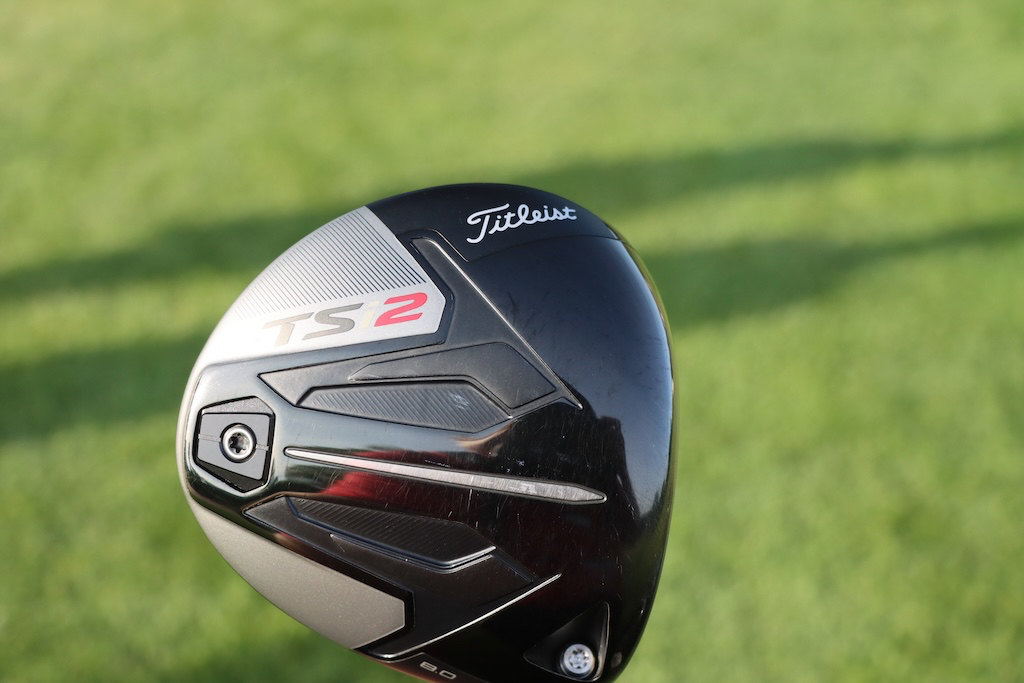
The first thing that caught my eye was the Titleist TSi2 driver set at 8 degrees with the B1 SureFit setting, paired with a Graphite Design Tour AD DI 7 X shaft. In my extensive fitting experience, the TSi2 was, and still is, a legitimate low-spin, high-stability performer. While Titleist has moved on to the TSR line, the TSi2 holds its own, especially for players who generate high clubhead speeds and need to mitigate spin. The “2” in TSi2 (and TSR2) typically signifies more forgiveness and a slightly higher launch bias compared to the “3” models, which are geared more towards adjustability for shot shaping. This 8-degree head, combined with the B1 setting, suggests a player who is looking to flatten their flight window and reduce dynamic loft at impact, likely battling too much spin or a ballooning ball flight.
The Tour AD DI shaft is a classic for a reason. Its distinctive mid-to-high kick-point and stable tip section are designed to deliver a penetrating ball flight with controlled spin. I’ve fit hundreds of golfers with this shaft, and the data consistently shows that for players with aggressive transitions and higher swing speeds, it provides exceptional feel and dispersion. An X-flex in the 70-gram range is a clear indicator of a strong player. We’re talking ball speeds in the 170+ mph range where shaft stability becomes paramount. While the TSi2 isn’t the absolute lowest-spinning head Titleist has ever made, its high MOI (Moment of Inertia) means that even on slight mishits, ball speed retention is excellent, which translates directly to more consistent carry distances. This setup isn’t chasing raw peak ball speed at the expense of control; it’s about maximizing efficient energy transfer and optimizing launch conditions for consistency.
Fairway Wood & Hybrid: Consistency Across the Board
Moving to the 3-wood, we see a Titleist TS3 (15 degrees, B1 SureFit) paired with a Graphite Design Tour AD DI 8 X. This mirrors the driver strategy perfectly. The TS3, like its driver counterpart, is a reliable, lower-spinning model. The B1 setting again points to a desire for a neutral-to-slightly flatter flight. The jump to an 80-gram X-flex shaft in the 3-wood is standard procedure for stronger players. Given the higher clubhead speeds generating more spin, a heavier, stiffer shaft helps maintain control and prevent ballooning. In my bay, we often see players gain 5-10 yards of carry with a properly spec’d heavier fairway wood shaft simply due to better energy transfer and lower spin.
The hybrid choice, a Titleist H2 818 (19 degrees, B1 SureFit) with a Graphite Design Tour AD Hybrid DI 105 X, continues the theme. The H2 was designed for players looking for a more penetrating ball flight and less offset than the H1. The 105-gram X-flex hybrid shaft is quite stout and speaks volumes about the player’s power and preference for consistency.
“Driver: Titleist TSi2 (8 degrees, B1 SureFit setting)
Shaft: Graphite Design Tour AD DI 7 X”
This commitment to the same shaft family across the top of the bag is a key fitting principle. It helps maintain a consistent feel, flex profile, and thus, a consistent swing thought, even as the clubs get progressively shorter. The data in my launch monitor shows us how crucial this ‘flow’ is for players looking to attack pins from 200+ yards out.
Irons: For the Purist
The iron choice is where we truly see a player who prioritizes feel and precision: Titleist T100 ’19 (3-9) with True Temper Dynamic Gold Tour Issue X100 shafts. The T100, even the ’19 model, is a player’s iron. It offers a slightly more compact head than its T200 or T300 counterparts, with minimal offset and a classic look at address. While it does incorporate some modern technology like tungsten weighting for improved MOI and launch, it remains a true forged iron, offering excellent feedback.

The Dynamic Gold Tour Issue X100 speaks volumes. This is a very heavy, stiff shaft profile, designed for maximum control and a penetrating ball flight. It’s what I call a “workhorse shaft” for serious ball strikers.
“Irons: Titleist T100 ’19 (3-9)
Shafts: True Temper Dynamic Gold Tour Issue X100″
If you’re a mid-handicapper wondering if X100s are for you, the answer is likely no unless you have a truly aggressive swing and generate serious clubhead speed (think 90+ mph with a 7-iron). For the right player, however, they provide unbelievable consistency and feedback. The T100 ’19 still holds its own against newer models for players who want that classic feel with just a touch of modern forgiveness. They are not about maximizing distance through strong lofts; they are about precise yardage gaps and consistent spin rates for stopping the ball on the green.
Wedges and Putter: A Familiar Blend of Precision
The wedge setup is classic Vokey: SM11 (48-10F @47, 54-14F @53) and an older SM7 (60-04L). It’s common to see players stick with a specific Vokey grind they love, especially for their lob wedge. The SM7 60-04L is a low-bounce lob wedge, perfect for tight lies and opening the face around the green. The strong lofts on the pitching and gap wedge (47 and 53 degrees) are very common for players using T100 irons, ensuring proper gapping down from the 9-iron.
“Wedges: Titleist Vokey Design SM11 (48-10F @47, 54-14F @53), SM7 (60-04L)
Shafts: True Temper Dynamic Gold Tour Issue X100″
Using the same Dynamic Gold Tour Issue X100 shafts in the wedges as the irons is a smart move for maintaining consistent feel and weight through the set. While some players prefer a slightly heavier wedge shaft for more control, sticking with the iron shaft promotes a seamless transition in feel from full swings with irons to those finesse shots around the green. It’s a preference I’ve seen work for many skilled players.
Finally, the Scotty Cameron Special Select F-5 Tour Prototype putter with a SuperStroke Zenergy 1.0PT grip. The F-5 is a mid-mallet design, offering more stability than a blade without the bulk of a full mallet. The “Tour Prototype” designation usually means it’s custom-weighted or slightly tweaked, reflecting a player’s exact preferences. SuperStroke grips are ubiquitous on tour and among amateurs for their ability to quiet the hands and promote a smoother, more consistent putting stroke. This setup screams stability and feel on the greens.

The Daily Duffer’s Takeaway
This is a bag built for performance and consistency, tailored for a powerful player who values control and precise ball striking. There’s no fluff or gimmickry here. The dedication to stable, heavy shaft profiles throughout the bag—Graphite Design Tour AD DI in the woods/hybrid and Dynamic Gold Tour Issue X100 in the irons and wedges—is a clear strategy to manage power and maintain tight dispersion. The choice of slightly older, but still incredibly effective, clubheads like the TSi2 and TS3 shows that sometimes, sticking with what works beats chasing the latest model simply for its new paint job.
For the average golfer, the takeaway isn’t necessarily to go out and buy an X-flex shaft. Instead, it’s about understanding how consistency in shaft weight and flex across your set can benefit your game. It’s about recognizing that powerful players often opt for slightly older models that deliver proven performance, optimizing those clubs through expert fitting rather than just buying the latest tech off the shelf. This bag is a masterclass in building a cohesive, data-driven setup for serious golf.
