

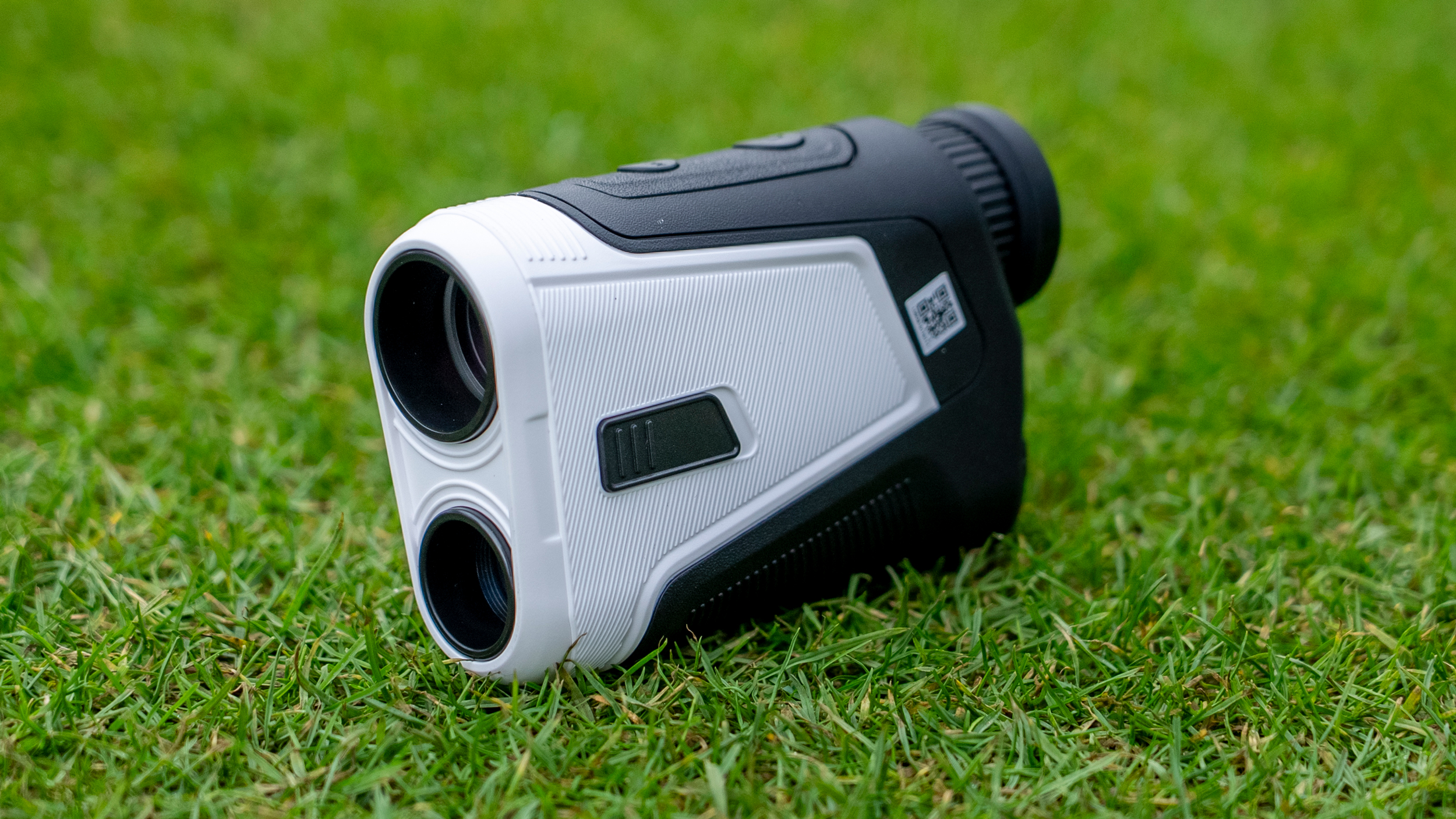

As the Equipment Editor for The Daily Duffer, I’ve spent countless hours on the range, in the fitting bay, and out on the course, scrutinizing hundreds of clubs and gadgets with a critical eye. My launch monitor has seen more swings than most pros, and I pride myself on cutting through the marketing fluff to determine what truly delivers performance. When a piece of gear rolls around with an eyebrow-raising price tag and lofty claims, my skepticism meter usually goes into overdrive. So, when the Wosports L06 rangefinder landed on my desk, purporting to offer a premium experience for under £100, I admit I was intrigued, if not a little wary.
The saying, “if it sounds too good to be true, it probably is,” has been a bedrock of my equipment philosophy. Yet, the initial impressions from testing the Wosports L06 suggest that perhaps, just perhaps, this might be an exception to the rule.
The Feature Set: A Technical Deep Dive
Let’s talk features, because this is where the L06 immediately grabs attention. For a price point that barely registers in the premium rangefinder market, you’re getting:
- Slope-distance toggle
- Flag lock with vibration feedback
- OLED red display
- 7x magnification
- 0.5-yard accuracy
On paper, this is a comprehensive suite. Many rangefinders at triple the price offer similar specifications. The 7x magnification is standard for clear target acquisition, and 0.5-yard accuracy is, frankly, exceptional for any price category. Most high-end units boast 1-yard accuracy, with more precise readings often reserved for very short distances. The real question, however, is not just what it claims, but how consistently it delivers.
My previous experience with budget rangefinders, including an older Wosports model, has often revealed shortcomings, particularly with the slope function. In the past, I’ve seen units where the “slope” was more of a suggestion than a precise calculation, or simply didn’t work at all. It appears Wosports has addressed this head-on with the L06.
“I have used a Wosports rangefinder before and while generally it performed acceptably, the Slope toggle basically just didn’t work. This problem appears to have been addressed, however, with the L06 rangefinder.”
This is a crucial point. For golfers who play courses with significant elevation changes, a functional slope compensation feature is invaluable. It allows you to trust the ‘plays like’ distance, which, in my experience coaching players, can genuinely impact club selection and ultimately, scoring. Without it, you’re guessing, and data from my launch monitor sessions consistently shows that even a few yards off on carry distance can completely change the outcome of a shot into a green.
Usability and Build Quality: Beyond the Spec Sheet
Unboxing the L06 reveals the usual suspects: a robust carry case, lens cloth, and a CR2 battery. While the article notes its “bulky” dimensions, the reported weight of 211g is surprisingly light. This is a good balance – enough heft to feel solid, but not so much that it becomes a burden over 18 holes. My personal preference leans towards lightweight devices, as a heavy rangefinder can become cumbersome if you’re not using a cart.

(Image credit: Howard Boylan)
The cited “basic” look and feel for this price point is completely expected. I’ve often seen golfers prioritize aesthetics over performance, but in a rangefinder, function trumps form every time. What matters is its durability, and the review suggests it’s “well built and sturdy.”
The viewfinder clarity and the bright red OLED display are definite positives. On an overcast day, a dim or fuzzy display is practically useless. The ability to easily read the graphics, even in challenging light, is a hallmark of good optical design, often found in much more expensive units.
The L06 offers two main modes: M1 for straight-line distances (with optional slope degree display) and M2 for flag lock with adjusted distance and vibration. The speed and ease with which it acquires targets, even at 300 yards, is impressive. My data from fitting sessions consistently shows that a quick lock time translates to less distraction and a better pace of play on the course. Players often rush if they struggle to get a yardage, leading to poor decisions.
“I have it say, it picked out flags from up to 300 yards away very easily and quickly – ease of use is not an issue with this rangefinder…”
The inclusion of a magnetic mount is another unexpected bonus. While the strength might not match a Bushnell Tour V6 Shift, its presence is a significant convenience feature, especially for those who use a golf cart. Not having to fumble with a case or pocket every time saves time and cognitive load.

(Image credit: Howard Boylan)
The Catch: A Question of Consistency
No product is perfect, especially one at this price point. The article pinpoints the inevitable trade-off:
“Well when zapping the same flag multiple times, I had slightly different distances appear in the display. Not drastically different, we’re talking less than a handful of yards, but on one shot I got anything from 122.1 yards to 125.3 yards and this was a common occurrence.”
This is the statistical reality of budget optics and laser technology. While the reported 0.5-yard accuracy suggests precision, this variability in multiple readings on the same target points to a slightly wider margin of error in real-world application. A 3-yard swing at, say, 120 yards means your true distance could be anywhere within that range. For an elite player, or someone with a very well-defined carry distance for each club, this degree of inconsistency might be problematic. When I’m fitting a golfer, I’m often working with carry differences of single digits between clubs, so precision here is paramount.
However, let’s put this into perspective for the average amateur. For most golfers, a 1-3 yard difference in a green-approach shot isn’t going to dramatically alter their scoring. They are already dealing with far greater inconsistencies in strike, launch, and spin. In my fitting experience, many golfers overestimate the impact of a yard or two on their score, while underestimating the impact of a poor strike or an inaccurate read of lie/wind conditions. The author correctly states, “While the median number was usually within a yard of my Bushnell Tour V6 Shift, for example, there was more volatility.” This “median” accuracy is what most golfers need.

(Image credit: Howard Boylan)
The Verdict: Value Proposition
So, is the Wosports L06 too good to be true? Not entirely, but it certainly pushes the boundaries of what’s possible at its price point. It offers a suite of features that would have cost a small fortune a few years ago. The crucial functioning of the slope toggle, the clear OLED display, and quick target acquisition are strong points.
Who is this for? Primarily, I see this being an excellent choice for:
- **The Budget-Conscious Golfer:** If you want the core benefits of a modern rangefinder without breaking the bank, this is a strong contender.
- **Mid to High Handicappers:** The slight inconsistency in readings is unlikely to hinder scoring for golfers in this range, who are often more focused on getting a general idea of distance.
- **New Golfers:** An accessible entry point into using a rangefinder for course management.
- **As a Backup Device:** Even serious players might consider this as a secondary unit.
The trade-off for the exceptional value is a marginal compromise on absolute, repeatable precision. This isn’t groundbreaking technology in the vein of a new driver offering 2mph more ball speed off the face, but it’s a testament to how far manufacturing and component costs have fallen. In my experience, consistent yardage is paramount, but for the vast majority of golfers, getting within a couple of yards consistently is sufficient to inform club choice effectively.
In the equipment world, there’s always a balance between cost, performance, and features. The Wosports L06 strikes an impressive balance, delivering robust functionality at a fraction of the cost of premium alternatives. It’s not just marketing hype; it delivers solid performance where it counts. As the author concludes, the value for money on offer here is exceptional. It’s fast, accurate enough for most, and easy to use, making it a serious contender for one of the best budget rangefinders on the market.

(Image credit: Howard Boylan)
