


As a lifestyle editor, I’m always looking for parallels between our passions on the course and the wider rhythm of our lives. Golf, at its heart, is a game of precision, flow, and understanding how subtle movements create significant outcomes. And you know what? That’s not so different from how we approach our daily routines, our wellness, and even how we carry ourselves.
Today, I want to talk about something that might sound purely technical at first glance – shaft lean. But bear with me, because what I’ve learned about achieving that perfect impact position actually holds a deeper wisdom that resonates far beyond the 18th green. It’s about finding your center, understanding optimal performance, and making movement an intuitive, rather than forced, part of your life.
The Illusion of the Linear Push
We’ve all seen those slow-motion videos of pros at impact, hands way ahead of the ball, club perfectly squared. It looks effortless, powerful, and utterly unattainable for us mere mortals. The natural instinct, much like in many areas of life, is to try and emulate that final visual outcome directly. In golf, Matt Walter, a Performance Golf expert, highlights this common pitfall:
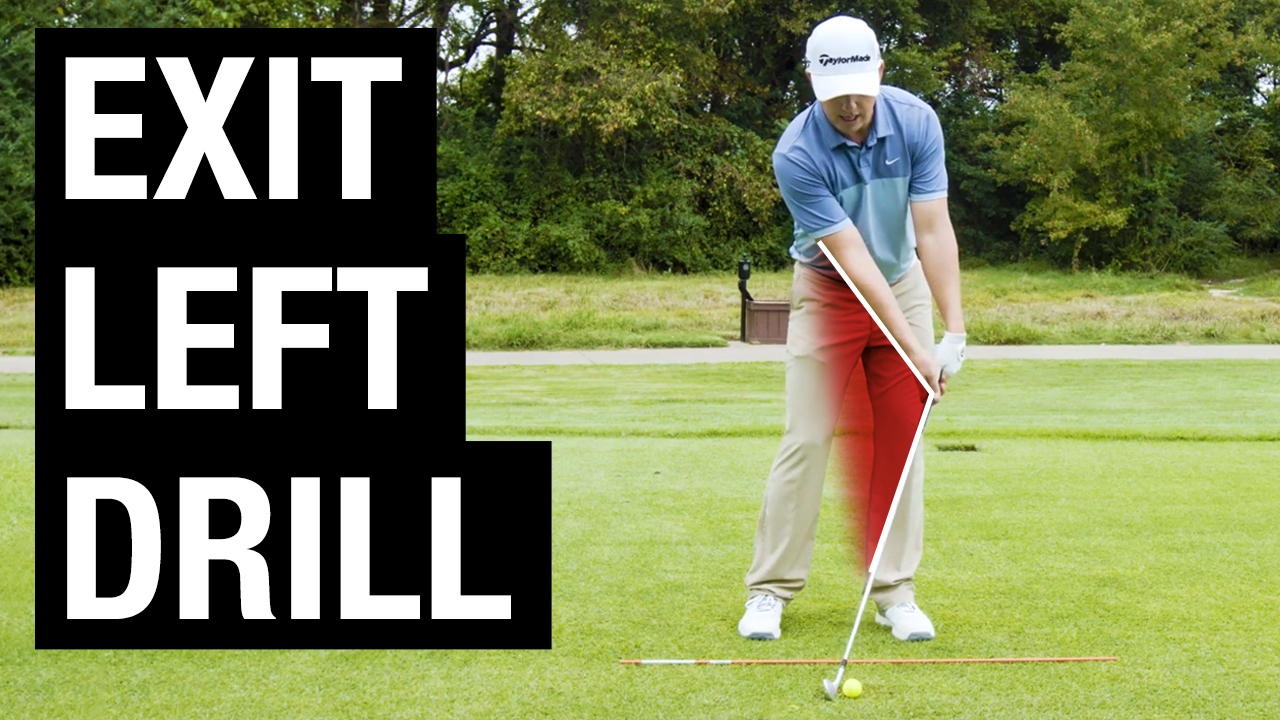
“Typically, where I see players shank it and they really get way off base is that they think that the shaft lean comes from a linear push with their hands to develop that look. So, they look at it on video, and they go, ‘Oh, my hands should be forward. I’ve turned my body,’ but the problem is, their hands are too far away from their body…”
Isn’t that fascinating? What looks like a linear push is actually the *result* of a more circular, integrated movement. We often try to force a desired outcome directly, forgetting that the most elegant results often emerge from a harmonious process. Think about it: trying to force creativity at work, pushing through a workout when your body is screaming for rest, or even trying to speed-read a book when your mind is elsewhere. The “linear push” rarely yields the best (or most sustainable) result.
The Elegance of “Exiting Left”
So, if pushing forward isn’t the answer, what is? Walter introduces a concept he calls “exiting left.” He’s not talking about slicing the ball into oblivion, but rather about how your hands move Post-impact. Instead of attempting to drive your hands straight down the target line, the key is to allow them to work *around* your body, almost as if they’re moving closer to your left pocket. This seemingly counter-intuitive move allows the clubface to square up naturally and prevents that dreaded hosel-first presentation.
This “exit left” strategy is a beautiful metaphor for life, isn’t it? Sometimes, the most efficient path isn’t a straight line. The best solutions often involve a degree of fluidity, of allowing things to *flow* rather than forcing them. It’s about understanding the natural mechanics of a system – whether it’s your golf swing, your body, or even a tricky family dynamic – and working *with* them, not against them.
“If you watch any of the modern-era golfers, you will see that they don’t exit up the line with their hands. What you’ll see is, their hands go in.”
It’s a subtle shift, but one that transforms the entire impact. It’s about creating space and allowing for a natural, rotational release. And here’s where the human element truly comes in.
Making Space: Body, Mind & Soul
Walter acknowledges that this might not be immediately easy for everyone:
“Now, here’s where it gets slightly difficult for the average Joe. So, we may not have enough hip rotation to carry all of that shaft lean around our body. So, if we had to imagine my hips are here, I have to create space with my hips in order to have room for my hands to exit. If my hips can’t turn and they stop right here, well, there’s not much room for an exit plan, so I have to release the club face a little bit.”
This is the real lifestyle connection. The ability to “exit left” seamlessly in your golf swing is directly tied to your body’s flexibility and mobility, particularly in your hips. If your hips are tight, your movement will be restricted, forcing you to compensate elsewhere. This isn’t just about golf; it’s about how you move through your entire day. Limited mobility impacts everything from picking up groceries to playing with your kids, to simply sitting comfortably.
Actionable Takeaways for a Flowing Life:
- Prioritize Mobility, Not Just Strength: While strength is important, supple, mobile joints – especially in the hips and thoracic spine – allow for more natural, efficient movement. Incorporate daily stretches, yoga, or Pilates into your routine. Even 10 minutes a day makes a difference.
- Listen to Your Body: Just as you might “release the club face a little bit” if your hips are tight, sometimes in life, you need to adjust your expectations or approach based on your current physical or mental state. Don’t force it if your body (or mind) isn’t ready.
- Practice Intuitive Movement: Whether it’s your golf swing or how you navigate your daily tasks, try to connect with the natural flow. Instead of rigidly planning every step, allow for some organic movement. How can you create “space” in your day for things to unfold more naturally?
- Patience and Practice: Mastering a new golf move, or a new wellness habit, takes time. Start small, perhaps with “nice, soft, little pitch shots” as Walter suggests for the swing, before scaling up to a “full-like golf swing.” Consistency over intensity is key for longevity and sustained improvement.
The “exit left” philosophy in golf teaches us that true power and precision come from an integrated, flowing movement, not a forced, linear push. It reminds us that our physical capabilities directly influence our performance, both on and off the course. By cultivating flexibility, listening to our bodies, and embracing a more circular, intuitive approach to movement – and to life – we can unlock greater efficiency, reduce strain, and find that effortless flow that defines a truly well-lived life.
So, the next time you’re on the range, trying to perfect that impact, remember that you’re not just honing a golf swing. You’re practicing a philosophy that can enrich every aspect of your lifestyle. And that, my friends, is why golf is so much more than just a game.
